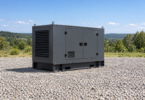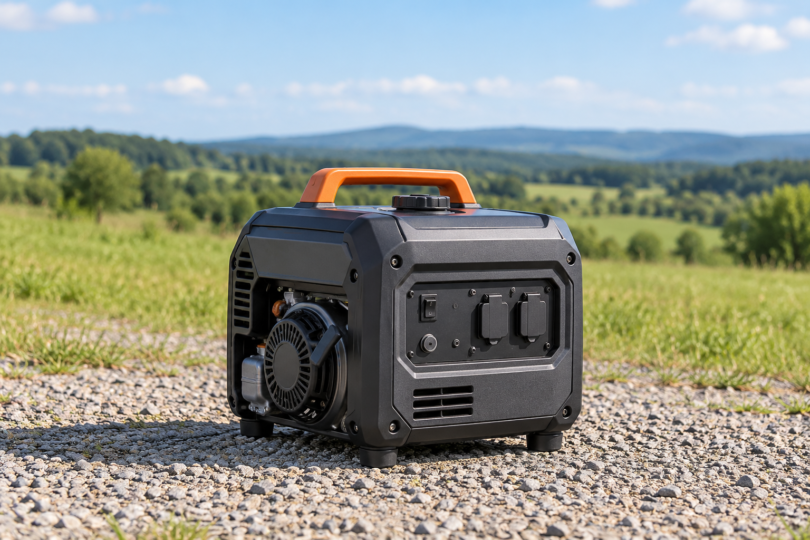

The best 1500-watt generator depends on which 1500-watt rating you need. The Champion 201285 provides 1500 starting watts and 1200 running watts; the Westinghouse iGen1500c provides 1500 peak watts and 1000 running watts. For a battery alternative with 1500 watts of rated output, consider the Jackery Explorer 1000 v2. Those are three different power budgets, so choose from the running rating before comparing handles, outlets or advertised runtime.
Our shortlist favors the Champion for more continuous power within this small gasoline class, the Westinghouse for an inverter design and lighter carrying weight, and the Jackery for short-duration power without a combustion engine. All three suit a carefully sized load. None should be bought as an automatic solution for every refrigerator, heater, power tool or home backup circuit.
Compare the exact models
| Model | Continuous / starting output | Energy source | Best reason to consider it | Main compromise |
|---|---|---|---|---|
| Champion 201285 | 1200 W running / 1500 W starting | Gasoline; 1.46-gallon tank | Higher running output of the two gas choices | 58 lb; conventional generator |
| Westinghouse iGen1500c | 1000 W running / 1500 W peak | Gasoline; 0.79-gallon tank | Compact inverter design with CO shutdown | Only 1000 W for sustained loads |
| Jackery Explorer 1000 v2 | 1500 W rated / 3000 W surge | 1070 Wh rechargeable battery | Actual 1500 W rated output without fuel | Stored energy runs down; recharge needed |
Starting or surge power is temporary capacity for a load’s startup demand. It is not an allowance to run that load indefinitely. Watts describe power; watt-hours describe stored energy. An outlet’s printed amperage also does not increase a generator’s total rated output. Check the exact U.S. model and selected bundle before ordering.
1. Champion 201285: for more running power in the 1500-starting-watt class

Champion 201285 Portable Generator, 1500 Starting / 1200 Running Watts
As an Amazon Associate we earn from qualifying purchases.
The Champion 201285 pairs a 79 cc gasoline engine with recoil starting, a covered 120-volt household duplex outlet and an Intelligauge display for voltage, frequency and operating hours. CO Shield provides carbon-monoxide auto shutdown. Champion lists a 58-pound weight and up to 10 hours of operation at 50% load from its 1.46-gallon tank.
Choose it when your planned continuous load falls above the Westinghouse’s 1000-watt ceiling but within this model’s 1200-watt rating, with adequate startup capacity. That extra 200 watts can matter more than another charging port. The frame gives you a clear place to grip it, but inspect the weight against what you can comfortably lift and transport.
This is a conventional generator, so buyers prioritizing an inverter’s output characteristics should look at the next option. The 201285 manual makes the distinction between running and starting loads explicit. Do not treat the covered receptacle as permission to run it in rain. Nor does CO Shield make indoor use safe.
- Pros: 1200 running watts; operating-hours display; CO auto shutdown.
- Cons: heavier than the compact inverter option; still cannot sustain a 1500-watt load; gasoline storage and engine maintenance required.
2. Westinghouse iGen1500c: compact gasoline inverter option

The iGen1500c is the specific 1500-peak-watt model with a CO sensor. Westinghouse specifies 1000 running watts, a 120-volt duplex outlet, two USB ports and total harmonic distortion of 3% or less. Its enclosed body has a top carrying handle, and the engine adjusts speed with demand.
This is our pick for buyers who want a small inverter generator and can keep their loads within 1000 watts. That combination fits a different shopping list from one built around a large heating appliance. An inverter specification is useful when checking an electronics manufacturer’s power requirements, but it is not a blanket compatibility promise for every device.
The advertised maximum runtime is 12 hours at 25% load on a 0.79-gallon tank. That means a 250-watt test load, whereas Champion’s 10-hour figure is at 600 watts. Those figures cannot establish which generator lasts longer at the same actual load. Westinghouse’s page also mixes 32-pound dry-weight and 33-pound marketing figures; treat it as approximately 33 pounds before fuel and check the shipped unit’s documentation.
- Pros: inverter output; compact carrying format; CO shutdown; USB ports.
- Cons: lower continuous capacity than the Champion; recoil starting; the headline runtime describes a light load.
3. Jackery Explorer 1000 v2: 1500-watt rated battery alternative

The Explorer 1000 v2 is a rechargeable power station, not a gasoline generator. Its 1070 Wh lithium iron phosphate battery feeds an inverter rated at 1500 watts, with a 3000-watt surge specification. The selected offer is the power station alone; a solar panel is not included. Do not confuse it with the original Explorer 1000, a HomePower model or a solar-panel bundle.
Choose this option when avoiding engine exhaust, refueling and recoil starts matters more than extending operation by adding gasoline. Its three AC outlets are convenient for a small collection of devices, but they share the output limit. The JE-1000D manual linked by Jackery lists approximately 23.8 pounds and confirms the 1500-watt rated output.
Capacity is the tradeoff. Dividing 1070 Wh by a steady 1500-watt load gives about 43 minutes before accounting for inverter losses and the station’s own consumption. That is a theoretical ceiling, not a measured runtime promise; usable operation will be shorter. For a planned evening of power, total the energy your devices will use and include a realistic way to recharge.
- Pros: 1500-watt rated output; no combustion exhaust during battery operation; lighter than either gasoline choice.
- Cons: finite stored energy; solar equipment costs extra; high loads can exhaust the battery quickly.
How to decide what you can run
List the devices you want operating together and read their rated input power. Add their running requirements, then allow for the largest additional starting demand that may occur while the others are already running. Use the appliance maker’s startup information when available; a refrigerator’s running label alone may not settle whether its compressor will start. The Westinghouse manual’s generator-capacity guidance explains this distinction.
For a simple arithmetic example, three steady loads of 100, 150 and 200 watts total 450 watts. A further 800 watts required during one device’s startup raises the temporary demand to 1250 watts. Both gas models’ stated ratings cover those numbers on paper, but actual device behavior still needs checking. Conversely, a steady 1500-watt appliance exceeds both gasoline models’ continuous ratings.
Compare the complete purchase: unit, suitable cords, any manufacturer-approved accessories, fuel storage or charging equipment, and access to service. Check local availability and emissions restrictions for the exact model. A low advertised price is less useful if it buys the wrong variant or leaves out a necessary charging component. For critical equipment, obtain the equipment manufacturer’s compatibility and backup requirements before choosing any portable supply.
Safety requirements that affect the purchase
Gasoline generators must operate outdoors only. The CPSC advises at least 20 feet from homes and buildings, with exhaust directed away from doors, windows and vents. Never operate one in a home, garage, basement, shed or other enclosed space, even with doors open. Use working CO alarms in the home. Automatic CO shutdown supplements safe placement; it does not replace it.
Read the Champion or Westinghouse manual before fueling or connecting loads. Champion and Westinghouse specify gasoline with no more than 10% ethanol. Keep ignition sources away, stop the engine and let it cool as instructed before refueling. Keep the generator and connections dry, and use appropriately rated outdoor cords. Never feed a household wall socket from a generator. Building connections require suitable transfer equipment and a qualified electrician; this shortlist is not an installation guide.
A battery station also needs care. Jackery’s manual requires a clean, dry environment and unobstructed ventilation during charging. Do not use damaged equipment or improvised charging accessories. Check the exact model and serial number against current CPSC recall notices and the manufacturer’s safety information before purchase, particularly for used equipment.
Frequently asked questions
Does a 1500-watt generator deliver 1500 watts continuously?
Not necessarily. The Champion here delivers 1200 running watts and the Westinghouse 1000; both reach 1500 only as a starting or peak rating. The Jackery battery option has a 1500-watt rated output, subject to its capacity and operating limits.
Will one run my refrigerator?
Check the refrigerator’s running and compressor-starting requirements, plus every other simultaneous load. A generic refrigerator estimate cannot establish compatibility. For a battery station, also work out the energy needed over the intended outage duration.
Can I use a CO-sensor generator in a garage?
No. A CO sensor does not make enclosed operation safe. Follow the outdoor placement requirement, keep exhaust away from openings and use CO alarms in occupied areas.
Is a solar generator the same as a gasoline generator?
No. Here, “solar generator” refers to a rechargeable battery station that can accept compatible solar charging equipment. It stores a finite amount of energy; the panel, weather and charging limits determine how quickly solar charging can replace it.
Which shortlist option should I choose?
Choose the Champion for 1200 running watts from gasoline, the Westinghouse for a compact inverter with a 1000-watt continuous budget, or the Jackery for 1500-watt rated battery output. Choose only after matching both power demand and required operating time.