
The best diesel generator for an off-grid property depends on whether you need a portable supply or a professionally planned installation. Start with the Kubota GL7000-USA for its documented 6.5 kW prime rating and stationary-use provision; consider the Generac XD5000E for a 5,000-watt portable alternative. Both need careful load matching, outdoor siting and scheduled maintenance.
Safety first: Never run these generators inside a home, garage, shed, basement or other enclosed or partly enclosed space, even with doors open. For portable operation, keep the generator outside at least 20 feet from doors, windows and vents, with exhaust directed away from occupied buildings. Use battery-powered or battery-backup CO alarms indoors.
These are two documented options to discuss with a dealer or installer. The comparison uses manufacturer specifications and manuals; it does not claim hands-on testing or an all-day load guarantee.
Two diesel generators worth comparing
| Model | Documented electrical output | Why consider it | Main limitation |
|---|---|---|---|
| Kubota GL7000-USA | 6.5 kW prime; 7.0 kW standby; 120/240 V, single phase, 60 Hz | Stationary-use provision and one-side service access | Manual limits inverter loads to below 50% of generator capacity |
| Generac XD5000E, G0068640 | 5,000 W rated; 5,500 W starting; 120/240 V, single phase, 60 Hz | Open-frame portable design with lifting eye | Battery and wheel/handle kit are sold separately |
Kubota GL7000-USA: a candidate for a planned off-grid system
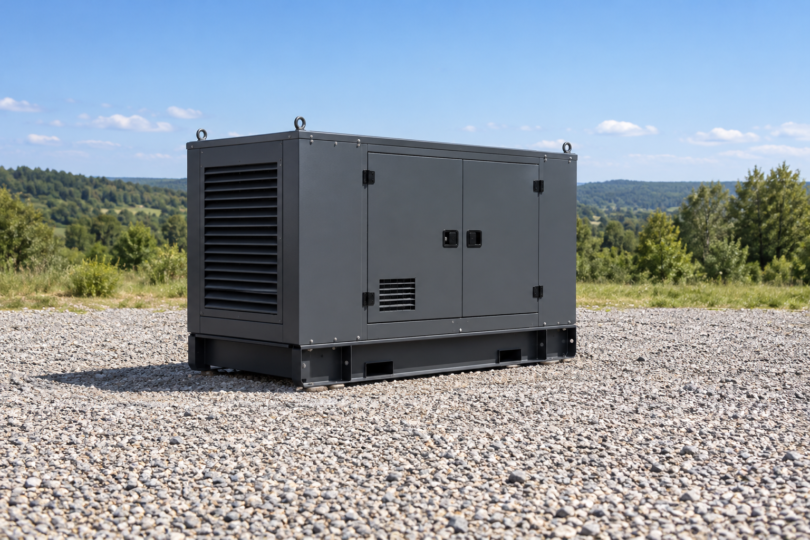
The Kubota GL7000-USA is the more relevant starting point here when you want a documented prime rating. Its U.S. specification lists 6.5 kW prime and 7.0 kW standby at 120/240 V, single phase, 60 Hz. Treat those as different ratings: the 7.0 kW standby figure is not a continuous-output allowance.
Its useful features include one-side maintenance access and a standard access terminal for an automatic transfer switch. Kubota identifies it as applicable to stationary use, but that does not turn it into a complete, preapproved home installation.
The important off-grid limitation is inverter loading. The GL-series operator manual, which explicitly covers GL7000-USA, says inverter loads must remain below 50% of generator capacity. If you plan to charge a battery bank through an inverter/charger, have the dealer and system installer confirm compatibility and the permitted charger setting for the exact supplied unit before buying.
Choose this model for further evaluation if its prime output, stationary-use provision and service access fit your plans. Pass on it if your design relies on drawing the full nameplate output through an inverter/charger without manufacturer approval.
Generac XD5000E: a portable option for temporary power
The Generac XD5000E is a diesel portable generator with 5,000 watts rated output and 5,500 watts for starting loads. Its manual specifies 120/240 V, single-phase, 60 Hz output. The current manufacturer page identifies variant G0068640; confirm that exact revision with the seller.
A lifting eye and steel frame suit moving the machine with appropriate handling equipment. The manufacturer lists a 12-gallon tank, an air-cooled Yanmar diesel engine and a 252-pound unit weight, so “portable” does not mean a light carry-around generator.
Budget for the separately sold starting battery and portability kit, which includes wheels, handles and the front foot. Do not assume the wheels or battery shown in a product image are included.
Choose the XD5000E for a portable-power plan within its rated output. For daily off-grid duty, obtain written confirmation of the intended operating schedule and service requirements; a running-watt figure or a large tank alone does not establish suitability for uninterrupted service.
What to settle before ordering
Have the installer check the actual connected loads, motor-start demand, voltage, phase and charger requirements. Kubota warns that practical load capacity depends on the load’s input characteristics; Generac also documents reduced available power with altitude and temperature. Neither model’s headline wattage guarantees that it will start your pump or power every appliance together.
Keep carbon-monoxide separation distinct from clearance for heat and fire. Generac requires at least 5 feet of clearance on all sides during operation; Kubota requires more than 1 metre from flammable materials and prohibits covering or enclosing the machine in a box. These requirements do not replace the 20-foot portable-generator separation from building openings.
A permanently installed system needs a qualified installer to select the exact equipment and establish siting, ventilation, service access and applicable local requirements from the supplied manuals. Do not borrow the clearance allowed for a different standby enclosure or convert either machine into an improvised indoor installation.
For building wiring, use transfer equipment selected and installed by a qualified electrician. Kubota explicitly requires an isolation/transfer switch installed by a licensed electrician before connection. CPSC warns against powering house wiring through a wall outlet; never use a backfeeding cable or improvised wiring.
Grounding and neutral bonding must match the generator and the electrical system. Generac’s manual identifies a frame-bonded neutral; Kubota directs the owner to the applicable electrical-code authority for the approved grounding method. A generic bonding plug is not a universal fix.
Arrange suitable diesel storage and maintenance before relying on the generator. Generac’s manual requires diesel with no more than 15 ppm sulfur and prohibits home heating oil and biodiesel; Kubota’s North American instructions specify ultra-low-sulfur diesel. Follow the exact unit’s cold-weather fuel instructions and stop the engine and let it cool before refueling.
Expect service downtime. Generac calls for an oil-level check at each use and an initial oil change after 50 operating hours, with further service by the manual’s hours, season and operating-condition limits. Kubota also has an initial-service schedule and recurring oil, filter, cooling-system and other checks. Confirm local parts and service support before choosing either.
Frequently asked questions
Which model is the better starting point for off-grid living?
Start by assessing the Kubota GL7000-USA if you need a prime-rated candidate for a planned installation. Its inverter-load restriction may rule it out for a particular charging setup. The Generac XD5000E is the portable alternative here, subject to its load and operating limits.
Can I use the standby rating continuously?
No. Kubota lists 6.5 kW prime and 7.0 kW standby separately. Its older operator manual labels 6.5 kW as rated output (COP); match the current unit and operating schedule with the dealer instead of treating either label as permission to run indefinitely at maximum output.
Can a diesel generator run in a garage with the door open?
No. Diesel engine exhaust can cause carbon-monoxide poisoning, and opening a garage door does not make this use safe. If anyone develops headache, dizziness, weakness or other possible CO symptoms, get to fresh air immediately and call 911 for suspected poisoning. Follow the CDC’s generator and CO guidance.
Can I connect one directly to my house?
Only through an electrical system designed and connected by a qualified electrician using appropriate transfer equipment. Never plug a generator into a household wall outlet to energize the house wiring. For individual appliances, CPSC recommends intact, heavy-duty outdoor extension cords rated above the connected load.
What should an exact-model quote include?
Ask for the model and revision, starting battery, any mobility kit, required transfer equipment, installation scope and service plan. Confirm the supplied manual and intended operating duty before ordering; this shortlist makes no promise about current stock, delivered cost or runtime at your load.