
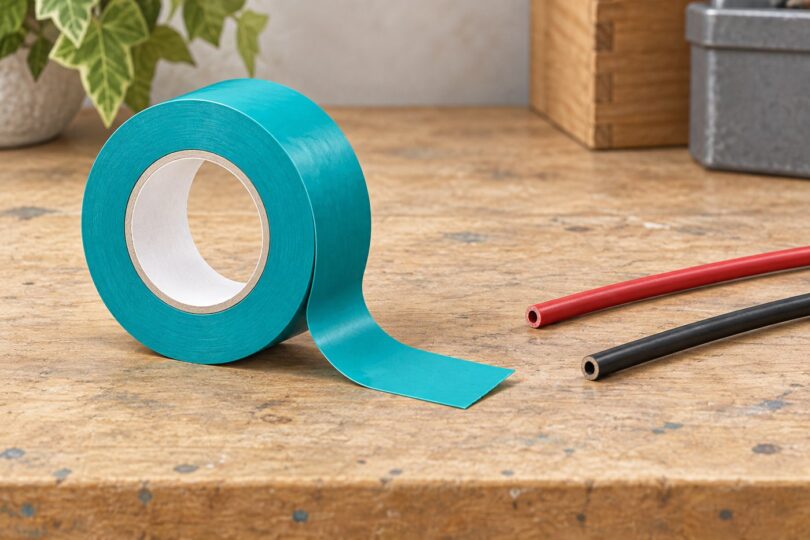

If you need turquoise electrical tape, check two things separately: the exact color and the tape’s documented electrical application. A turquoise roll in a photo, or a listing that mentions cables, does not establish that the product is electrical insulating tape.
Our finding: we could not verify an exact turquoise vinyl electrical tape with a traceable manufacturer specification and an Amazon product identity during our October 5, 2026 review. We therefore have no turquoise electrical-tape purchase recommendation. This guide explains the misleading matches, the specifications worth checking, and how to source the right product without settling for an unsuitable roll.
Why turquoise electrical tape is difficult to find
Two established electrical-tape ranges illustrate the problem. 3M’s Scotch 35 range lists ten colors: blue, brown, gray, green, orange, pink, red, violet, white, and yellow. Turquoise is not one of those named options. Advance Tapes’ AT7 industrial catalog likewise lists standard colors including blue and green, but no turquoise. Neither range should be described as an exact turquoise match.
That does not prove that no manufacturer makes one. It means a defensible recommendation needs more than a search result or a blue-green product photograph. If matching an existing cable-identification scheme matters, ask the supplier for the manufacturer’s color name, part number, and a physical sample.
Which search results should you reject?
| What the listing shows | Why it needs closer inspection | What to verify |
|---|---|---|
| Turquoise, aqua, or teal duct tape | A matching color does not establish electrical insulation suitability. | An explicit electrical application and rating for that exact product. |
| Blue or green electrical tape | The electrical specification may be suitable, but the color is different. | A sample and written agreement that the shade meets your identification requirement. |
| A mixed-color electrical-tape pack | A blue-green-looking roll in the image may be labeled green or blue. | The named colors and quantity of each color in the selected pack. |
| Turquoise adhesive insulation paper | Insulating paper is a different construction from flexible vinyl electrical tape. | The intended equipment application, material specification, and installation requirements. |
| A colorful roll labeled only “vinyl tape” | Vinyl describes the backing material, not the whole product’s suitability. | The manufacturer’s electrical data sheet and product identifier. |
A concrete example is Electro Tape’s teal 208 Series. The manufacturer describes an abatement duct tape for hanging and patching protective polyethylene sheeting. Its teal color and the company’s name do not make it a verified turquoise electrical-insulation choice.
Another near-match is Darit Tape’s turquoise insulating paper, described for uses such as motors, transformers, and battery assemblies. That is a specialist paper material, not evidence of an interchangeable turquoise PVC wrapping tape. We have not selected either product as a substitute.
The specifications to request before buying
1. Exact product identity and color
Ask for the brand, product series, part number, color designation, roll width, roll length, thickness, and pack quantity. Keep those together when comparing offers. A distributor may sell one roll while the manufacturer describes a carton; similarly, a family-level page may contain several colors without identifying the selected variant.
For a shade-critical job, a physical sample is more useful than comparing two screen images. “Turquoise,” “aqua,” and “teal” are useful search terms, but they are not a guarantee that products from different suppliers will match.
2. A stated electrical-use rating
Look for the intended application and working-voltage information, rather than assuming that an impressive dielectric number is the allowed circuit voltage. For example, 3M’s Scotch 35 technical sheet lists a 600-volt UL 510 rating separately from substantially higher dielectric-breakdown test values. Those entries describe different things; they should not be swapped in a buying comparison.
Request documentation for the exact supplied product. A certification claim copied from another color, another product family, or an unidentifiable generic listing is not enough to resolve the purchase.
3. Conditions where the tape will be used
Temperature, exposure, and the intended substrate matter. Advance’s AT7 product page, for example, specifies a service-temperature range of -5°C to +70°C and separately identifies water and UV resistance. Those are product-specific properties, not promises that transfer to every PVC tape with a similar appearance.
Tell the supplier whether the tape is for a protected indoor space, exposed outdoor use, a cable jacket, or a labeling task. Ask which current data sheet and application instructions cover that use. Do not translate “water resistant” into approval for a submerged electrical connection.
If turquoise is for identification rather than insulation
Describe that distinction to the supplier. A label around an intact cable jacket has a different purpose from material insulating an electrical connection. 3M’s cable-management guidance treats color-coded tapes, wire markers, and heat-shrink products as separate identification options.
If an established system requires turquoise, keep that requirement in the order. Do not quietly replace it with green, blue, or a two-color combination. Ask the person responsible for the system to approve any different identification method and update its documentation. A clearly readable cable identifier can also help prevent reliance on shade alone.
Do not use color-matched tape to conceal cord damage
A damaged appliance or extension cord needs the appropriate repair or replacement, even if matching tape would make the damage less visible. Electrical Safety Foundation International advises against using cracked, frayed, or otherwise damaged cords and recommends replacing the cord or equipment. Stop using the damaged item and seek qualified help where needed.
A practical supplier checklist
- Is the backing genuinely named turquoise, aqua, or teal by the manufacturer?
- What is the exact part number, and can I see a sample?
- Is this electrical insulating tape, identification tape, duct tape, or insulating paper?
- Which ratings and installation instructions cover my intended use?
- What are the roll dimensions, pack contents, storage requirements, and return conditions?
Buy only after both the color and application are confirmed. For this narrow search, an accurately documented supplier match is more useful than a long list of unrelated tape products.
Image note: AI-generated illustration of turquoise tape; no electrical rating or exact product identity is implied.