
A harness for a basset hound should fit the dog’s chest, neck opening, and short-legged stride together. A size chart can narrow the choice, but a harness that matches chest girth can still sit too close to the front legs or shift when the dog lowers its head to sniff.
Start with the Ruffwear Front Range for a straightforward padded walking harness. Consider the modular PerfectFit if an off-the-shelf harness fits one area but not another. The Ruffwear Flagline adds a longer body section and handle, with extra fitting considerations. These are candidates to try, not breed-wide guarantees.
Research checked October 4, 2026. This guide uses manufacturer specifications and fitting instructions; we have not tested these harnesses on basset hounds or measured escape resistance, pressure, or durability. Confirm the current chart and selected configuration before buying.
Quick comparison
| Harness | Why consider it? | Main fit limitation |
|---|---|---|
| Ruffwear Front Range | Padded everyday design with front and back attachments | Four adjustments cannot change the panel’s underlying shape |
| PerfectFit modular harness | Separate pieces can accommodate different proportions | The breed selector is only a starting point |
| Ruffwear Flagline | Handle, extended chest/belly panel, six adjustments | The additional rear section also needs a comfortable fit |
1. Ruffwear Front Range: an everyday starting point
The Ruffwear Front Range has foam padding, four adjustment points, a back aluminum V-ring, and a reinforced front leash attachment. There is also an ID pocket and reflective trim. It is a reasonable first candidate if the priority is ordinary walks with an uncomplicated design.
Ruffwear sizes it by the widest part of the rib cage: XXS 13–17 inches, XS 17–22, S 22–27, M 27–32, and L/XL 32–42. Its instructions say to choose the larger size between sizes. Those ranges do not identify a standard basset-hound size.
Tradeoff: the neck opening and panel length must work as well as the girth. If the harness rotates, the chest section hangs low, or the front-leg area rubs, a different design may be more suitable than tightening every strap. This model has no lifting handle; do not hoist a dog by its leash attachments.
2. PerfectFit: useful when proportions do not match one size
The PerfectFit Basset Hound Harness page describes a modular, fleece-lined design that clips around the neck rather than going over the head. The three-piece system has five adjustment points, plus front and top leash attachments. Individual pieces can be replaced or resized.
The configuration displayed during research was a 20 mm set with medium top, small front, and medium girth pieces, covering 53–63 cm. That is one selected combination, not a prescription for all bassets. Enter the actual girth and use the manufacturer’s sizing help when proportions, growth, or the available adjustment range make the choice uncertain.
Tradeoff: choosing and assembling the right pieces takes more care than ordering a single size. Ask the seller which pieces are included and how exchanges work before purchase. Its modularity makes it worth investigating when chest and neck proportions are difficult to match; it does not establish an escape-proof fit.
3. Ruffwear Flagline: an extended-body option with a handle
The Ruffwear Flagline has six adjustment points, a padded handle, an extended chest/belly panel, and three leash connection points. Its girth chart runs from 13–17 inches in XXS to 32–42 inches in L/XL, with the same intermediate ranges as the Front Range.
It is worth a fitting trial when you want a handle for brief, appropriate assistance and a design that extends farther along the body. The extra section creates another area to check while the dog stands, sits, sniffs, and walks.
Tradeoff: more straps are not automatically better. Check the rear strap’s position and clearance, including when the dog toilets. Do not assume a handle makes this a rehabilitation sling, lifting device for prolonged carrying, or a substitute for veterinary advice. A basset with back pain, weakness, or difficulty walking needs an appropriate assessment and support plan.
Measure first, then check the moving dog
- Use the exact brand’s measuring method. Measure with the dog standing comfortably. Ruffwear specifies the widest rib-cage circumference; PerfectFit describes girth just behind the front legs. Record the measurement rather than converting it into a generic small, medium, or large.
- Adjust in a quiet indoor area. Let the dog investigate the harness and reward calm cooperation. Open the relevant buckles rather than pulling a tight opening over the ears or forcing legs through it.
- Check the front panel and leg clearance. The harness should not hang between the legs or crowd the soft area behind the front legs. Inspect the underside directly instead of relying only on the view from above.
- Repeat the check in motion. Watch several steps, turns, sitting, and relaxed sniffing. Look for shifting, altered stride, rubbing, and straps migrating toward the throat. Follow the product’s fitting instructions rather than applying one universal strap clearance.
- Test gently in a secure place. Check that the dog cannot easily slip a leg or back out. Do not provoke a struggling dog to prove security. If backing out is a known issue, get hands-on fitting and reward-based training help before walking near traffic.
The Front Range adjustment guide shows how its shoulder and girth straps work. Keep the instructions for the harness actually purchased; similar-looking buckles and straps can serve different roles.
Walking habits matter as much as hardware
A front attachment may help with managing a walk, but it does not teach loose-leash walking on its own. Keep the leash clear of low front legs, reward the behavior you want, and seek qualified training help if pulling or lunging exceeds what you can safely manage. Do not use jerks to compensate for a poor fit.
Remove the harness after the activity, inspect the skin, and follow its cleaning directions. Recheck growing dogs frequently and remeasure after weight changes. A walking harness should not be assumed to be a crash-tested car restraint or a safe unattended tie-out system.
Frequently asked questions
What size harness does a basset hound need?
There is no reliable breed-only answer. Measure the individual dog and confirm the chest, neck opening, body length, and leg clearance together.
Should I size up for room to grow?
Only choose a size that can fit correctly now. Follow that manufacturer’s between-size advice; buying a loose adult size for a puppy can leave dangerous gaps.
What if the harness fits the chest but rubs the legs?
Stop using it and reassess the adjustments and design. A modular option or a different panel shape may fit better. Persistent redness, pain, or changes in walking warrant veterinary advice.
Bottom line: prioritize the moving fit over the breed label. The best candidate is the one that adjusts correctly, stays comfortable during normal sniffing and walking, and suits the dog’s actual needs.
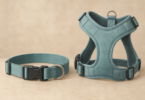
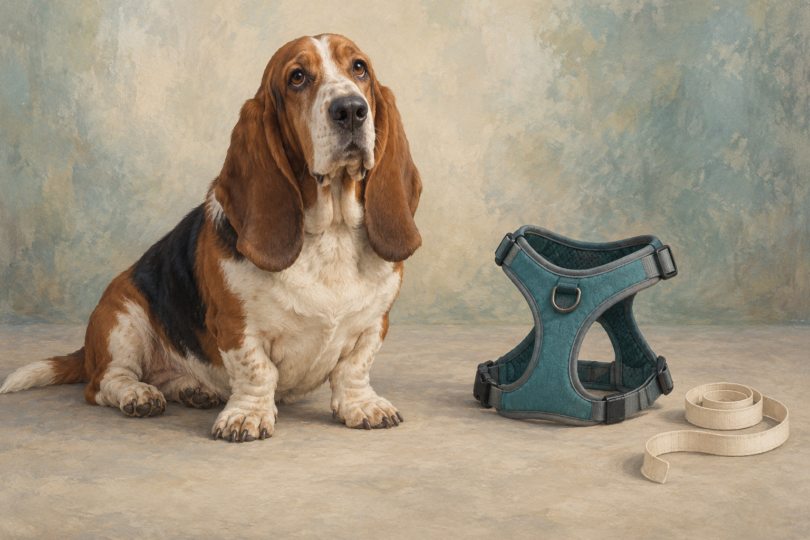
Image note: AI-generated generic editorial illustration; it does not show a tested harness, demonstrate fit or guarantee suitability for a particular dog.