
For a plus-size pear-shaped fit, start with enough room through the hips, a comfortable bodice and a waist you can adjust. A wrap dress can be a useful option when your waist and hip measurements fall into different sizes, but the neckline and skirt overlap still need to fit. Our shortlist compares the Kiyonna Essential Wrap Dress for a simple midi silhouette, Universal Standard’s Divine Jersey Wrap Dress for a viscose-rich option, and its Tiered Twirl Wrap Dress for cotton-rich fabric and pockets.
“Pear-shaped” is only a shorthand for proportions, often fuller hips relative to the upper body. It does not dictate what you should wear. These suggestions are for readers who want adjustable waist definition and room to move; choose a fitted, straight or oversized dress instead if that is the look you enjoy.
Editorial note: This is a comparison of published brand specifications and fit considerations, not a hands-on wear test. The links below go to the brands. Size and color availability, prices and return terms can change; a listed size range does not mean every size is available.
Quick comparison
| Dress | Why consider it | Published fabric | Main fit check |
|---|---|---|---|
| Kiyonna Essential Wrap Dress | Simple wrap style with three-quarter sleeves | 95% polyester, 5% spandex | Check front overlap and the brand’s 0X–5X size chart |
| Universal Standard Divine Jersey Wrap Dress | Adjustable waist with flowing viscose jersey | 94% viscose, 6% elastane | Use numeric measurements: the brand’s M means 18–20 |
| Universal Standard Tiered Twirl Wrap Dress | Cotton-rich fabric, tiered skirt and pockets | 94% cotton, 6% spandex | Check pocket placement, high-low hem and final-sale terms |
1. Kiyonna Essential Wrap Dress: a straightforward midi option
The Essential Wrap Dress uses a true wrap closure, princess seams and three-quarter-length sleeves. Kiyonna describes a flowing midi or tea-length skirt and lists an approximate shoulder-to-hem length of 44⅜ inches for size 2X. That measurement is a reference for one size, not a promise about where the hem will fall on every wearer.
This is the simplest-looking option on this list if you prefer a plain skirt over tiers. The tie offers waist adjustment, while the crossover front makes bust coverage a separate fit check. Do not size down merely because the fabric contains stretch: a skirt that pulls apart when you sit will not become more comfortable with a tighter tie.
Limit: The polyester-rich fabric may not suit someone specifically shopping for a cotton dress. Check the exact color’s fabric and care details before ordering.
2. Universal Standard Divine Jersey Wrap Dress: viscose-rich drape
The Divine Jersey Wrap Dress has a tie waist and three-quarter sleeves in a 94% viscose, 6% elastane jersey. It is a useful candidate if your priority is a fluid knit fabric rather than a structured woven skirt. The product page lists numeric sizing from 00–0 through 38–40.
Universal Standard’s letter sizes differ from many brands: its M corresponds to 18–20. Compare the bust, waist and hip measurements instead of transferring the letter size from a dress you already own. A wrap can accommodate some adjustment, but it cannot correct a bodice that is too wide at the shoulders or too short through the torso.
Limit: The neckline remains a personal coverage decision. Before keeping it, bend forward and reach overhead to see whether the overlap stays where you want it. This recommendation is based on the construction, not a claim that it fits every pear-shaped body.
3. Universal Standard Tiered Twirl Wrap Dress: cotton-rich fabric and pockets
The Tiered Twirl Wrap Dress combines a functional wrap front, fixed waist tie, V-neckline and side-seam pockets. Its high-low hem is described as below the knee, and the fabric is 94% cotton and 6% spandex. It offers more skirt detailing than the other two choices.
Choose it if tiers and pockets are features you actively want. For fit, pay attention to whether the side seams hang straight and the pockets lie comfortably at your hips. Try the pockets with the small items you normally carry; an empty-pocket fitting can miss pulling or bulk that appears in use.
Limit: The black listing was marked final sale when reviewed. Read the current terms for the selected color and size before paying, especially if you have not tried this brand’s sizing. Do not assume it has the same return eligibility as a full-price dress.
How to choose a dress when your hips need more room
Use all three measurements
Measure the bust, natural waist and fullest part of the hips according to the seller’s instructions. Compare them with that specific dress’s size chart. Kiyonna’s fit guide provides body measurements and explains its plus-size fit. Body measurements and garment measurements are different: a dress needs suitable ease for its fabric and cut.
If your measurements span two or more sizes, ask the brand which measurement should govern for that style. For a non-stretch, fitted skirt, hip room can be the deciding constraint. An adjustable waist helps only when the rest of the garment fits. Altering a waist or strap may be practical, but allow for that cost before buying.
Check the skirt while sitting and walking
Walk, sit, climb a step and reach in the dress. The hem should stay at a length you like, seams should not strain, and a wrap skirt should retain comfortable overlap. More flare can provide movement; it is not a requirement to disguise your hips. If you dislike wrap openings, consider a closed A-line or fit-and-flare skirt instead.
Choose the neckline and fabric you actually want
A tie waist does not necessarily make a crossover neckline adjustable enough for every bust. Look at the shoulder width, armhole, sleeve opening and torso length as well as the waist. Stretch content alone does not establish opacity, breathability or whether a dress will cling. Check the fabric in your normal lighting and with your usual undergarments during the return window.
Frequently asked questions
Are wrap dresses the best choice for every pear-shaped person?
No. They are one option for an adjustable waist and a skirt with room to move. A-line, fit-and-flare, shirt dresses and straight cuts can also work. The best choice depends on your measurements, desired coverage and preferred silhouette.
Should I buy a bigger size to fit my hips?
Buy a size that accommodates your measurements according to the specific brand’s guidance. Check that sizing for the hips does not create unwanted looseness at the shoulders or neckline. A different cut may be easier than trying to make a poorly matched size work.
Do I need shapewear with these dresses?
No. Shapewear is optional. Judge the fit using whichever undergarments you want to wear, and make sure you can move and sit comfortably.
Does an XL fit the same across these brands?
No. Universal Standard uses its own letter-to-number conversions, while Kiyonna uses its plus-size chart. Match your measurements to the chart on the specific listing rather than buying the same letter size automatically.
Bottom line
Start with the Essential Wrap if you want a simple midi, the Divine Jersey Wrap if you prefer viscose-rich fabric, or the Tiered Twirl if cotton-rich fabric and pockets are priorities. Then let measurements, movement and return terms decide. A body-shape label is a starting point for discussing fit, not a rule about what looks good.
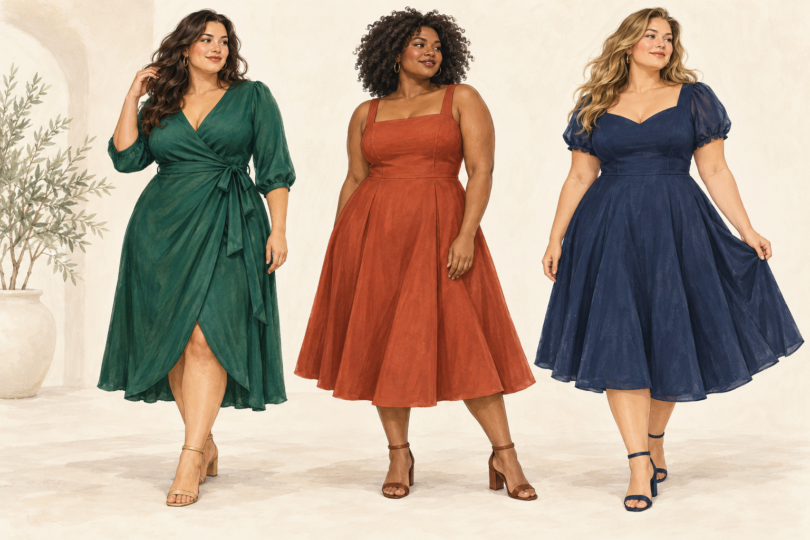
Image note: Original editorial illustration; not specific products. Wrap, A-line and fit-and-flare silhouettes illustrate dress-fit options.