
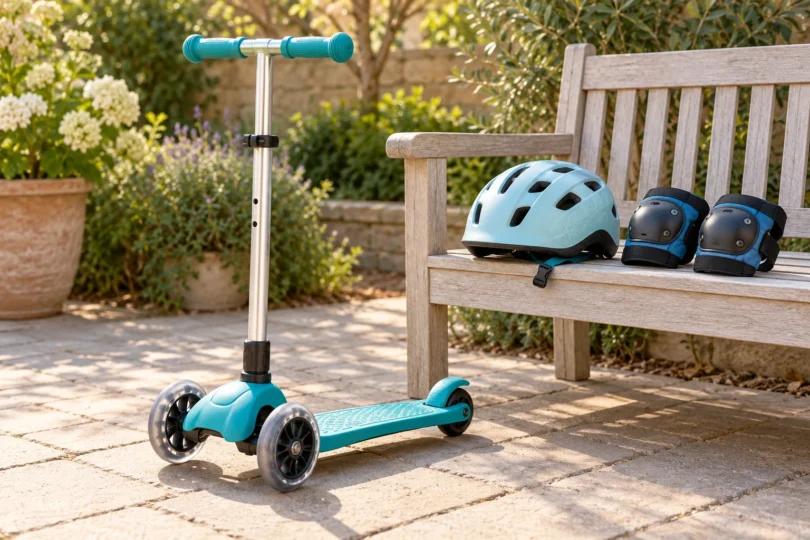

The best scooter for a 5-year-old is the one that fits their body and current riding skills. Our starting choice is the Micro Maxi for a child who fits its taller handlebar and can control its lean-to-steer design. The Micro Mini suits a smaller beginner who still fits its lower handlebar. The Razor A is the two-wheel option for a child who already has the balance and coordination to use it.
These three non-electric kick scooters cover different needs. The recommendations draw on manufacturer specifications, manuals and sizing guidance. A fifth birthday, a high weight limit or a favorite color does not establish that a child is ready to ride.
Compare the three picks
| Scooter | Best fit in this shortlist | Manufacturer age and weight guidance | Main trade-off |
|---|---|---|---|
| Micro Maxi | Children ready for a larger three-wheel scooter | Ages 5–12; 110 lb maximum; Micro suggests a minimum rider weight of 40 lb | Taller starting handlebar can be too much for a small child |
| Micro Mini | Smaller beginners who fit its lower handlebar | Ages 2–5; 110 lb maximum | A five-year-old may outgrow its dimensions soon |
| Razor A | Children ready to balance on two wheels | Ages 5+; 143 lb maximum | Requires the rider to manage two-wheel balance |
These are limits and fit criteria, not promises of suitability. Check the exact scooter’s label and manual, the child’s height and weight, and their ability to steer, brake and follow instructions. Color choices are a matter of preference for any child.
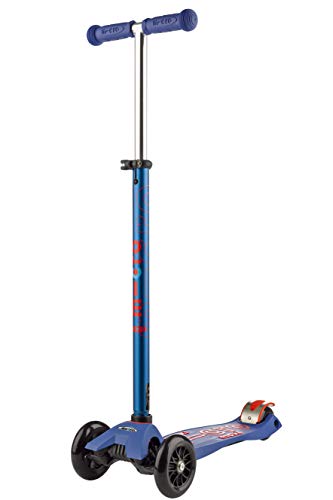
1. Micro Maxi: our first option for a child who fits it
The standard Micro Maxi has three wheels, lean-to-steer control and an adjustable T-bar. Micro lists a handlebar height of 26.25–35.75 inches from the ground, a 13 × 5.5-inch deck and a scooter weight of 5.5 lb. The larger deck and taller adjustment range give it more growing room than the Mini.
The important question at age five is whether the lowest handlebar position and the scooter’s size already work for the child. Micro’s sizing FAQ suggests a minimum rider weight of 40 lb for the Maxi. Its manual gives an approximate upper rider height of 150 cm. Neither number replaces a proper fit and control check.
Choose it if: the child fits the handlebar now and wants to continue with three-wheel steering. Skip it for now if: its size makes it difficult to handle. The standard version covered here does not fold; Micro sells separately named folding and LED versions.
The linked choice is one standard Maxi, model MMD023, listed as Blue on Amazon and Blue/Red by Micro. Check Micro’s model specifications for the exact version.
2. Micro Mini: the smaller beginner option
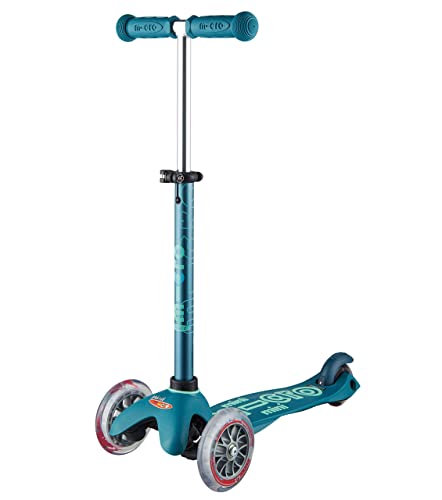
The standard Mini has the same three-wheel, lean-to-steer format in a smaller package. Its T-bar adjusts from 19.25–27 inches from the ground, the deck measures 12 × 4.5 inches, and the scooter weighs 4.2 lb. That lower handlebar range is the reason to consider it for a smaller five-year-old.
Micro’s Mini-versus-Maxi buying guide says the Mini is most comfortable up to roughly 38–40 inches of rider height and cautions that many four- and five-year-olds will outgrow it within a year. Its manual allows a broader approximate height ceiling of 120 cm; use the tighter comfort guidance when choosing a new scooter, rather than treating the manual’s ceiling as an ideal fit.
Choose it if: the child fits the smaller dimensions now and a lower handlebar matters more than extra growing room. Skip it if: the child is already too tall for a comfortable fit. Its 110 lb capacity does not make its preschool-size deck and handlebar suitable for every rider under that weight.
This pick is one standard, non-folding Mini in Ice Blue, model MMD055. See Micro’s Mini specifications; folding and light-up models are different versions.
3. Razor A: for a child ready for two wheels
The Razor A is a conventional two-wheel kick scooter with adjustable handlebars, a folding frame and a rear-fender brake. Its aluminum construction and foldability make it a useful alternative when compact storage matters. The verified listing is the Blue A, model 13010049, supplied as one scooter with its owner’s manual.
Razor’s US kick-scooter manual puts the A’s weight limit at 143 lb and says a parent’s decision should depend on maturity, skill and the ability to follow rules. The age-five starting point does not mean every five-year-old can manage a two-wheel scooter.
Choose it if: the child has the balance, steering and braking control for this format and the adjustable handlebar fits. Skip it for now if: the child still needs a three-wheel platform to manage the scooter. Have an adult handle folding, unfolding and adjustments, keeping children clear of the mechanism.

Fit checks that matter more than birthday labels
- Measure before ordering. Compare the child’s height and weight with the exact model’s guidance. The Micro handlebar measurements above are from the ground, not from the deck.
- Buy for control today. The child needs a comfortable grip, access to the brake and the ability to follow an adult’s directions. A scooter that is awkward now is not a good purchase simply because it has growing room.
- Choose the steering format deliberately. The two Micro models turn by leaning. The Razor A uses a conventional steering handlebar and requires balance on two wheels. Moving to two wheels is an option when ready, not an age-five milestone.
- Check the full cost. Include a properly fitted helmet and protective pads in the budget. Compare the selected color, model and package contents before checkout; do not assume accessories are included.
- Read the exact manual. Follow its assembly, inspection and use instructions. For a secondhand scooter, identify the model and look for damaged or missing parts before considering use.
Plan the riding space and safety gear
The CPSC’s scooter-safety guidance recommends a helmet meeting the CPSC bicycle-helmet standard, knee pads and elbow pads. It also calls for securely locked handlebars and steering columns, routine fastener checks, smooth paved surfaces away from motor vehicles, and no night riding. Avoid wet, sandy, gravel-covered or dirty surfaces.
A five-year-old needs direct adult supervision. Keep riding away from traffic, hills, steps, sloping driveways and pool edges. Use closed-toe shoes and keep loose laces clear of the wheels. One child rides at a time. A rear brake can become hot during use; follow the manual’s precautions. Lights, three wheels and protective equipment do not remove the possibility of a fall.
Which scooter should you buy?
Start with the Micro Maxi if the child meets its size guidance and can control it. Choose the Micro Mini when a smaller five-year-old still benefits from its lower handlebar and shorter deck. Choose the Razor A when the child fits it and is ready for two-wheel balance. If none fits the child’s current abilities, wait and reassess instead of buying to an age label.


