
For pool-cover anchors in concrete, the best first purchase is the exact replacement hardware approved for your existing safety-cover system. A brass anchor that fits a 3/4-inch hole is not automatically compatible with your cover, its springs or an existing threaded casing. If the brand or component is unknown, have a qualified pool-cover installer identify it before ordering.
One clearly identified aftermarket option is the Poolzilla 10-pack of complete brass anchor assemblies, listed for a 3/4-inch hole with a 1-5/8-inch body length. It belongs on your shortlist only after the cover manufacturer or its authorized installer confirms that assembly is appropriate for the specific cover and deck. This guide compares the buying paths without claiming hands-on load testing.
Choose the right type of replacement
| Your situation | What to buy after confirmation | Important limitation |
|---|---|---|
| Known cover brand; damaged threaded insert | The exact approved replacement insert | Diameter alone does not establish thread compatibility |
| Damaged or loose anchor shell | An approved complete shell-and-insert assembly | The surrounding concrete and hole need inspection |
| Unknown hardware or uncertain cover rating | An identification and system inspection first | A generic anchor cannot establish safety compliance |
| Pavers over sand, wood or landscaped ground | The manufacturer’s specified special-deck hardware | A short concrete anchor is not a substitute for a designed installation |
First choice: match the original cover manufacturer’s hardware
Start with the label on the cover, its installation paperwork and any identifying marks on the existing anchors. Photograph the head, shell and spring connection. Tell the dealer whether you need only the threaded insert or the entire embedded assembly; these are different purchases.
Meyco provides a useful example of why this matters. Its official FAQ warns that other brands’ anchors may not fit securely in Meyco casings and identifies genuine Meyco heads by their stamped name. That is a good reason to resist a listing that treats all brass inserts as interchangeable.
Meyco offers separate screw-type, pop-up, wood-deck and pipe-anchor designs. Match the existing system rather than choosing solely by appearance. Buying through a dealer who can identify the cover and supply the specified part is especially valuable when an older installation has mixed or unmarked hardware.
Poolzilla 10-pack: a conditional complete-assembly option
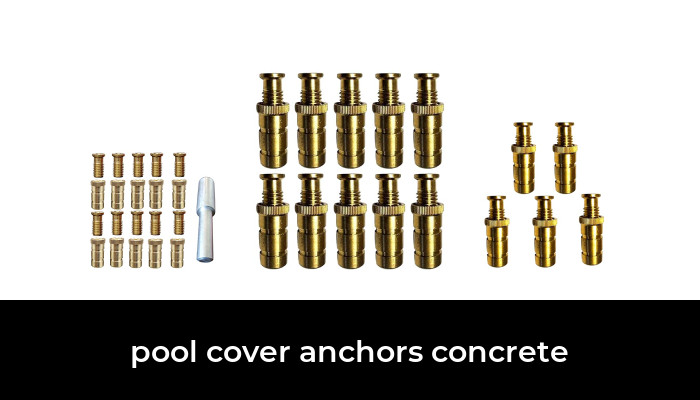
The verified Amazon product is Poolzilla Pool Safety Cover Brass Anchors for Concrete and Pavers, 10 Pack, ASIN B08GVSVWVM. The listing identifies ten brass anchors, a 3/4-inch hole size and 1-5/8-inch anchor length. Poolzilla’s own product page confirms those dimensions and a screw-down design that can sit flush when not in use.
This pack can be worth comparing when several complete assemblies need replacement and compatibility has been confirmed. Count actual approved replacement locations rather than assuming ten anchors are enough for the whole pool. A small price difference per piece is secondary to having the right component.
The product title uses “universal fit,” but that is not a guarantee for your cover or existing threads. The checked sources do not establish compatibility with every tested cover system. Do not buy the pack just to thread its inserts into unidentified shells. Ask the cover maker to approve the complete assembly and have the installer confirm the deck and attachment arrangement.

Poolzilla Pool Safety Cover Brass Anchors for Concrete and Pavers - 10 Pack - Universal Fit
As an Amazon Associate we earn from qualifying purchases.
Which measurements matter?
- Hole diameter: the nominal hole size for the anchor shell, not the diameter of the removable screw.
- Shell length and shape: compare the body, top flange or taper and required installation depth.
- Insert thread: diameter, pitch, engagement and head geometry must match when reusing a casing.
- Working height: the spring needs the correct attachment height and clearance when the anchor is raised.
- Cover layout: the intended anchor position, strap length, spring type and tension are part of the system.
For comparison, GLI specifies its standard brass anchor as 1-5/8 inches long, with a 13/16-inch top diameter and 3/4-inch bottom diameter. That illustrates why one “3/4-inch” description does not tell the whole story. It does not prove another brand’s insert or complete assembly is a GLI replacement.
Concrete, pavers and wood need different decisions
A sound poured-concrete deck and individual pavers sitting on sand are different anchoring situations. A tile or paver surface can also conceal concrete underneath. Have the installer establish what is below the finish and whether it can support the specified attachment.
Meyco distinguishes pavers above concrete from pavers above dirt or sand, for which it offers pipe anchors. GLI’s installation instructions likewise separate standard concrete anchors, wood anchors, paver tubes and lawn tubes. Follow the instructions for your own cover and substrate; do not transfer another brand’s hole depth or anchor layout to your pool.
Stop if a shell rocks, the hole is enlarged, concrete is cracked or the anchor sits near an unsuitable edge. A decorative collar can improve appearance but does not repair deficient concrete or restore holding strength. The repair needs an approved plan, not a larger screw forced into the opening.
Have the complete installation checked
Anchor replacement affects a tensioned safety system. Use a qualified installer for uncertain fitment, new drilling, damaged concrete or relocation. They should confirm suitable deck thickness, safe drilling locations and the cover manufacturer’s required setback and tension. Use the specified installation tools and keep clear of springs under tension.
Before considering the pool secured, check the whole cover: fabric, seams, straps, buckles, springs, anchors, overlap and openings. GLI’s instructions warn against using an improperly secured cover and call for damage inspection. A new anchor does not compensate for a torn strap or a cover that no longer fits.
ASTM F1346 concerns safety-cover performance and labeling. Do not assume that a stand-alone anchor carries a safety-cover rating or that fitting it makes an ordinary winter tarp a safety cover. Maintain the barriers and supervision recommended by CPSC’s Pool Safely program, and keep people off the cover.
Bottom line: buy exact approved OEM hardware whenever you can identify the system. Consider the verified Poolzilla pack only with confirmed system and deck compatibility. If the thread, casing or cover history is uncertain, an inspection is the useful next purchase.
Image note: Legacy product-category illustration. Pictured designs or pack sizes may differ from the specific recommendations below.