The right pool filter backwash valve is the one specified for your filter’s exact model and plumbing layout. A similar handle, the same pipe diameter, or the same brand is not enough to establish compatibility. Start with the filter nameplate and existing valve part number before comparing prices.
Three useful replacement candidates are the Hayward SP0714T for a compatible top-mount sand filter, Pentair 261055 for the specified Triton and Quad D.E. applications, and Pentair 261152 for the specified FNS, FNS Plus and NSP applications. These are different fitments, not three interchangeable upgrades. The comparison uses manufacturer documentation and exact product identities; it does not claim hands-on leak, flow or durability testing.
Compare the exact valve, not just the pipe size
| Model | Configuration | Where to start checking compatibility | Important distinction |
|---|---|---|---|
| Hayward SP0714T | Top mount; 1½-inch FIP connections | Filter manual specifying SP0714T | Clamps to a compatible sand-filter neck; not a side-mount valve |
| Pentair 261055 | 2-inch side-mount multiport; 7½-inch centerline | Pentair Triton and Quad D.E. compatibility table | SM 20-3 configuration |
| Pentair 261152 | 2-inch side-mount multiport; 7½-inch centerline | Pentair FNS, FNS Plus and NSP compatibility table | SM 20-2 configuration |
The linked packages each contain one valve. They are not complete filtration systems. Confirm which fittings, unions, seals or clamps your particular installation needs and whether those pieces are supplied with the seller’s package.
Hayward SP0714T: for an explicitly compatible top-mount sand filter
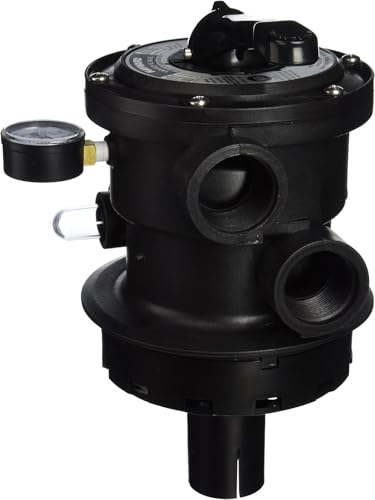
Hayward SP0714T Vari-Flo Multiport Valve, 1½-Inch FIP Top Mount Black, One Valve
As an Amazon Associate we earn from qualifying purchases.
The SP0714T is the relevant option when the parts diagram for your Hayward sand filter calls for that exact control valve. It mounts at the top of the tank and provides the familiar filter, backwash, rinse, waste and recirculation functions, plus closed and winter positions. The last two are not additional filtration modes.
Hayward’s Pro Series S180T, S210T, S220T and S244T owner’s manual identifies SP0714T in the illustrated parts list. Use that as a model-specific example, then check the manual and revision belonging to your actual tank. Do not stretch it into a promise that every Hayward filter accepts this valve.
- Reason to choose it: your original valve and filter documentation identify SP0714T, and the top-mount connection matches.
- Check carefully: tank-neck connection, internal standpipe fit, clamp condition and 1½-inch plumbing interface.
- Buying trap: an SPX0714BA key/cover/handle assembly or an SPX0714L cover O-ring is a repair part, not this complete valve.
The Hayward valve manual is also the appropriate reference for its operating positions and safety warnings. A seven-position description should not persuade you to use it on a tank with a different mounting arrangement.
Pentair 261055: for specified Triton and Quad D.E. applications

Pentair identifies 261055 as the 2-inch SM 20-3 multiport valve with a 7½-inch centerline for Triton and Quad D.E. filters. The manufacturer’s exact SKU page makes that application distinction explicit.
Choose it only after matching the filter model and existing plumbing. Centerline is the spacing between the relevant filter connections; it is a separate dimension from the nominal pipe size. Measure and compare the entire connection arrangement rather than looking only at the large “2-inch” wording in a retail title.
- Reason to choose it: the manufacturer specifies this multiport arrangement for your filter.
- Check carefully: SM 20-3 identity, connection spacing, orientation and required fittings.
- Buying trap: 261050 is a separately listed HiFlow package with plumbing. Similar application wording does not make its package contents identical to 261055.
Pentair 261152: for specified FNS, FNS Plus and NSP applications

Pentair’s valve compatibility table assigns 261152 to FNS, FNS Plus and NSP filters. It is the SM 20-2 version with a 7½-inch centerline. Its similar appearance and nominal size should not be used to substitute it for the 261055.
This is a particularly important distinction for shoppers searching only for a “D.E. valve.” Quad D.E. appears with 261055 in the same manufacturer table, while the named FNS-family applications appear with 261152. Filter type alone does not settle the required internal flow arrangement.
- Reason to choose it: your exact filter calls for this SM 20-2 valve configuration.
- Check carefully: the full filter model, valve part number and plumbing connection details before ordering.
- Buying trap: a 1½-inch valve, a different SM configuration or a repair-only top assembly is not the reviewed package.
Five checks before ordering a replacement
- Photograph the equipment labels. Capture the filter’s model and serial information, the old valve label, and an overall view of the plumbing. A close-up of a handle rarely gives a supplier enough information.
- Identify what failed. Ask whether the required purchase is a complete valve, a key/cover assembly, a seal, a clamp or a fitting. Replacing the whole valve may be unnecessary, but a damaged pressure-containing body needs professional assessment.
- Match the mounting arrangement. Check top versus side mount, tank-neck design or side-port spacing, and the connection to the filter’s internal parts.
- Match every interface. Record nominal size, threaded versus slip connections, union design and port orientation. Do not force mismatched threads or assume an adapter solves an internal compatibility problem.
- Compare the complete installed cost. Include the approved valve, necessary seals and fittings, plumbing work and professional installation where required. A cheaper valve that needs unplanned alterations can be the more expensive purchase.
If the filter or valve label is unreadable, send the photos to the manufacturer or a qualified pool technician. An uncertain identification is a reason to pause the purchase.
What the common valve positions do
The following is a plain-language overview of the SP0714T positions documented by Hayward. Follow your own valve and filter instructions for the exact operating sequence.
- Filter: normal filtered circulation.
- Backwash: reverses the cleaning flow and discharges dirty water.
- Rinse: a post-backwash or startup clearing step directed to waste.
- Waste: sends water out without normal filtration.
- Recirculate: returns water to the pool while bypassing the filter.
- Closed: blocks the flow path; do not run the pump in this position.
- Winter: a storage/winterizing position used as the equipment instructions specify.
Do not copy a fixed backwash duration or pressure trigger from a different filter. Sand and D.E. systems have their own cleaning procedures. Follow the D.E. filter’s instructions for replenishing filter media after cleaning, and check local requirements before discharging backwash water.
Safety before adjustment or service
Switch the pump off before changing valve positions. Hayward expressly warns against moving the filter-control valve while the pump is running. Pool circulation equipment can also remain pressurized after shutdown. Before servicing it, prevent an automatic restart and follow the system’s pressure-release procedure; never loosen a clamp, cover or fitting on pressurized equipment.
Use the equipment manuals and a qualified pool professional for installation, troubleshooting or any uncertainty about pressure, electrical supply or damaged components. This guide is a purchasing comparison, not a substitute for the installation and startup procedure.
Frequently asked questions
Is a backwash valve the same as a pool-cleaner backup valve?
No. A cleaner backup valve changes how certain automatic cleaners move. A filter backwash valve changes the filtration system’s water route. They belong to different parts of the pool system.
Will any 2-inch multiport valve fit my filter?
No. The two Pentair examples have the same nominal size and centerline but different specified filter applications. Match the complete model and configuration.
Can a new O-ring fix a leaking valve?
It depends on the leak’s source. A serviceable seal problem, damaged valve body and leaking plumbing joint require different solutions. Have the cause identified before buying a seal kit or a complete valve, and use the exact approved replacement parts.
Which valve is the best choice?
Buy the exact complete valve your filter manufacturer specifies, after checking the connection layout and package contents. For the examples above, that means SP0714T, 261055 or 261152 only when its documented application matches your equipment. There is no useful universal winner across incompatible filters.
Image note: AI-generated editorial illustration; not a photograph of the named product.