
The most useful boys’ swim trunks are the pair that stays in place, lets the child move comfortably and suits the kind of swimming he actually does. A favorite print helps, but the waistband, lining and leg length deserve just as much attention. Toddler, little-boy, big-boy and adult sizes can appear together in search results, even when their size labels look similar.
For casual pool and beach use, start with a drawstring waist and a lining the child finds comfortable. The two examples below are mesh-lined Kanu Surf trunks in explicitly identified sizes: one little-boy size and one toddler size. They illustrate practical shopping choices, not a head-to-head performance ranking. We have not timed their drying, tested their sun protection or worn them in the water.
Two clearly identified options for casual swimming
Kanu Surf Victor: a striped option in boys’ size 7

Kanu Surf Victor Swim Trunks, Boys Size 7, Navy/Orange, 1 Pair
As an Amazon Associate we earn from qualifying purchases.
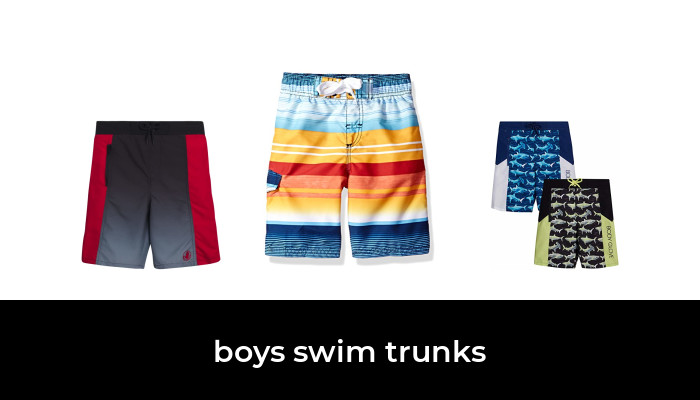
The selected Amazon listing places this print within its Echo product family, while Kanu Surf calls the design Victor. The exact variant is Navy/Orange in boys’ size 7, supplied as one pair. It has a polyester shell, mesh lining, an outside drawstring, side pockets and a cargo pocket. The manufacturer describes the fabric as quick-drying with a UPF 50+ rating.
Useful for: ordinary pool visits, beach play and a child who already gets along with a conventional mesh liner. Check before choosing: the current size chart and how the waistband and liner openings fit. Size 7 is the clothing size of this item, not a promise that it fits every seven-year-old. The striped print also exists in other sizes, so confirm the selection rather than relying on the picture alone.
Kanu Surf Patriot: a toddler option in size 3T

The Patriot design uses a red, white and blue flag print, a polyester shell, mesh lining and an outside drawstring. Kanu Surf lists two side pockets and a cargo pocket and describes the fabric as quick-drying and UPF 50+. The linked variant is specifically toddler size 3T, one pair; it is not the matching adult version or a rash-guard set.
Useful for: a toddler whose measurements match the size chart and whose caregiver wants a conventional lined trunk. Check before choosing: comfort while sitting and squatting, plus room for any swim diaper required by the pool. A mesh lining is not a swim diaper, and the word “toddler” does not mean a diaper is built in.
These two designs share many construction features. The meaningful differences here are the selected size range and print. If mesh feels scratchy to the child, changing between these two styles may not address the underlying preference; consider a different lining type instead.
Measure first, then use the size label
Use the brand’s instructions to measure the waist and any other requested dimensions. A waist measurement is more useful than guessing from age, and a swim trunk does not necessarily fit like a pair of jeans in the same nominal size. Check whether a listing uses a single number, a paired range such as 10–12, or Small/Medium/Large within a specific age group.
During a dry try-on, the waistband should hold the shorts in place without requiring the drawstring to pull a very oversized waist into a tight bunch. The child should be able to sit, squat and lift a knee comfortably. Look at the liner separately from the outer shell: the shorts can appear roomy while the liner openings feel tight.
A little growing room is sensible only if the trunks still fit securely now. If the waistband slides down or the legs interfere with normal movement, buying a larger size for next season compromises the current fit. Keep tags and packaging until you have checked the retailer’s try-on and return conditions.
Mesh liner, compression liner or unlined?
- Mesh-lined trunks: have a built-in brief-style lining. Check the edge seams and leg openings, especially if a child has previously disliked this style. Neither mesh nor a particular brand guarantees freedom from rubbing.
- Compression-lined trunks: use a closer-fitting inner short. Compare the inner leg length and seams as well as the outer trunk. A smooth-looking liner can still be too tight or too warm for a particular child.
- Unlined boardshorts: are a separate category. Read the actual description; “boardshort” is sometimes used loosely for lined trunks. Decide whether that construction meets the child’s needs and the swimming venue’s rules.
Avoid buying a disliked liner on the assumption that you will simply cut it out. That changes the garment and can leave unfinished edges. It is usually easier to choose the preferred construction from the start. Likewise, do not assume ordinary underwear is required beneath a lined swimsuit; check the garment guidance and venue rules.
Length, pockets and the kind of swimming
For recreational swimming, choose a length that allows easy walking, sitting and kicking. “Mid-length” and “knee-length” are descriptions, not standardized measurements across every boys’ size. An inseam is measured along the inner leg; an outseam runs down the outside from the waist. Compare like measurements when two listings use different numbers.
Pockets can be convenient on the beach, but empty them before entering the water. Check that the child can use the waistband and drawstring without a lengthy struggle during a bathroom break. For structured lessons or swim-team training, ask the instructor whether a closer-fitting brief or jammer would be more appropriate than a loose recreational trunk. Do not assume a competition-style suit is needed for every beginner.
UPF fabric does not cover the whole child
A UPF claim applies to the rated fabric, not to exposed legs, torso, face or shoulders. The American Academy of Pediatrics’ sun-safety guidance recommends a combination of shade, protective clothing and appropriate sunscreen. Plan for a rash guard or other coverage where useful, and follow sunscreen directions for application and reapplication after swimming.
Do not interpret a UPF 50+ label as permission to spend unlimited time in direct sun. Also check the care label and replace swimwear that no longer fits or is visibly deteriorating. A marketing claim about fabric performance does not establish that a worn, stretched garment performs exactly as it did when new.
Swim trunks are not safety equipment
A distinctive color can help you recognize a child, but no print makes supervision optional or guarantees visibility underwater. The AAP’s family beach-safety guidance emphasizes an attentive water watcher and an adult within arm’s reach for young children. Use appropriate life jackets where needed; ordinary swim trunks provide no flotation.
For children who are not toilet trained, follow the pool’s swim-diaper requirements and bring spare supplies. The CDC explains that swim diapers are not leak-proof and cannot reliably keep diarrhea-causing germs out of the water. Check and change them regularly, away from the poolside, and keep anyone with diarrhea out of the water.
Care and a useful packing routine
Follow the garment’s own washing directions. Kanu Surf recommends cold-water washing and air drying, without wringing or twisting. Make room for drying after the swim rather than leaving trunks balled up in a closed bag until the next outing. Check for sand trapped in pockets and lining, and inspect the waistband, seams and drawstring before reuse.
Pack a dry change of clothes and a separate bag for the wet suit. A second pair can be useful for back-to-back swim days, but first confirm that the initial pair fits comfortably; ordering multiple sizes or matching prints before a try-on can multiply an avoidable sizing mistake.
Quick answers
Are matching men’s and boys’ trunks the same fit?
No. Matching prints do not mean matching cuts or size scales. Verify that the selected item is in the correct boys’ or toddler department, especially when a product page also advertises a father-and-son set.
Does “quick dry” mean the suit is waterproof?
No. Swim fabric gets wet, and drying time depends on the garment and conditions. The featured manufacturers’ quick-dry description is not a measured drying-time promise.
What should decide the final purchase?
Fit and liner comfort come first, followed by suitable length, an easy-to-use waistband and a print the child will wear. The Victor size 7 and Patriot 3T are clear examples of traditional mesh-lined trunks. If the size or construction is wrong, choose another variant or lining rather than treating either example as a universal best buy.
Image note: Relevant existing topic illustration retained; not a representation of exact current card contents.