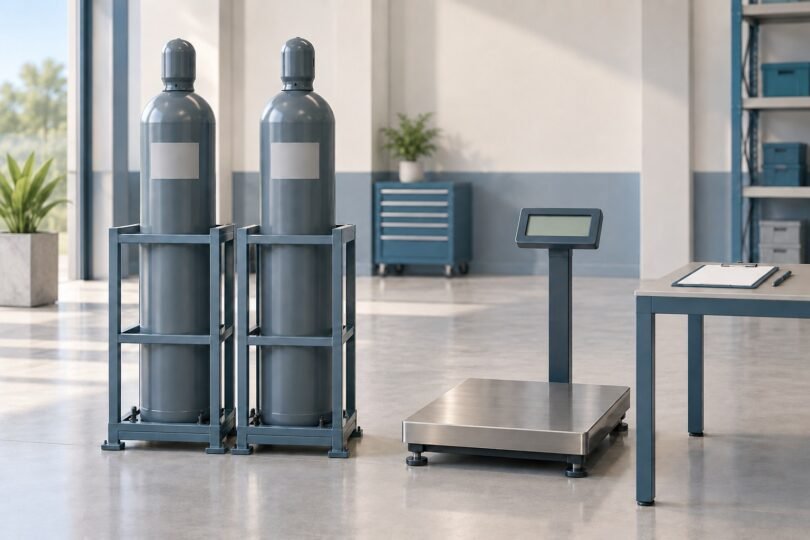

A CO2 tank filling machine is specialist equipment for transferring carbon dioxide into approved refillable cylinders. A tire inflator, PCP air compressor, beverage regulator or adapter hose does not perform the same job. For an occasional soda-maker, aquarium or kegerator cylinder, start by finding a supplier that accepts that exact cylinder for refill or exchange. Businesses planning to fill cylinders need a professionally specified system, a suitable site and trained operators.
The useful buying decision is whether you need a cylinder service, a replacement cylinder, a component or a complete filling installation. Here is how to tell them apart and what to verify before spending money.
Choose the right route for your use
- Home soda maker: use the appliance manufacturer’s approved cylinder and exchange route. Confirm the exact cylinder connection against your machine model.
- Kegerator or beverage dispensing: ask a beverage-gas supplier about a compatible cylinder, the required gas grade and local refill or exchange service.
- Aquarium or paintball cylinder: give a specialist service the cylinder markings, valve details and intended use before buying a replacement. Confirm whether a paintball system requires CO2 or compressed air.
- Commercial cylinder filling: request a complete installation proposal from a CO2 filling-equipment manufacturer. A pump or fill hose listed separately may be only one part of the project.
- Fire extinguisher: take it to a qualified fire-equipment service. A beverage-cylinder supplier is not automatically equipped or authorized to recharge an extinguisher.
What different “filling” products actually do
| Product type | Purpose | What it does not establish |
|---|---|---|
| Professional CO2 cylinder filling system | Transfers CO2 from a specified supply into suitable cylinders, with the manufacturer’s filling controls and weighing equipment. | Compatibility with every cylinder, a ready-to-use site, or permission to operate. |
| High-pressure air compressor | Compresses air for approved air applications. | CO2 production or CO2 cylinder-filling capability. |
| Tire inflator | Inflates tires and other items within its stated applications. | Suitability for charging a CO2 cylinder. |
| Transfer adapter or hose | Provides a connection within a specifically approved system. | Correct gas supply, fill measurement, overfill protection or complete-system approval. |
| Dispensing regulator | Controls gas supplied to compatible downstream equipment. | A cylinder-refilling system. |
| CO2 cylinder | Stores the specified gas for an approved use. | That it arrives full or that a nearby supplier will accept it. |
Paintball listings are particularly easy to confuse: BAUER’s paintball equipment is described as compressed-air technology, while ASCO’s LH900 is specifically a CO2 cylinder filling system. A high advertised pressure does not make those technologies interchangeable.
Official equipment and service options worth checking
ASCO LH900: a commercial filling-system reference
The ASCO CO2 Cylinder Filling System LH900 uses electronic weighing and filling controls; the manufacturer also lists an LH900 TwinFill configuration. This is an industrial equipment inquiry, rather than a small appliance purchase. Ask ASCO to specify the configuration for your supply, cylinder inventory, local electrical service and expected workload.
Request a written scope covering the supplied equipment, cylinder connections, installation, commissioning, operator training, maintenance and local support. Confirm which facilities and safety systems must be provided separately. Do not treat broad marketing language about cylinder sizes as approval for a particular valve or cylinder.
Airgas National Carbonation: a beverage-supply service reference
Airgas National Carbonation describes beverage-gas supply, cylinder-handling training and cylinder-free MicroBulk options. Its food- and beverage-grade cylinder program includes lot and filling-location identification. That makes it a useful starting point for a business comparing delivered gas with the expense of maintaining its own filling installation.
Contact the branch serving your location to confirm cylinder acceptance, refill versus exchange, delivery coverage, product grade and all charges. The national service description does not establish that a particular branch will refill your privately owned cylinder while you wait.
SodaStream exchange: an appliance-specific route
For a SodaStream appliance, check the manufacturer’s cylinder guidance. It distinguishes Quick Connect and screw-in cylinders, offers retail and online exchange, and says its cylinders should be maintained and refilled by SodaStream. Use the machine’s model and connection requirements to select the replacement. An aftermarket adapter listing is not evidence that SodaStream approves a different filling arrangement.
Luxfer L6X cylinders: a specification reference, not a filling machine
Luxfer’s L6X CO2 cylinder specifications illustrate why cylinder selection needs more than a size description. The manufacturer lists CO2 capacity, water volume, dimensions, cylinder weight, approval specification and thread information separately. Product variants and approvals differ. Have the cylinder supplier and filling service identify the exact approved cylinder-and-valve combination for your location and application before ordering.
Cylinder details to confirm before buying anything
Send the proposed supplier clear photographs of the existing cylinder’s markings and label, plus the appliance or equipment model. Ask them to verify:
- Intended gas and use: CO2, compressed air and other gases are different specifications. Beverage use also requires confirmation of the supplied gas grade and handling chain.
- Refillable status and ownership: confirm the cylinder is approved for refilling and accepted by the chosen service. Exchange-program cylinders may have different ownership or service terms.
- Capacity and weight: identify the marked CO2 capacity and tare information. Water capacity, empty-cylinder weight and gas capacity describe different things.
- Valve and connection: obtain the exact valve-outlet designation and approved mating connection. A thread listed for a bare cylinder may describe its neck connection rather than the outlet you will connect to.
- Withdrawal configuration: have the supplier confirm the required gas or liquid withdrawal arrangement. A siphon-tube cylinder is a distinct configuration, not a universal substitute.
- Condition and qualification: have the service check the applicable approval markings, requalification status and any service-life limit.
For example, Airgas specifically labels its FG20S cylinder as a siphon-tube configuration. That identifies a product characteristic; it does not establish compatibility with your equipment. Never choose or modify a cylinder based on appearance alone.
In the United States, PHMSA’s cylinder-requalifier information provides a route to approved testing facilities. Requalification requirements depend on the cylinder and applicable rules. Do not assume one test interval applies to every CO2 cylinder, or mistake a stamped test pressure for an operating or filling instruction.
What a commercial filling-station quote should cover
A useful quotation should answer these questions before you compare headline machine prices:
- Which cylinders are accepted? Supply a list of cylinder types, capacities and valves, including any specialty formats.
- What supply and utilities are required? Ask the manufacturer to specify the CO2 source, electrical service, space and installation requirements.
- How is filling controlled and verified? Request details of the weighing system, applicable calibration, safeguards, inspection checks and records.
- What throughput is realistic? Ask for an estimate for your cylinder mix that includes handling and inspection time, rather than relying only on a pump’s rated output.
- Who commissions and supports it? Confirm training, documentation, maintenance intervals, parts availability and service response.
- What site work is excluded? Include a qualified assessment of ventilation, CO2 detection, cylinder restraint, emergency arrangements and applicable local requirements.
Compare the complete annual cost with an outside service: equipment and installation, gas supply, staff time, training, testing, calibration, maintenance, delivery or collection, and downtime. For a small number of cylinders, getting a service quote first is a sensible way to avoid buying equipment that does not solve the actual need.
Safety requirements that affect the buying decision
CO2 can collect in low or enclosed areas, and exposure can be dangerous even when oxygen is present. The Missouri Division of Fire Safety calls for appropriate CO2 detection, ventilation, operator training and maintenance of beverage systems. An oxygen monitor alone is not a substitute for assessing CO2 hazards. Have qualified professionals determine the protection required for the actual site.
The Compressed Gas Association identifies overfilling, trapped liquid, very cold releases and blocked piping among CO2 hazards. Follow the supplier’s safety data sheet and equipment instructions. Do not bypass relief devices, alter valves, refill disposable cartridges or improvise a pressure vessel. If there is a suspected hazardous leak or a CO2 alarm, leave the affected area and follow the site’s emergency plan; do not enter to investigate or attempt an unprotected rescue.
For U.S. workplaces, OSHA’s compressed-gas standard addresses cylinder condition, handling and pressure-relief devices. Buying a machine does not demonstrate that the whole operation meets workplace, transport, fire-code or food-service requirements.
Frequently asked questions
Can an air compressor refill a CO2 tank?
An ordinary air compressor supplies compressed air, not carbon dioxide. Do not use it to charge a CO2 cylinder. Have the manufacturer or a qualified cylinder service identify the appropriate gas and equipment.
Is a CO2 adapter sold as a “fill station” a complete system?
Not necessarily. The name may refer only to a hose-and-valve assembly. Require written confirmation of what is included and which complete installation and cylinders the manufacturer approves.
Does a pressure gauge show the correct CO2 fill amount?
It is not a substitute for the specified filling controls. Professional equipment such as the ASCO LH900 uses weighing. The filling service must follow the approved cylinder and system requirements; a gauge reading is not permission to add more gas.
Will any supplier fill a cylinder bought online?
Acceptance is not guaranteed. Ask the intended supplier about the exact cylinder before purchase, including its approval markings, condition, valve, service history and whether the branch offers refill or exchange.
Can any CO2 be used for drinks?
Do not infer beverage suitability from the chemical name alone. Confirm the required food or beverage specification with the gas supplier, including the cylinder service and traceability appropriate to the use.