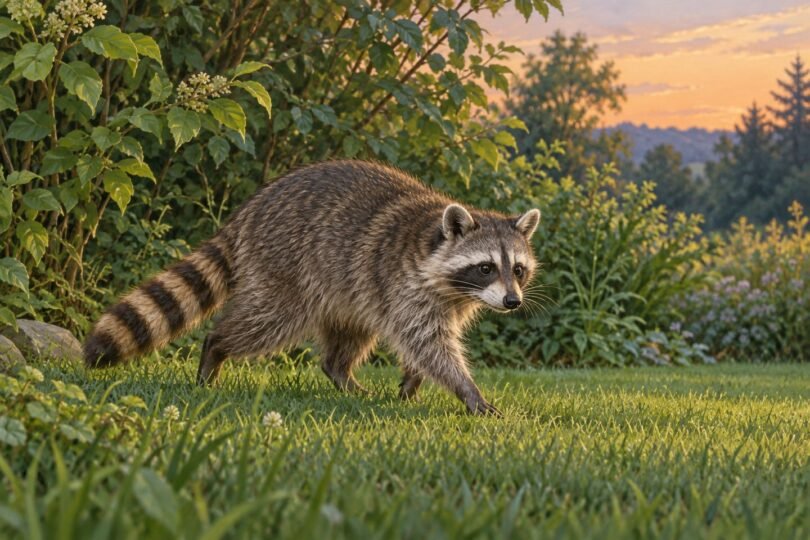

For a lawful, professionally planned live-capture operation, ripe banana, other sweet fruit, or marshmallows are commonly cited raccoon bait options. Fish and meat odors can also attract raccoons, but they may draw pets and other wildlife. No bait is reliably raccoon-only, and buying a stronger lure does not solve a food-access or denning problem.
Before setting any trap, confirm local wildlife rules and arrange what will happen to a captured animal. If the problem is a raccoon visiting garbage or pet food, removing that attraction is usually a better starting point. This guide focuses on humane nuisance-wildlife decisions rather than lethal trapping or guaranteed-catch product rankings.
Common raccoon bait types and their trade-offs
The Washington Department of Fish and Wildlife’s nuisance-trapping guidance lists several ordinary foods for raccoons, including ripe bananas, corn, jelly, marshmallows, and fish-flavored cat food. These are examples within that agency’s guidance, not permission to trap in another jurisdiction.
| Bait type | Why it is considered | Important drawback |
|---|---|---|
| Ripe fruit, such as banana or apple | Ordinary food mentioned in agency or university-extension guidance | Can attract other animals and spoil in warm conditions |
| Marshmallows or similar sweet food | A commonly listed alternative to fish or meat | Not selective enough to guarantee pets or other wildlife will stay away |
| Fish, meat or fish-flavored pet food | Strong-smelling options found in trapping guidance | Greater concern around roaming pets and other scavengers |
| Commercial lure | May be used by an experienced operator for a particular case | A brand name or strong odor does not establish effectiveness or humane handling |
A trap maker’s bait page may be useful for its equipment, but it is also marketing. Havahart favors sweet foods for raccoons; do not turn that into a claim that sweet bait cannot attract anything else. Choose the approach with a wildlife professional who understands the animals, neighborhood and rules involved.
Decide whether trapping is needed at all
A raccoon passing through a yard is not automatically a nuisance requiring removal. First identify the actual problem: repeated access to trash, entry into a building, damaged property, or a potential threat to people or pets. Note what happened and where, from a safe distance.
Florida Fish and Wildlife Conservation Commission guidance treats trapping and relocation as a last resort after other measures fail and an animal meets nuisance criteria. Removing one visitor while leaving an easy food source may simply create space for another.
Do not approach a den, corner an animal, or try to confirm its identity by getting close. If the species or cause of damage is uncertain, ask the local wildlife agency or a qualified wildlife-control operator for an assessment before purchasing equipment.
Remove the food reward
FWC’s attractant checklist covers garbage, pet food, fruit, bird feeders, grills and access to buildings. Make lids secure, bring pet food indoors, clean up fallen fruit and food scraps, and prevent access to stored feed. Coordinate with neighbors when the same animals move between properties.
A useful inspection is specific: which container can be opened, which feeder spills seed, or which gap leads into shelter? Fixing that point is more effective than spreading bait around the yard. Do not start feeding raccoons to keep them in one place or to make them easier to watch.
Building exclusion needs special care. Have a professional confirm that animals, including dependent young, are not being sealed inside before closing an entry point. A permanent repair should follow a humane removal or exclusion plan, not precede it.
Check capture, checking and release rules separately
Owning a cage trap does not establish that you may use it, transport the animal or release it wherever you choose. Ask the wildlife agency about the species, location, purpose of capture, allowable equipment, inspection frequency and permitted outcome.
In Florida, the nuisance-wildlife FAQ and furbearer trapping regulations address different circumstances. Raccoon transport and relocation can be restricted. Do not assume that a general statement about releasing native wildlife overrides a species-specific restriction, rabies alert or local rule. Confirm the plan with FWC for the actual situation.
Legal minimum inspection intervals are not a welfare target for every weather condition. Heat, cold, rain and distress can make a captured animal’s situation urgent. If you cannot provide the supervision and lawful response the situation requires, do not set a trap. Hiring appropriate help is preferable to improvising after an animal has been caught.
Choose a wildlife operator by the plan
Ask for a clear description of the work before agreeing to it. Useful questions include:
- How will you confirm which animal is causing the damage?
- Can attractant removal or exclusion resolve the problem?
- How will you check for dependent young?
- Who monitors equipment and responds to an animal in distress?
- What happens to the captured animal under local rules?
- What repairs, cleanup and follow-up are included?
Verify whatever licensing, permits or other credentials your jurisdiction actually requires. FWC specifically says it does not license nuisance-wildlife trappers, so appearing on its service list should not be described as an FWC license or a guarantee of workmanship.
Protect people and pets from contact
Keep children and pets away from raccoons, occupied traps and droppings. Do not reach into a cage or attempt to handle an animal because it seems calm. If an animal appears injured, unusually aggressive or neurologically abnormal, contact wildlife or animal-control professionals.
Raccoon feces can contain roundworm eggs that are invisible to the naked eye. The CDC’s raccoon-roundworm prevention guidance advises avoiding contact and taking precautions around latrines. A normal appearance does not establish that an animal is free of infection.
Keep people away from a suspected latrine until a cleanup plan is in place. Avoid sweeping or stirring contaminated dust, and do not assume household disinfectant makes it safe. An attic, substantial contamination, or uncertainty about cleanup is a good reason to obtain professional assistance.
After a bite, scratch, or possible saliva exposure, wash the affected area and seek prompt medical advice. A clinician or public-health department should assess rabies risk; do not wait for symptoms or attempt to catch the animal yourself. The CDC identifies raccoons among important wildlife rabies hosts in the United States.
Frequently asked questions
Is there a bait that attracts only raccoons?
No guaranteed species-selective food bait is established here. Sweet food may be chosen instead of meat in some situations, but pets and non-target wildlife still require protection.
Should I buy a large tub of commercial raccoon bait?
Not before confirming that trapping is lawful and appropriate. Ordinary foods already appear in agency guidance; a commercial lure is not a substitute for a complete humane plan.
Can I use poison or mothballs?
Do not use poison or mothballs to remove raccoons. Iowa State University Extension warns against fumigants and toxicants such as mothballs, which create risks to people, pets and livestock.
Can I drive the animal to a park?
Do not assume so. Transport and release rules vary, and relocation may be unlawful or harmful. Arrange the lawful outcome with the responsible wildlife authority before capture.
Image note: Original AI-generated editorial illustration; generic subjects shown, not branded product photography.