
The best engine for a go-kart is one that suits the chassis, drivetrain and intended use. For a compatible recreational kart, compare the DuroMax XP7HP recoil-start engine with the XP7HPE electric-start version. For a sanctioned racing class built around it, the Briggs & Stratton 206 belongs on a separate shortlist. It is expressly unsuitable for recreational fun-karts. These are feature-based buying choices, not a claim that any engine will bolt into your kart.
Start with the kart maker’s approved replacement specification. If it is unavailable, have a qualified kart technician check the complete installation before ordering. An engine’s displacement or shaft diameter alone does not establish safe fit, braking capacity or a suitable operating speed.
Go-kart engine choices at a glance
| Engine | Best fit to consider | Starting arrangement | Important limit |
|---|---|---|---|
| DuroMax XP7HP | Compatible recreational chassis; simpler starting hardware | Recoil start | 208cc; 3/4-inch horizontal shaft; fit still requires measurement |
| DuroMax XP7HPE | Compatible chassis where electric starting is useful | Electric start plus recoil backup | Adds battery installation, weight and length |
| Briggs & Stratton 206 | An approved 206 sanctioned-racing class | Recoil-start racing engine | Not for recreational fun-karts; class rules control the package |
DuroMax XP7HP: the simpler recreational option to compare

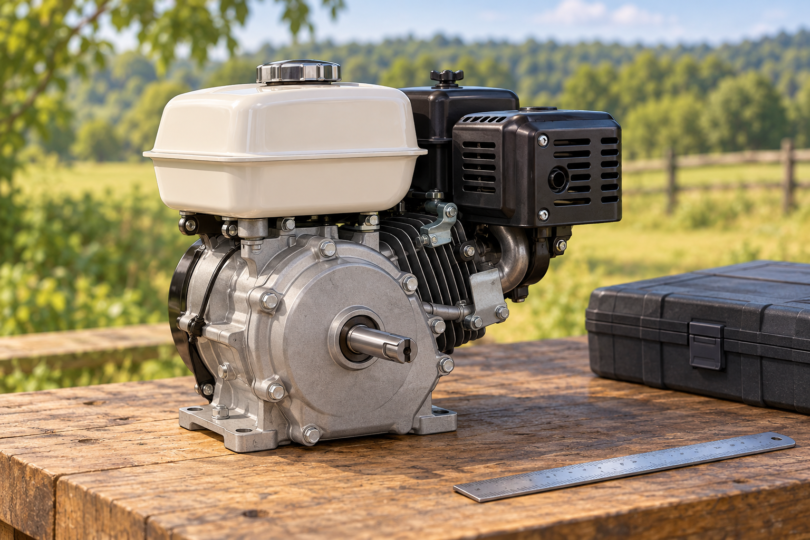
DuroMax XP7HP 208cc Recoil-Start Engine
As an Amazon Associate we earn from qualifying purchases.
DuroMax lists go-karts among the XP7HP’s applications. The current manufacturer specification describes a 208cc four-stroke OHV engine with recoil starting, a horizontal shaft and a one-gallon fuel tank. This is the choice to compare first when your compatible kart does not need an electric starter or a separate starting battery.
The listed shaft is ¾ inch in diameter and 2⅜ inches long, with a 3/16-inch-wide keyway and a drilled-and-tapped 5/16-24 UNF end. The manufacturer lists counterclockwise shaft rotation and a 4.175-inch shaft-center height above the base. The engine envelope is 14.6 by 13 by 13.4 inches and the listed weight is 32.6 pounds. Compare those figures with the exact mount, clutch and clearances on your kart.
Its main advantage here is the simpler pull-start arrangement. The tradeoff is that you must be able to reach and operate the recoil starter safely. Do not assume a clutch, torque converter, chain, mounting plate or controls are part of the engine purchase; confirm the actual package and price the rest of the installation separately.
DuroMax XP7HPE: the electric-start alternative

The XP7HPE offers key-switch electric starting with a recoil backup. DuroMax publishes the same 208cc displacement and ¾-inch by 2⅜-inch horizontal shaft dimensions as the XP7HP. Electric start is the reason to choose it; the shared displacement is not evidence of a performance upgrade.
The manufacturer lists the XP7HPE at 16.3 by 13 by 13.4 inches and 38 pounds, making it longer and heavier than the recoil-only option. The box contents list battery leads, not a battery. Budget for a suitable 12V battery and a secure, protected installation by a qualified technician, and check starter and wiring clearance as well as the engine mount.
Check the exact model and emissions label before purchase. DuroMax’s current pages identify both engines as 208cc and mark CARB certification and 50-state emissions as “No.” Retailer titles may still say “50 State Approved,” and the XP7HPE listing includes a conflicting 212cc detail. Confirm the shipped model, installation eligibility and applicable local requirements with the manufacturer or seller; do not use those inconsistent fields as a fit or emissions assurance.
Briggs & Stratton 206: only for the appropriate racing class
The Briggs & Stratton 206, model/type 124332 8201-01, is a purpose-built racing option with a factory-sealed short block and a digitally limited ignition. Its appeal is competing within a defined engine class, not replacing a utility engine in a backyard kart. Briggs explicitly excludes recreational fun-karts and use outside sanctioned racing.
Buy this route through a racing dealer after confirming the current rules with your track or sanctioning body. Have the dealer specify the correct class configuration, mount, clutch, exhaust and other required parts. Use the manufacturer’s 206 installation drawing to assess space; shared shaft size would not make it interchangeable with the DuroMax choices.
What to measure before buying an engine
- Mount and clearance: match the mounting-hole pattern, plate strength, shaft-center height and complete engine envelope. Include room for the fuel cap, air cleaner, muffler, starter and service access. A matching shaft diameter is only one check.
- Drivetrain: verify shaft diameter, usable length, keyway, end thread and rotation against the exact clutch or torque-converter specification. Have the technician check chain alignment, gearing and drive-component ratings; this guide does not establish a universal clutch match.
- Controls and stopping: require a reliable throttle return, accessible engine-stop control, effective brakes and intact guards over moving parts. Have the finished kart checked before it is driven. Do not remove the governor or alter its settings to chase a higher speed.
- Use and rider: keep within the kart maker’s operating limits, terrain guidance and rider requirements. For racing, confirm the class rules first. A larger engine is not automatically a better match for the driver or the chassis.
Fuel, exhaust and operating safety
Run a gasoline engine only outdoors in an open area. Carbon monoxide is poisonous and cannot be reliably detected by smell; never test-run the engine in a garage, shed or other enclosed space. Stop the engine and let it cool before refueling, keep fuel away from ignition sources and clean up spills before restarting. Follow the engine’s oil and fuel instructions before first use.
Keep guards installed, and keep hair, clothing and hands away from the engine and drivetrain. Wear the helmet, eye protection and other protective gear specified for the kart and activity. Inspect controls, brakes, fasteners and guards before riding, and stop if anything is loose, damaged or sticking. These checks matter regardless of the engine selected.
Frequently asked questions
Will a 208cc engine fit any go-kart?
No. Displacement does not establish mounting-hole spacing, output-shaft compatibility, clearance, chain alignment or safe chassis limits. Compare the exact drawings and component specifications before choosing an engine.
Is the electric-start DuroMax more powerful?
The manufacturer lists both the XP7HP and XP7HPE as 208cc engines with the same published maximum-torque figure. The practical comparison here is recoil-only simplicity versus electric starting, its battery installation, and the electric version’s greater size and weight.
Can I use a Briggs 206 in a recreational fun-kart?
No. Briggs expressly says its racing engines are not designed for recreational fun-karts or vehicles used outside sanctioned racing. Choose an engine approved for your recreational kart instead.
Does the engine include everything needed to drive the kart?
Do not assume so. DuroMax’s package lists do not include a clutch, torque converter or completed drivetrain; the electric version lists battery leads rather than a battery. Check what is included and have a qualified technician identify the remaining compatible parts.
How fast will one of these engines make my kart?
There is no defensible universal speed figure. The full vehicle setup and operating conditions matter, and the kart’s permitted limits still apply. Keep the manufacturer’s speed controls intact and choose a speed suited to the kart, terrain and driver.