
The best faucet cover for winter depends on the shape of your outdoor tap and how exposed the cover will be to knocks. For a straightforward foam cover, start with the Frost King FC1. For a cover with a protective plastic exterior, choose the Frost King FC2. These are two distinct construction choices for covering a wall-mounted faucet; neither is a promise that every pipe will stay above freezing.
This shortlist compares manufacturer descriptions, the exact product listings and documented winterization guidance. The recommendations are based on fit and construction, not hands-on freeze testing, star ratings or a lowest-price claim.
Best faucet covers for winter at a glance
| Cover | Best fit | Construction | Before buying |
|---|---|---|---|
| Frost King FC1, single cover | A simple foam option for a faucet that fits inside it | Oval expanded-polystyrene shell and foam gasket | Confirm space for the whole tap and a continuous seat against the wall |
| Frost King FC2, single dark-red cover | A location where the outside of the cover may get knocked | Rectangular plastic shell with a poly-foam inner cover | The harder shell does not establish a colder temperature rating |
1. Frost King FC1: best simple foam option
The FC1 is an oval foam protector for an outdoor faucet. The selected single-cover listing specifies a 5/8-inch expanded-polystyrene shell and a 3/4-inch foam gasket. We would choose it when a basic foam enclosure fits the faucet and there is no particular need for a harder exterior.
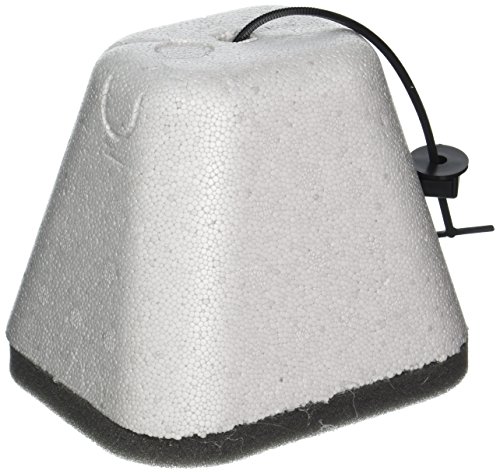
Frost King FC1 Outdoor Foam Faucet Cover, Oval, Single
As an Amazon Associate we earn from qualifying purchases.
The useful distinction from the FC2 is the exposed foam exterior. Frost King points shoppers toward its plastic cover when knocks or animals are a concern. That makes the FC1 our simpler construction choice, rather than a claim that it insulates better. Its listing describes it as reusable, but inspect the shell, gasket and fastener before returning an old cover to service.
Buy for fit first. A listing’s outside dimensions do not tell you how much usable space remains around a projecting handle or vacuum breaker. Ask the seller for internal clearance if your faucet is unusually long or bulky. For this recommendation, the linked option is one FC1; the listing also offers multipacks, so check the selected quantity before ordering.
2. Frost King FC2: best for a protective outer shell
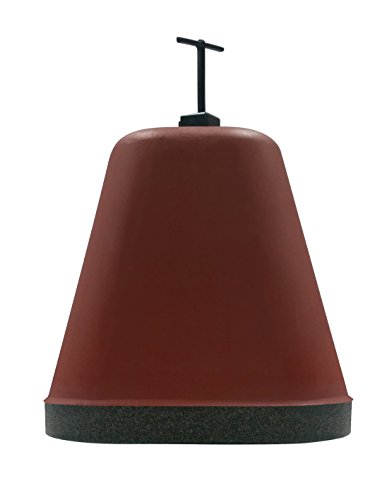
The FC2 adds a hard plastic outer shell over a poly-foam inner cover. Frost King identifies it as a rectangular protector and recommends the hard-shell design for added resistance to knocks or animals. This is the more sensible pick of these two when physical protection is the deciding factor.
Choose the FC2 for that exterior construction, not an assumed ability to survive a lower temperature. The cited product pages do not provide a comparative freeze test or a minimum-temperature guarantee for these two covers. A rigid cover also needs enough clearance around the faucet to sit correctly against the wall; do not force it over a fitting that prevents a proper seat.
The linked FC2 is the single dark-red version. Amazon’s generic unit field says “1 Ounce,” which is not useful as a package count; the selected option and title both identify a single cover. Confirm the model and selected pack when comparing offers, rather than relying on that generic field.
How to choose the right cover
Check the entire faucet shape. Look at the projection from the wall, the handle, any backflow-prevention fitting and the available wall surface. A cover that clears the spout but cannot enclose the handle is the wrong fit. Our buying advice is to test the fit before freezing weather and return an unsuitable cover rather than crush its insulation or alter the plumbing to make it fit.
Look for gaps at the wall. Uneven masonry, a projecting mounting block or adjacent pipes can complicate the fit. Follow the cover’s supplied fastening instructions and check the perimeter after fitting. If neither shape seats properly, look for a different size or design with verified internal measurements; a multipack of the wrong size is poor value.
Compare the cost per usable cover. Count the faucets that actually need the same size and check the selected package quantity. A harder shell may be worth paying for where it addresses a real durability concern. There is no reason to buy extra covers or choose a higher price solely because a listing uses stronger freeze-protection wording.
Winterize the faucet before covering it
University of Georgia Extension advises disconnecting outdoor hoses, shutting off the faucet’s water supply and draining the pipe. Where there is a separate outdoor shutoff, Portland Water Bureau likewise advises closing it and opening the outdoor spigot to drain remaining water. Identify your own faucet and valve arrangement before proceeding; if the shutoff or drainage method is unclear, have a plumber confirm it.
A frost-proof label does not mean an attached hose can be ignored. Woodford’s standard frost-proof faucet explanation shows that correct downward pitch and an unrestricted outlet allow the barrel to drain after shutoff. A hose or other restriction can trap water. Follow the instructions for your particular faucet; do not remove a required backflow device simply to squeeze on a cover.
Treat insulation as one part of winter preparation. Frost King’s winterization sequence places a protector after hose removal, shutoff and drainage. A cover is not a leak repair or a substitute for a working drainage arrangement. For a faucet that cannot be shut off or drained, or plumbing in an unheated space, get advice appropriate to that installation rather than assuming a thicker cover settles the problem.
Frequently asked questions
Which cover should I start with?
Start with the FC1 if its foam design fits your faucet. Choose the FC2 when a protective plastic exterior is useful. The fit against your wall and the condition of your plumbing matter more than treating one cover as a universal winner.
Does a plastic shell keep a faucet warmer than foam alone?
The manufacturer documents a tougher exterior for the FC2, but the sources here do not establish a temperature advantage over the FC1. Do not translate shell hardness into a freeze rating.
Can I leave the hose attached under a cover?
Disconnect the hose for winterization. Woodford specifically warns that a hose can stop a standard frost-proof faucet from draining. A cover does not correct trapped water.
Do I still need to turn off the outdoor water supply?
If your installation has a separate outdoor shutoff, follow its winterization instructions and drain the downstream section. Frost-proof faucets have their own drainage requirements. Ask a plumber if you cannot identify which arrangement you have.
Can I reuse last winter’s cover?
The FC1 listing describes seasonal reuse. Before reusing either design, check for damage and whether it still fits and fastens properly. Replace a cover whose shell, insulation or fastening system can no longer do that job.