
The best grips for BMX are the ones that fit your bars, give your hands enough room and stay secure through a ride. Start with length and flange preference, then choose a surface pattern. A grip that looks right but twists on the handlebar is not ready to ride.
For a long, flangeless ribbed grip, the ODI Longneck SLX is a sensible starting point. The ODI Longneck ST suits riders who prefer an inner flange and a shorter layout. Cult x Vans offers a distinctive waffle surface if you want something different from straight ribs. These are specific product comparisons based on published specifications, not claims of hands-on testing.
Quick choices for different preferences
- Long and flangeless: ODI Longneck SLX, black, 160 mm, one pair.
- Classic flanged design: ODI Longneck ST, bright blue, 143 mm, one pair.
- Waffle-pattern alternative: Cult x Vans A01VNB, black flangeless bicycle version, one pair. Confirm usable length with the seller if your cockpit clearance is tight.
Three BMX grips to consider
ODI Longneck SLX: for extra hand-positioning room
The Longneck SLX is ODI’s 160 mm flangeless Longneck. It uses the brand’s soft compound and collapsible mushroom-style ribs. The ends are open, and ODI includes two-color push-in plugs. The black version is model F01SXB, sold as a pair.

ODI Longneck SLX F01SXB BMX Grips, Black, 160 mm, Pair
As an Amazon Associate we earn from qualifying purchases.
The extra length is useful if you like to shift your hands along the grip, while the absence of a flange leaves the inner edge unobstructed. This is a good option to compare against a shorter stock grip before buying an entirely different handlebar.
What to check: Measure the straight section available on each side of your bar, especially if a brake lever already sits near the grip. The full grip needs appropriate support. Soft ribs are a feel preference, not a guarantee against hand fatigue, and there is no published service-life figure that predicts how long your pair will last.
ODI Longneck ST: for a traditional inner flange
The Longneck ST is the 143 mm version of ODI’s classic ribbed BMX grip. It has an inner flange and open ends, with push-in plugs included. The card below is specifically the bright-blue pair, model F01LSBU, rather than a different color or the longer SLX.

Choose the ST if you already know you like a flange as a tactile boundary at the inside of your hand. It also occupies less bar length than the 160 mm SLX. That difference can matter on a compact setup where the brake lever position is already comfortable.
What to check: Some riders find a flange gets in the way when moving their hands. Check lever clearance, too. If you want a completely clear inner edge, selecting a purpose-made flangeless grip is simpler than buying this version with the intention of cutting it immediately.
Cult x Vans: for a waffle-pattern surface
The Cult x Vans Waffle Grip applies Vans’ recognizable sole pattern to a bicycle grip. Cult says the grip is produced by ODI in the United States using ODI’s rubber compound. The black flangeless bicycle model linked here is A01VNB, with UPC 711484174353.

This is the choice to consider when you like a more geometric surface instead of parallel ribs. Texture preference is personal, particularly when switching between gloves and bare hands; a familiar brand pattern alone cannot tell you how it will feel during your riding.
What to check: Published length information is inconsistent: the linked Amazon listing describes 143 mm, while a bicycle retailer lists the same A01VNB model at 150 mm. Ask the seller to confirm length if every millimeter matters. Also avoid accidentally ordering a Vans motorcycle or classic-scooter grip: similar names and patterns do not establish bicycle compatibility.
Fit comes before color
Measure the grip area, not the stem clamp
A handlebar’s center clamp measurement is different from the diameter where a grip slides on. Use the specifications for your exact bar and grip. Also measure the available straight length and the position of your brake lever. A longer grip should not force your hand or lever into an awkward position.
Compare your current setup before replacing it. If its diameter feels comfortable but the rubber is worn, a similar shape may be the easiest choice. If your fingers struggle to wrap around it, look at the grip’s outside diameter as well as its length. None of these listings establishes a universal fit for every rider or children’s bike.
Slip-on versus lock-on
All three recommendations above are slip-on grips. They rely on a secure fit between the grip and handlebar. Lock-on designs use a clamp, which changes both installation and the hardware near your hand. Neither style excuses a loose fit.
If you choose a lock-on model instead, follow that model’s instructions. ODI’s v2.1 instructions, for example, require full installation onto the bar, secure-fit checks and the specified clamp torque. Do not copy one manufacturer’s torque setting to unrelated grips or assume every handlebar accepts it.
Installation and bar-end safety
Follow the grip maker’s installation procedure, and ask a bike shop for help if the grip will not fit securely. Start with clean bars and remove old residue as instructed. Avoid improvising with persistent lubricants that could leave the grip able to turn. Before riding, check both grips firmly for rotation or movement and verify that the brake lever operates without obstruction.
Keep both handlebar ends plugged. The Haro bicycle owner’s manual warns that loose or damaged grips can cause loss of control and that unplugged bars can cause serious injury. Bar-end caps are functional safety parts, not optional decoration. Replace missing or damaged caps before riding, and use plugs that fit your bar’s internal diameter.
Check again after a crash or a hard impact. A grip that was secure when installed can later tear, move or lose its plug. Do not hide an exposed bar end under torn rubber and assume it is protected.
Frequently asked questions
Are longer grips always better?
No. Longer grips provide more potential hand positions but take up more space. Your bar shape, lever placement and preferred hand position determine whether 160 mm is useful.
How often should BMX grips be replaced?
Use their condition rather than a fixed calendar. Replace grips that tear, slip, expose the bar or no longer provide a secure hold. Inspect the end plugs separately because they may need attention before the grip surface does.
Which pair is the easiest starting point?
Choose the Longneck SLX if you want a long flangeless ribbed design and have room for it. Choose the Longneck ST if you prefer a flange. Consider the Cult x Vans for its different texture after checking the exact bicycle model and dimensions.
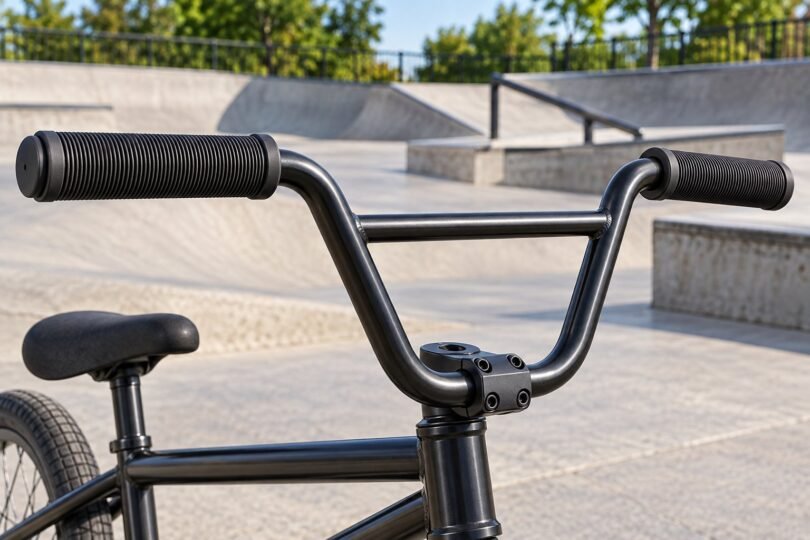
Image note: AI-generated generic editorial illustration; not a photograph of a named or tested product.