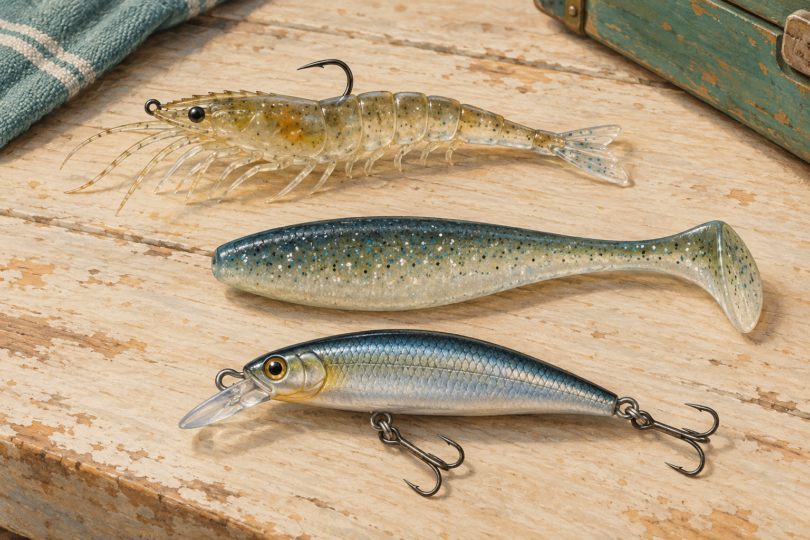

A useful starting snook-lure selection is a D.O.A. 3-inch Shrimp, a 4-inch Z-Man DieZel MinnowZ and a Rapala X-Rap Saltwater SXR10. They cover three different presentations: a weighted shrimp imitation, a soft paddle-tail rigged to suit the water, and a suspending hard bait.
We would choose among them by depth, current, vegetation and the size of the baitfish or shrimp you can actually see. Buying several colors of one lure is less useful if none can be presented at the right depth. No lure guarantees a catch, and the conditions at your fishing spot matter more than a universal ranking.
Research checked October 4, 2026. This is a manufacturer-specification buying guide, not a field test or a catch-rate comparison. We have not tested casting distance, hook strength or fish-catching performance. Check current fishing rules for the exact location before going.
Three lures to compare
| Lure | Verified configuration | Why shortlist it | Main limitation |
|---|---|---|---|
| D.O.A. 3-inch Shrimp | 1/4-ounce original shrimp; select the rigged package | A simple shrimp presentation without choosing a separate jighead | That fixed weight may not suit strong current or deeper water |
| Z-Man DieZel MinnowZ, 4-inch | Soft paddle-tail body | Flexible rigging choices for different water and cover | Requires a suitable hook or jighead, purchased and matched separately |
| Rapala X-Rap Saltwater SXR10 | 4 inches, 7/16 ounce; listed running depth 4–6 feet | A suspending hard-bait alternative | Exposed hooks and its diving depth can be unsuitable for shallow, snaggy areas |
1. D.O.A. 3-inch Shrimp: a straightforward first option
The original 3-inch D.O.A. Shrimp is listed at 1/4 ounce. The product selector distinguishes rigged packs from a package containing bodies, hooks and weights. Read that selector carefully so that a replacement-body purchase does not become an unexpected rigging project.
D.O.A.’s shrimp guidance suggests a restrained presentation, allowing current to move the lure with small rod movements. That is a useful starting technique to practice rather than automatically retrieving every shrimp imitation at high speed.
Why we would buy it: the rigged version is a simple way to add a different shape to a small lure selection. Why we might skip it: its fixed weight is a compromise. If it never reaches the intended depth, change the presentation or choose a configuration suited to the conditions instead of assuming another color solves the problem.
2. Z-Man DieZel MinnowZ: for choosing your own rig
The DieZel MinnowZ is offered in 4-, 5-, 6- and 7-inch sizes. The 4-inch version is our manageable starting comparison here. Its soft body has a belly hook slot and split dorsal fin intended to accommodate weedless rigging.
This is a body choice, not a complete recommendation for one universal jighead. Match hook size, keeper and weight to the selected body and the water you fish. A knowledgeable local tackle shop can help compare compatible rigs. Check that the lure sits straight and that the hook arrangement follows the rig manufacturer’s instructions.
Tradeoff: flexibility brings extra decisions and hardware costs. “Weedless” also does not mean snag-proof. Z-Man’s ElaZtech storage guidance says to keep these baits in their original packaging and separate from conventional soft plastics. Keep the packets organized instead of mixing loose bodies together.
3. Rapala X-Rap Saltwater SXR10: a suspending hard bait
The X-Rap Saltwater specification table lists SXR10 at 4 inches and 7/16 ounce, with a 4–6-foot running-depth range. Rapala describes this saltwater family as suspending and suitable for casting or trolling.
The exact model code matters. SXR08, SXR12 and SXR14 differ in dimensions and weight, while the ordinary X-Rap is a separate listing. Check the package rather than assuming every lure sold under a similar name has the specifications above.
Why we would compare it: it adds a hard-bait presentation without assembling a soft body and jighead. Tradeoff: the advertised running depth is a guide, not a promise under every retrieve, line choice and current. Exposed hooks require care around people, equipment and snag-prone cover. Keep pliers or a suitable dehooking tool accessible.
Choose the presentation before the color
Use this buying order to keep a small tackle box useful:
- Depth: decide where you need the lure to travel. A plug intended to dive several feet is an awkward first choice over much shallower obstructions.
- Current and control: choose a setup you can keep in the intended area without continually dragging bottom or losing track of it.
- Cover: consider the hook arrangement around grass and structure. Do not cast into places where retrieving a snag would require unsafe access.
- Profile: compare a shrimp shape and a baitfish shape before buying a large number of nearly identical colors.
- Color: pick a small starting selection you can distinguish in the conditions, then record what you used. We have no evidence for one color that is always best.
Check that the complete lure or rig falls within the rod’s stated lure-weight range. Include jigheads, hooks, leader material and likely replacement bodies when comparing cost. Inspect line and hardware after snags or contact with abrasive structure. Replace damaged parts rather than treating a premium brand name as proof that worn tackle remains reliable.
Check local rules and prepare for release
Florida anglers should use the FWC snook management page for the specific region. Seasons and slot limits vary by region, and additional location-specific rules can apply. Check the required license and permit, current closures and the rules for keeping a fish before casting. Outside Florida, consult the relevant local authority.
FWC’s fish-handling guidance recommends minimal handling and keeping fish in the water during release where possible. If a fish must be lifted, use wet hands and support its full weight horizontally. Prepare release tools beforehand, avoid holding a snook vertically by its jaw, and make the release prompt rather than prolonging it for photographs.
Frequently asked questions
What is the best single lure for a beginner?
The rigged D.O.A. Shrimp is our simplest starting purchase among these three because it reduces rigging decisions. Its usefulness still depends on depth and current. Ask locally whether that weight suits your intended spot.
Is a more expensive hard bait always better?
No. Compare the job it performs and the complete replacement cost. A lure that spends the session snagging or travelling at the wrong depth is a poor fit regardless of price.
Should I buy all the sizes?
Start with a small selection suited to your tackle and fishing location. Add another size only when it solves a specific presentation problem.
Bottom line: build around a shrimp, a riggable paddle-tail and a suitable hard bait. Learn their differences, check local rules, and keep fish handling part of the plan.
Image note: AI-generated generic lure illustration; shapes do not identify specific models, sizes, rigging instructions or fishing performance.