
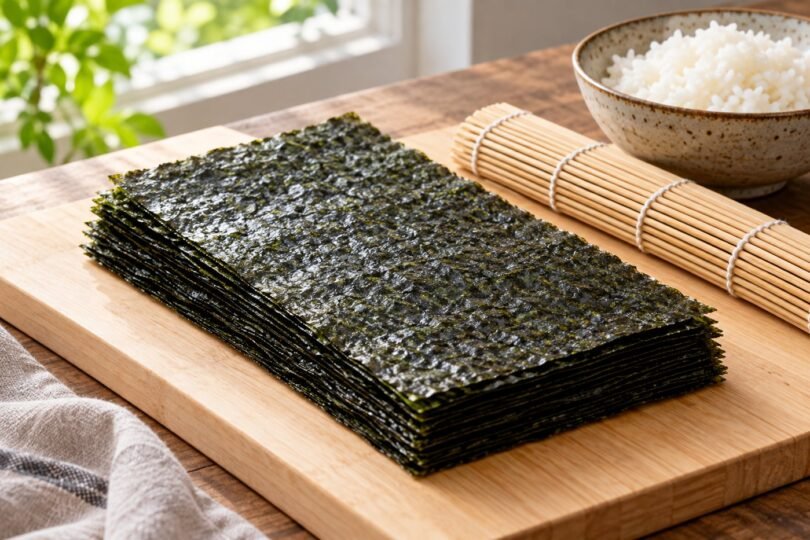

For an occasional sushi night, start with a small pack of full-size roasted nori such as Gimme’s nine-sheet Sushi Nori. If you make rolls regularly, CHOI’S 1 Daechun and ONE ORGANIC offer 50-full-sheet packages. The most important shopping detail is the format: full sushi sheets, half sheets and small seasoned snack sheets are different products, even when the package photographs look similar.
This shortlist focuses on sheets for wrapping rice, making hand rolls and cutting into strips. It does not rank brands by claimed health benefits or pretend that words such as gold and premium establish a universal quality score. Choose the sheet size and package you will actually use, then judge the texture in your own recipes.
Three nori sheet options for home cooking
| Exact product | Best reason to choose it | Pack detail to confirm |
|---|---|---|
| Gimme Organic Sushi Nori | A smaller pack for occasional rolls | 9 sheets, 0.81 ounce, one pack |
| CHOI’S 1 Daechun Gold Grade Sushi Nori | A larger resealable pack for repeated cooking | 50 full sheets, one pack |
| ONE ORGANIC roasted Sushi Nori | A plain organic option in a larger quantity | 50 full sheets, not 100 half sheets |
Gimme Organic Sushi Nori for a smaller starting pack
Gimme Organic Sushi Nori is the easiest quantity to recommend to someone who makes sushi occasionally. The current single-pack listing specifies nine thicker sheets in a 0.81-ounce package. Gimme’s product page likewise lists nine one-sheet servings and organic seaweed as the ingredient.
A smaller pack gives you fewer unused sheets to protect after opening. It also lets you find out whether you like the texture before committing to a large bag. Use these for rolls and hand rolls; do not substitute Gimme’s similarly branded roasted snack trays when a recipe calls for a full sheet.
Watch for: older sheet-count references and multipack listings. This recommendation is specifically the nine-sheet single pack. Gimme also discloses shared equipment that processes soy and sesame oil, so read the actual package if those details matter to your household.

Gimme Organic Sushi Nori Roasted Seaweed, 0.81 Ounce, 9 Sheets, 1 Pack
As an Amazon Associate we earn from qualifying purchases.
CHOI’S 1 Daechun for frequent sushi and gimbap nights
The CHOI’S 1 Daechun Gold Grade 50-full-sheet pack is a practical larger option for repeated cooking sessions. Its listing identifies Korean roasted seaweed in a resealable bag with a desiccant sachet. Daechun’s manufacturer exhibit at SIAL also describes a 50-sheet roasted product intended for sushi and gimbap, with zipper packaging.
The useful distinction is the amount of material available for practice and different cuts. You can use a full sheet for a larger roll, cut sheets to suit a hand-roll recipe or make narrower bands for rice portions. That flexibility is more useful than comparing this pack’s count with the number of little trays in a snack multipack.
Watch for: how often you cook. Fifty sheets leave more to store between meals. Choose this quantity because you have uses for it, rather than assuming a larger bag will always work out cheaper after waste.

ONE ORGANIC for plain roasted organic full sheets
ONE ORGANIC’s 50-full-sheet Sushi Nori is another larger-pack option. The maker lists organic roasted seaweed as its only ingredient and says it uses no added oil in the roasting process. It gives an approximate full-sheet size of 7.5 by 8.5 inches on its nori product page.
This is a useful fit when you want a plain sheet and prefer an organic-labeled product. Full sheets give you room to adjust the size for different recipes, although trimming them creates offcuts you should plan to use as toppings.
Watch for: the brand also sells a 100-half-sheet package. That larger printed count does not represent twice the full-sheet quantity. Keep the full-sheet designation in mind when comparing listings or reordering, and follow the storage instructions on the pack you receive.

Sushi nori and seaweed snacks are different formats
Plain roasted sushi nori is usually sold as large sheets that can wrap a layer of rice and fillings. Seasoned seaweed snacks are often smaller pieces, sometimes with added oils, salt or flavorings. Both can be enjoyable with rice, but a tiny snack sheet will not wrap the same roll as a full sushi sheet.
Look at the product name, dimensions, ingredients and serving format together. A photograph of sushi on the front is not enough to establish the size inside. Likewise, the word gim does not automatically mean a small seasoned snack: the Daechun option here is explicitly sold as full sheets for sushi and gimbap.
Just One Cookbook’s nori guide distinguishes plain, seasoned and shredded forms. That is a more useful shopping starting point than grouping every seaweed product together. Shredded nori works as a topping, while a seasoning blend or seaweed intended for rehydrating in soup solves a different cooking problem.
How to choose the right quantity and sheet size
Start with the recipe’s cut
Check whether your recipe calls for a full sheet, half sheet or narrow strip before buying. A large roll can need more wrapper than a small hand roll, and recipes differ in their rice and filling quantities. Do not assume one sheet always means one finished serving.
Full sheets offer the most flexibility because you can cut them smaller. Half sheets save preparation when that is the size you use consistently. Small snack rectangles are convenient for individual rice bites, but assembling them into a larger wrapper is awkward. For a first attempt, buy the format named by the recipe.
Compare equal amounts
Compare full-sheet equivalents before comparing totals. For example, a 50-full-sheet pack and a 100-half-sheet pack provide the same count of full-sheet equivalents. That arithmetic does not prove identical weight, thickness or dimensions, so also check the net weight and stated sheet size.
For snack packs, the count may mean trays or individual sealed packets rather than sheets. Keep those units separate. A small package that you finish while the sheets are in good condition may suit you better than an economical-looking bulk bag that stays open for months.
Treat grade names as product descriptions
Gold, silver, premium and restaurant quality can help identify a particular brand’s product, but they do not provide enough information to rank unrelated brands. Look for a clearly described format, readable ingredients and intact packaging. After opening, evaluate whether the sheet handles well in the dish you make, rather than expecting a marketing label to guarantee the result.
Keep the unused sheets dry
Nori is sensitive to humidity. Take out the sheets you need, then close the package rather than leaving it beside a steaming pot. Just One Cookbook recommends an airtight container or tightly sealed bag in a cool, dry place. A small pack is sensible if you do not use nori often.
Keep a supplied desiccant packet with the stored sheets as directed on the package, and keep it out of the food. Follow the brand’s instructions when they differ: ONE ORGANIC recommends refrigeration after opening for maximum freshness, while Daechun’s listing also suggests refrigeration for longer storage. Keep the package well sealed and avoid introducing moisture when taking sheets out.
Make rolling easier before blaming the nori
Gimme’s California-roll instructions use cooled sushi rice and place the rough side of the nori upward for spreading it. Follow your chosen recipe’s method and leave yourself enough wrapper to close around the filling. If your first roll tears, try a smaller amount of rice and filling before deciding the sheets are unsuitable.
Prepare the filling and working area before opening the bag. Use dry hands for handling unused sheets and moisten your hands only as needed for the rice. Cut spare pieces into garnish rather than forcing them into a full roll. For crisp rice bites, add the nori close to eating time instead of letting it sit against moist ingredients.
Read the package beyond the front label
Check ingredients and any shared-equipment or allergen notices for the exact variant. A plain sheet and a flavored snack from the same brand can have different labels. Gimme and ONE ORGANIC also publish California Proposition 65 notices on their product pages; review the current packaging if you need that information. Organic labeling should not be treated as a promise of allergen-free production or a medical benefit.
For most occasional cooks, the nine-sheet Gimme pack is a manageable place to begin. Choose either 50-full-sheet option when you have regular uses and a reliable way to keep the remainder dry. Correct format, sensible quantity and careful handling matter more than buying the biggest count.
Image note: AI-generated editorial illustration; not a photograph of the named product.


