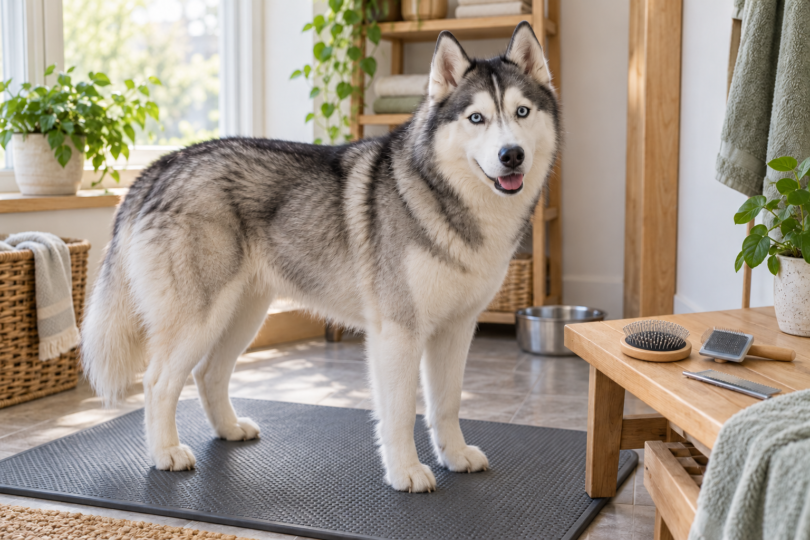

The best brushes for a husky usually form a small kit: a pin brush for routine grooming, a rake for loose undercoat, and a comb to check the areas the brush missed. A long-pin slicker can be useful for a particularly dense coat. The American Kennel Club’s Siberian Husky guidance recommends weekly brushing and attention to the shedding undercoat. These four named options cover different jobs; the comparison uses manufacturer specifications and grooming guidance, not hands-on testing or a promise to stop shedding.
Which tool fits the job?
- For loose undercoat: FURminator Grooming Rake, the rotating-metal-tooth model.
- For routine brushing: Andis Medium Pin Brush, item 68560.
- For a longer, very dense coat: Chris Christensen Big K Slicker, with size chosen for the area being groomed.
- For checking and finishing: Andis 7½-inch Steel Comb, item 68550.
1. FURminator Grooming Rake: for loose undercoat
The FURminator Grooming Rake has rotating metal teeth and a nonslip handle. The manufacturer specifically describes it for thick fur and dense double coats. This recommendation is for the rotating-pin grooming rake; check the exact tool pictured and named before ordering.
- Pros: Its stated undercoat role makes it a useful addition when a surface brush is leaving loose hair deeper in the coat.
- Cons: Repeated strokes over one patch can irritate skin. It is not a reason to pull through painful mats or keep working until no more hair comes out.
- Best fit: A husky with loose, accessible undercoat and healthy skin. Use gentle strokes in the direction of growth, following the tool’s instructions.

FURminator Grooming Rake P-92930, Gray, One Tool
As an Amazon Associate we earn from qualifying purchases.
2. Andis Medium Pin Brush: for regular coat maintenance
The Andis Medium Pin Brush, 68560, is a general grooming and finishing brush with medium-length pins. Andis lists an overall length of 8.5 inches and width of 2.5 inches. It is a practical starting option if you want a conventional pin brush and a manageable tool rather than a wide rake head.
- Pros: Designed for detangling, smoothing and routine grooming; the identified item number helps distinguish it from other Andis pin brushes.
- Cons: The maker does not state a numeric pin length on this page. Do not assume it will reach every part of an unusually dense or longer coat just because the surface looks tidy.
- Best fit: Routine sessions, followed by a careful comb check. A groomer can show you whether the pins reach the coat you actually need to work through.
3. Chris Christensen Big K Slicker: for long, dense coat areas
The Big K Slicker uses 27 mm stainless-steel pins, a flexible cushion and a long handle. Chris Christensen’s slicker guide specifically names Siberian huskies among the thick-coated breeds for which the more sparsely pinned Big K can make sense. That is a manufacturer recommendation, not proof that every husky needs a long-pin slicker.
- Pros: A clearly specified long-pin design, with Large, Medium and Baby head sizes for different areas.
- Cons: Length and reach make careful pressure especially important. A large head may be awkward in small areas, and a dog with a shorter or less dense coat may need a different brush.
- Best fit: Owners who have confirmed a long-pin slicker suits their dog’s coat and can use it gently. Choose the head size for control; the maker labels Large for the torso and Baby for hard-to-reach areas.
4. Andis 7½-inch Steel Comb: for a finishing check
The Andis Steel Comb, 68550, combines coarse and fine tooth spacing in a 7.5-inch tool. Its two sections make it a useful companion to a brush or rake. Work through accessible coat gently and investigate a snag rather than forcing the comb through it.
- Pros: Two tooth spacings in one straightforward tool for detangling and finishing work.
- Cons: This is a comb, so it does not replace every brush in a dense-coat grooming routine. Tooth spacing is described qualitatively, not as a verified millimeter measurement.
- Best fit: Checking the result after brushing and identifying areas that need more attention or professional help. Inspect teeth before use and replace a damaged comb.
Build a routine around the coat, not the amount of hair collected
A husky has an outer coat and an undercoat, and the AKC notes seasonal undercoat shedding. Start with the routine pin-brush and comb combination, then add a rake or appropriate slicker for the areas that need it. The aim is to remove loose coat while keeping the dog comfortable. Buying all four tools is unnecessary if a smaller kit already does the job.
The AKC’s double-coat guidance recommends a rake or steel comb for loose undercoat and a slicker in denser areas. Ask an experienced groomer to demonstrate working through your dog’s coat in sections if you are only brushing the surface. Heavy matting, pain or a coat you cannot work through comfortably calls for professional assessment.
Stop if you find sores, bruising or an irritated skin area. FURminator’s instructions advise veterinary care before resuming brushing when those problems are present. Use short, calm sessions according to your dog’s tolerance, and avoid repeatedly scraping one spot. No tool is guaranteed to prevent irritation.
Do not use shaving as the routine answer to shedding
The AKC advises against routine shaving of double-coated dogs because it removes both coat layers and can disrupt regrowth and protection. Medical procedures or severe matting can justify a different decision by a veterinarian or qualified groomer. Those exceptions do not make a summer shave a normal substitute for maintaining a husky’s coat.
Frequently asked questions
Is a pin brush enough for a husky?
It can be a useful starting tool, but assess the undercoat as well as the surface. The AKC’s husky guidance pairs a pin brush with a metal comb; denser areas or seasonal shedding may call for an additional suitable rake or slicker.
Should I choose Big G or Big K?
Chris Christensen distinguishes them by pin density and coat type. Its guide points to Big K for very thick coats including Siberian huskies, while emphasizing that individual coat texture matters. Have a groomer help choose if the brush drags or the dog is uncomfortable.
How often should I brush?
The AKC gives weekly brushing as a general starting point for Siberian huskies. Increase attention when loose undercoat builds up, while keeping sessions comfortable. Skin condition, coat density and the individual dog matter more than a rigid daily target.
Can these tools remove a tight mat safely at home?
Do not assume that a detangling label makes every mat suitable for home removal. If a tool catches, the dog is distressed or the mat is close to the skin, stop and consult a groomer. Skin lesions or pain warrant veterinary advice.