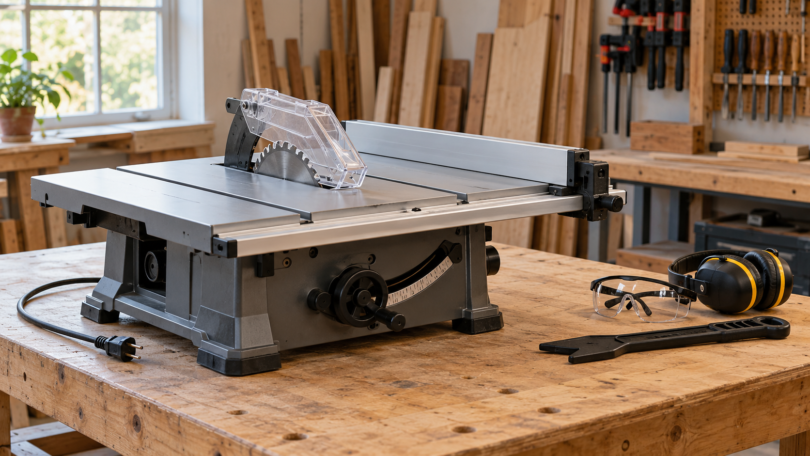

The best table saw for a beginner is one you can set up correctly, support securely and learn to use with its safeguards in place. Start by comparing the SawStop Compact Table Saw CTS-120A60 for its additional blade-contact safety system, the SKIL TS6307-00 for an included folding stand, and the DEWALT DWE7485 for a compact 8-1/4-inch-blade option.
Choose around your workspace and planned projects before chasing motor speed or maximum rip width. None of these saws makes an unfamiliar cut safe. Read the exact model’s manual and get practical instruction before operating it.
Three beginner table-saw options
| Saw | Reason to consider it | Blade and capacity | Stand and power |
|---|---|---|---|
| SawStop Compact CTS-120A60 | Additional blade-contact detection and braking | 10-inch blade; 24-1/2-inch right rip; 3-1/8-inch cut depth at 0° bevel | Optional stand; 120V, 60Hz, 15A |
| SKIL TS6307-00 | Integrated folding stand in the standard package | 10-inch blade; 25-1/2-inch right rip; 3-1/2-inch cut depth at 90° to the table | Included folding legs; 120V, 60Hz, 15A |
| DEWALT DWE7485 | Compact saw with a smaller blade | 8-1/4-inch blade; 24-1/2-inch right rip; 2-9/16-inch cut depth at 0° bevel | Separate stand or secure bench mounting; 15A, corded; match the nameplate supply |
These are manufacturer-listed capacities for the named models. Rip capacity describes a fence setting, not a promise that a beginner can manage a full sheet alone. Long or wide stock still needs suitable support and room around the saw.
1. SawStop Compact CTS-120A60: for an additional safety layer
The SawStop Compact Table Saw is the first option to compare if blade-contact mitigation is a buying priority. Its system is designed to detect skin contact and stop and retract the blade. The 68-pound saw also has a rack-and-pinion fence; its folding stand is an optional purchase.
Why consider it: you want that additional safety system in a portable saw. Main limits: serious injury is still possible, and the system does not replace guarding or correct workpiece control. The CTS does not accept dado stacks. Include the stand, compatible blades and replacement brake-cartridge costs in your budget.
Read the CTS owner’s manual before selecting blades or materials. Conductive material can activate the brake. If material or blade compatibility is uncertain, stop and consult SawStop; do not disable a safety system to get a cut done. The included guard, spreader, pawls and push stick remain important.
2. SKIL TS6307-00: for an included folding stand
The SKIL TS6307-00 is worth comparing if you need a saw and stand together. Its folding legs are integrated, and its rack-and-pinion fence provides a clearly identified adjustment system. The standard package includes a 24-tooth blade, blade guard, riving knife, anti-kickback pawl, push stick and miter gauge.
Why consider it: the included stand simplifies the equipment list for a small workspace. Main limits: it does not list a SawStop-style contact-detection system, and folding legs still need a stable, level position with all required locks secured. A dust-port elbow does not replace an appropriate dust-management setup.
Check the TS6307-00 manual for the blade’s arbor, body thickness and kerf requirements. A blade being labelled “10 inch” does not establish compatibility. If a later project needs dado cutting, use only the exact blade and insert arrangements the manual allows and get instruction for that operation.
3. DEWALT DWE7485: for a compact saw-only setup
The DEWALT DWE7485 offers rack-and-pinion fence rails, a metal roll-cage base and storage for its supplied accessories. Its smaller blade reduces the available cut depth compared with the two 10-inch saws here. The named saw-only package does not list a stand.
Why consider it: you have a suitable mounting arrangement and your projects fit its smaller blade. Main limits: the manual prohibits dado sets, multiple blades and shaping cutter heads. Its blade brake and power-loss reset are not a skin-contact detection system.
The DWE7485 instruction manual requires secure mounting on a stand, workbench or other rigid, stable support. Budget for a compatible stand if needed, and verify the precise stand model and included mounting hardware rather than assuming every DEWALT stand fits.
What to check before buying your first table saw
Guarding and workpiece control
For through cuts, use the model’s properly installed blade guard, riving knife or spreader, and anti-kickback devices as its manual specifies. Check that the saw includes these parts, especially when buying used. Missing or damaged safeguards are a reason to pause the purchase or use until the correct parts are supplied.
Learn when the manual requires a push stick, push block or other work helper. Keep your hands away from the blade, and never make freehand cuts. A good buying decision includes the instruction and accessories needed for your projects, not just the saw itself.
Blade compatibility
Confirm blade diameter, arbor fit, body thickness, kerf and the saw’s speed requirements. The blade and riving knife must be compatible, and SawStop adds brake-system requirements. Do not fit a larger blade or improvise spacers to make an unsuitable blade work. Stop the saw, wait for the blade to stop, and disconnect power before adjustments or blade changes.
Power and a stable workspace
Match the saw’s nameplate and manual to your electrical supply. Use only an extension cord of the type, gauge and length the manual permits; do not select one merely because the plug fits. Have a qualified electrician resolve an unsuitable outlet or uncertain circuit capacity.
Plan secure mounting, a level floor and support for the stock’s full length and width. Also budget for suitable eye and hearing protection, dust collection and respiratory protection appropriate to the exposure. A portable saw still needs a planned working area.
Frequently asked questions
Which of these would you compare first?
Start with the SawStop CTS if the additional contact-braking system is your priority. Compare the SKIL if an included stand matters most, and the DEWALT if its smaller blade meets your work and you already have suitable support. Include the whole setup cost in the comparison.
Does SawStop eliminate the risk of injury?
No. Its manual explicitly warns that serious injury remains possible. Guarding, correct accessories, workpiece support and trained operation are still necessary.
Can these saws use dado stacks?
The SawStop CTS and DEWALT DWE7485 cannot. The SKIL manual permits specified dado equipment and requires the correct setup. That capability is a separate learning task, not a reason to improvise a blade stack.
Is a stand included?
The SKIL TS6307-00 includes folding legs. The SawStop CTS stand is optional, and the DWE7485 saw-only package lists no stand. Check the exact package contents before comparing prices or buying a retailer bundle.