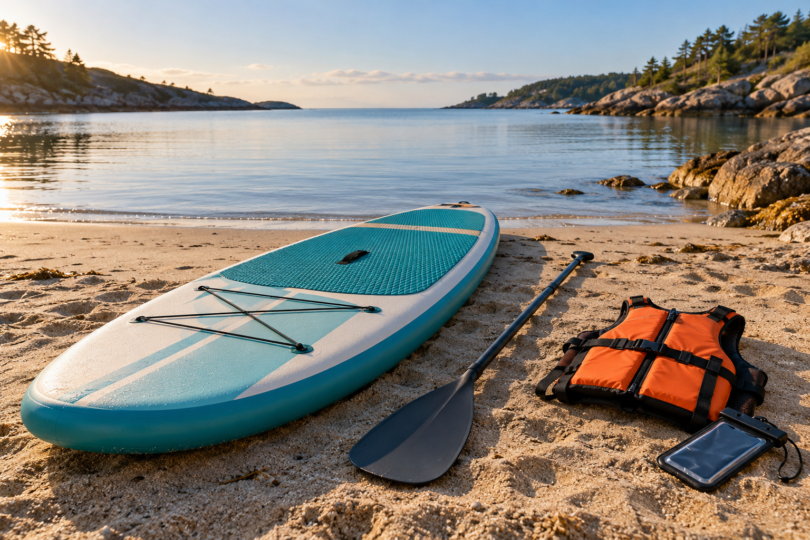

The best paddle board for ocean use depends on what “ocean” means for your trip. A sheltered coastal bay, a planned coastal tour and a surf break call for different boards and skills. Our shortlist starts with the Red Paddle Co Ride for sheltered recreation, the Voyager MSL 800 for touring, the Starboard Generation for a rigid crossover, and the Starboard Wedge for dedicated surf use.
No board makes offshore water safe. Avoid offshore winds, assess tides and currents, and choose conditions within your ability. Beginners should take a lesson and start in a sheltered location with appropriate supervision. The RNLI’s beginner guidance is a useful starting point for planning, flotation and communications.
These picks compare manufacturer specifications and intended uses. We have not performed on-water tests, and the use-case labels are editorial recommendations rather than a performance ranking. Current seller prices and stock have not been verified; check the exact board and package before buying.
Four paddle boards to compare
1. Red Paddle Co 10’6″ Ride MSL: best starting point for sheltered coastal recreation
The 10’6″ Ride MSL is an inflatable all-round board listed at 32 inches wide and 4.7 inches thick. Red describes it for beginner use and riders up to 100 kg, shown as 220 lb on its U.S. page. That rider guidance is not a guarantee of comfortable performance at the limit with extra cargo.
Why consider it: it is the most straightforward match here for someone prioritizing short, sheltered outings and a board that packs away. Trade-off: it is an all-round shape, so dedicated touring or surf buyers should compare the specialist choices below. Take a lesson or demo to establish whether its size suits your balance and remounting ability.
Before buying: select the exact color and paddle package. The maker offers a “No Paddle” configuration; a package name does not mean every accessory you need is included. Confirm the fin arrangement, pump, bag, leash and other contents with the seller. A supplied coiled leash still needs to suit the venue.
2. Red Paddle Co 14’0″ Voyager MSL 800: best inflatable option for planned coastal touring
The 14’0″ Voyager MSL 800 is a 30-inch-wide inflatable tourer with front and rear cargo areas, RSS stiffening battens and a configurable fin system. Red lists intermediate experience and a maximum weight of 150 kg; its Voyager range guide identifies that as maximum rider weight. Ask Red how your luggage and intended conditions affect suitability.
Why consider it: the touring layout gives experienced paddlers a specific alternative to a short recreational board. Trade-off: a 14-foot board requires room for handling, launching and turning. Its expedition branding does not remove the need for navigation, self-rescue skills or a conservative route. This is not an offshore recommendation for a novice.
Before buying: verify that the offer is the 14’0″ MSL 800 version, not a different Voyager length or construction. Confirm paddle, fin and leash contents, since package choices differ. The ability to carry equipment is useful only when the whole loaded setup remains appropriate for the paddler and trip.
3. Starboard Generation 12’6″ x 30″ Lite Tech: best rigid crossover to discuss with a specialist
The Generation hard-board range combines touring, racing and surfing design features. The specific 12’6″ x 30″ Lite Tech model has 272 liters of volume, and Starboard describes it for riders up to 110 kg. The narrower 28-inch model has a different volume and rider guideline; the inflatable Generation is also a separate product.
Why consider it: this is a candidate for a paddler who wants a rigid board for varied coastal outings and already has the skills to choose appropriate conditions. Trade-off: a crossover involves compromises, and a long board is not the same tool as a dedicated surf SUP. You also need suitable transport, storage and handling arrangements for a 12’6″ hard board.
Before buying: arrange a demo if possible, especially if you are moving from a wider recreational board. Confirm the Lite Tech construction, exact dimensions, fins and any separately sold carry accessories. The maker’s rider-weight recommendation should guide the discussion, not substitute for it.
4. Starboard Wedge 9’2″ x 32″ Limited Series: best specialist surf option on this shortlist
The Wedge 9’2″ x 32″ Limited Series is a rigid surf SUP with 160 liters of volume and a 2+1 fin layout. Starboard positions the range for surf progression, with a rounded pin tail and thinner rails. This shorter surf shape belongs in a different shopping category from a distance-touring board.
Why consider it: it is a focused option for a paddler learning or developing SUP surfing with qualified instruction. Trade-off: a manufacturer’s “beginner” surf description should not be read as permission for a first-time paddler to enter breaking waves. Starboard’s product page does not provide an unambiguous numeric rider-weight limit for this exact size; obtain sizing advice from Starboard or an authorized surf specialist before purchase.
Before buying: check that the offer is the 9’2″ Limited Series model. Older Wedge sizes and other constructions are not interchangeable. Match the board, fins and surf leash to your weight, skill and local break, and learn surf etiquette before joining other water users.
Choose the board for the actual outing
Sheltered nearshore paddling: prioritize a manageable board, comfortable balance and the ability to climb back on in your flotation and clothing. “Close to shore” can still include a hazardous current or a difficult landing. Choose an appropriate launch, an easy exit and a short route you can abandon.
Coastal touring: consider the complete loaded setup and the paddler’s ability to navigate, turn, remount and return as conditions change. Distance and cargo capacity are not safety ratings. A longer board does not give you a guaranteed way to paddle against wind or tide.
Surf: choose a board and leash for wave riding with local instruction. Breaking waves, other surfers and a moving board add hazards beyond flat-water balance. A touring board’s occasional-surf marketing does not establish that it is suitable for your break.
Read size and weight figures carefully
Length and width describe dimensions, while liters describe board volume. “Maximum rider weight,” “recommended rider weight” and “maximum total load” are different claims. Do not compare those numbers as if manufacturers all use the same definition. The listed rider limits above do not establish a separate cargo allowance. Tell the seller your weight, clothing, equipment and intended use, and ask about an appropriate operating margin rather than buying at a headline limit.
A demo can reveal whether you can stand comfortably, paddle on both sides, turn and remount. For an inflatable, follow that exact model’s inflation and temperature instructions. Inspect seams, valve and fin fittings before launch; for a rigid board, inspect damage and fittings. Do not borrow another board’s pressure setting or rely on “indestructible” marketing.
Flotation, leashes and a coastal safety plan
Wear suitable flotation. Use a properly fitted, U.S. Coast Guard-approved wearable life jacket appropriate for your activity and swimming ability. Check its label: the Coast Guard explains that some buoyancy aids and inflatable designs have swimmer or use restrictions. An impact vest is not automatically an approved life jacket. Swimming ability and practiced self-rescue matter even when you wear flotation.
In U.S. waters, the Coast Guard considers a SUP a vessel beyond the narrow limits of swimming, surfing or bathing areas, with applicable life-jacket carriage requirements. Check state and local rules and other required equipment for your venue. A legal carriage minimum is not a reason to leave your jacket strapped to the board.
Match the leash to the environment. The RNLI warns that tidal or flowing water can create entrapment hazards and recommends an appropriate quick-release waist system where that risk exists. A leg leash can snag and hold a paddler in the current. Get instruction in fitting and releasing the system; adding a waist belt does not make hazardous moving water suitable for a beginner.
For surf, use a surf-appropriate system selected with a qualified instructor. Starboard identifies its straight ankle/calf leash for surf use. Do not assume a coiled leash included with a touring package is the right choice for waves, or that one leash is suitable for every coast, estuary and river.
Plan for changing conditions. Check the local marine forecast, wind direction, tides, currents, swell and landing options. Avoid offshore winds even when the sea looks flat. Paddle with suitable company, tell someone your route and return time, and carry a means of calling for help on your person. Dress for immersion and water temperature; Red’s cold-water guidance explains why a strong swimmer can still be affected by cold shock.
Frequently asked questions
Can I use an inflatable paddle board in the ocean?
Some are designed for coastal uses, but suitability depends on the exact board, paddler, load and conditions. Start with sheltered water and qualified instruction. Construction type alone does not make a board suitable for offshore travel or rough surf.
Is a higher weight capacity always better?
No. Establish whether the figure refers to the rider or total load, then consider balance, handling and the intended conditions. More advertised capacity does not compensate for a board you cannot control or remount.
Does an included leash replace a life jacket?
No. They serve different purposes, and both require an appropriate choice for the paddler and environment. A leash can also create an entrapment hazard in moving water; select and practice with the correct system.
Which option should a first-time coastal paddler start with?
Start with a lesson or supervised rental in sheltered water. If the Ride’s size and rider guidance suit you after that experience, it is the recreational option to compare first. Choose a touring or surf model when your skills and intended use justify it.