For a replacement Promax 260 rim-brake shoe, use the complete part marking and the brake’s mounting requirements. A historical Promax catalog documents the closely named 260MW as a 60 mm angle-adjustable pad on its TX-125L linear-pull brake. That is a rim-brake application, not a disc-pad specification.
If your worn shoe is marked only “260,” check it against the complete model and actual hardware before ordering. We have not established a current genuine 260/260MW Amazon listing or a manufacturer-approved aftermarket cross-reference. This guide focuses on identifying that original pattern, sourcing a properly documented replacement and checking the details that a generic compatibility claim leaves out.
What the manufacturer documentation establishes
The Promax-branded page in this archived 2018 catalog lists 260MW pads at 60 mm on the TX-125L. The same page assigns other shoe models and lengths to other brakes. This gives a documented starting point for identification, but it does not say that every Promax brake takes the same shoe.
Look at the bicycle as well as the old pad. A rim brake presses elongated shoes against the wheel rim; a disc brake uses compact pads inside a caliper near the hub. If your bicycle has a disc brake, identify that caliper separately and use its specified pad. Do not select a disc pad from a search result merely because it includes “Promax” and “260.”
The details a replacement listing must establish
| Check | Useful evidence | What is insufficient |
|---|---|---|
| Complete identity | A clear 260/260MW marking and manufacturer part description | “Fits Promax” with no model |
| Shoe dimensions | Actual length and mounting geometry | A photo without scale |
| Mount and hardware | Matching post, washers and adjustment arrangement | A threaded post alone |
| Rim suitability | Brake-pad and rim manufacturer’s requirements | Rubber color or a “universal” label |
| Current supply | Exact current item and pack contents | An old catalog entry or a different 70 mm shoe |
Start with the original-part sourcing route
Show a local bicycle shop the old shoe, its washers and clear photographs of the brake. Ask for a genuine 260/260MW match or a replacement the shop can confirm against the brake and rim. Promax’s current contact page is another route for asking about the historical part and an appropriate supplier.
For an old-stock offer, request the complete model number, pad length, post type and a photograph of the supplied hardware. Check that the rubber and packaging are in suitable condition. A listing for a 70 mm Promax shoe is not automatically the same part as the documented 60 mm 260MW, and an old catalog does not prove current availability.
Why a larger threaded pad is not a verified replacement
Aftermarket rim shoes often have published dimensions and a familiar threaded mounting post. Those are useful screening details, but they do not establish that the shoe will sit correctly in your brake. A longer block may interfere with the frame or tire, extend beyond the usable brake track or change the clearance needed to remove the wheel.
For the documented 60 mm 260MW, ask the replacement supplier to address overall length, pad height, post position, post length and the complete spacer arrangement. Also confirm that the available adjustment can put the working surface squarely on the rim. Do not file a pad or improvise missing hardware to force an uncertain fit.
We have therefore not presented a larger aftermarket shoe as a 260MW replacement. If original-pattern stock cannot be sourced, a knowledgeable bicycle mechanic can compare the actual assembly with an appropriate alternative. That confirmation needs to cover the brake and rim together, rather than just the shoe’s brand or advertised riding discipline.
What to measure and photograph
- Brake model: photograph both arms and any model markings, plus the complete wheel area.
- Mounting type: distinguish a threaded post with a nut and washers from a smooth post clamped by the brake arm.
- Pad footprint: record the shoe length, height and where the post sits relative to each end.
- Hardware: keep track of the existing washers and spacers, but follow the new pad and brake instructions rather than blindly mixing hardware.
- Rim: identify its material, braking surface and any special pad requirements.
- Package quantity: one pair means two shoes, normally enough for one conventional rim brake. Front and rear replacement usually requires two pairs.
A photograph beside a ruler is helpful, but it does not show every critical detail. The shop may need the bicycle or removed assembly to check post length, washer arrangement and adjustment range. Keep the old parts until the correct replacement has been established.
Fit and condition matter as much as compound
The entire working surface must align with the rim’s brake track without touching the tire or dropping below the track. A shoe that can be tightened securely may still be positioned incorrectly. Follow the pad manufacturer’s direction markings and the brake’s specified adjustment and tightening procedure.
Inspect the rim, cables and brake movement as well. Worn or damaged rims, frayed cables, sticking arms and contaminated braking surfaces can cause problems that new pads will not solve. Do not apply lubricants to the pad or braking track to cure squealing. Stop riding if braking is unreliable and have the cause checked.
Use the installation instructions for the actual brake and replacement shoe. Have a mechanic perform or inspect the work if alignment or compatibility is uncertain. Before normal riding, verify operation in a safe, controlled area after the installation has been checked. The brake should release freely, and squeezing the lever should not move a secured shoe out of alignment.
Bottom line
Buy around the brake’s documented requirements, not the search phrase “Promax 260 brake pads.” Start by sourcing the documented original pattern, or obtain an application-specific alternative from a knowledgeable shop. When the original assembly remains uncertain, professional identification is the next useful step, not another guessed pad order.
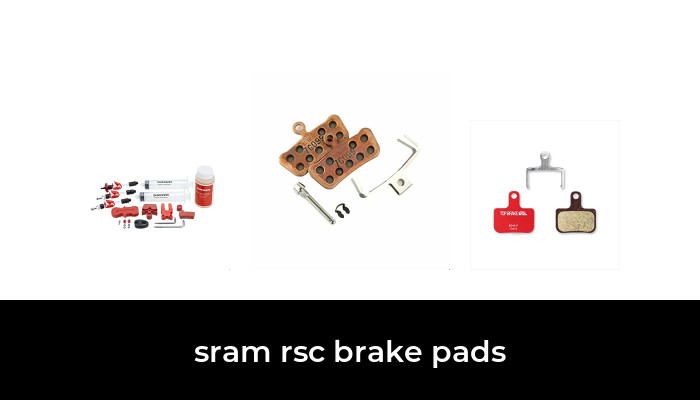
Image note: Illustrative threaded rim-brake pad styles. The collage does not establish that every pictured pad is a verified replacement for a Promax 260 or 260MW shoe.