
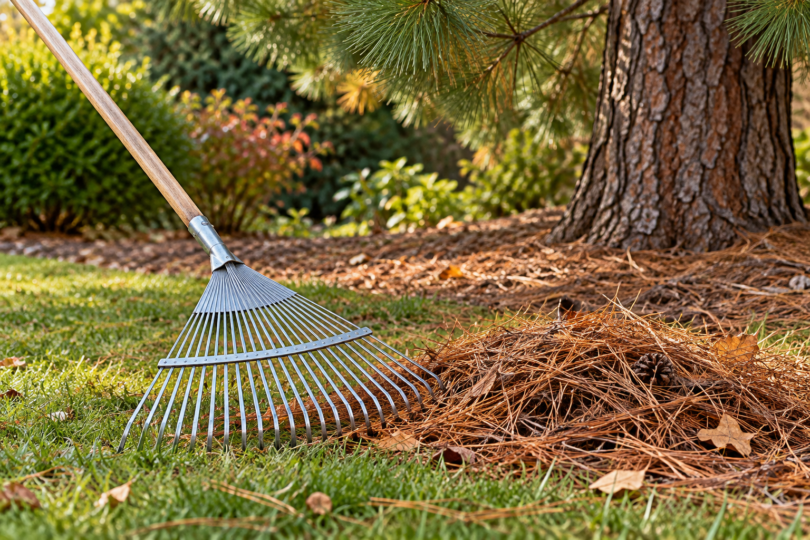

For substantial pine-needle cleanup in open areas, the 21-inch Groundskeeper II is our starting point. Its smaller 9-inch Shrub Rake suits tighter gaps, while the Corona RK 62060 offers a compact fan-style alternative for loose surface debris. The best choice depends on whether you need to pull through accumulated needles or make controlled passes around plantings.
These recommendations compare documented head widths, tine designs and intended uses. We have not field-tested the rakes or measured collection speed. Groundskeeper expressly lists pine straw among its applications; Corona describes its rake for leaves, clippings and garden debris, so its place here is a qualified option for loose needles rather than a proven specialist for dense mats.
Rakes for pine needles compared
| Rake | Head and tines | Useful role | Main limitation |
|---|---|---|---|
| Groundskeeper II Fullsize | 21 inches; 28 steel tines | Open areas and accumulated pine straw | Stiff tines call for care on delicate surfaces |
| Groundskeeper II Shrub Rake | 9 inches; 12 steel tines | Narrow beds and spot cleanup | Less coverage per pass; check handle version |
| Corona RK 62060 | 8 inches; 11 extra-wide tines | Loose debris around closely spaced plants | No maker claim of pine-needle mat performance |
Groundskeeper II Fullsize: our pick for open areas
The full-size Groundskeeper pairs a 21-inch head with 28 spring-steel tines and a 55-inch fiberglass handle. The maker lists pine straw among its intended materials. Its round, stiff tines are designed to engage debris without extra downward pressure, making this the most relevant starting point here for broad needle cleanup.
Use a light first pass to see how the tines interact with your lawn or bed. Because the maker also lists dethatching and moving mulch among its uses, do not assume the rake will leave every surface undisturbed. Reserve more assertive raking for areas where that disturbance is acceptable.
- Pros: Broadest head in this comparison; replacement tines and handles are available separately.
- Cons: The 21-inch head is awkward between closely spaced plants, and its digging action needs restraint around shallow roots or mulch you want to keep.
The linked Amazon choice is the yellow-handled, 21-inch model with a 55-inch handle, identified as GK102R in the listing. Check the selected version before ordering; the smaller shrub and mini heads are different products.

Groundskeeper II 21-inch Rake, 55-inch Yellow Handle
As an Amazon Associate we earn from qualifying purchases.
Groundskeeper II Shrub Rake: our pick for narrow gaps
The Shrub Rake reduces the head to 9 inches and 12 steel tines while retaining the fiberglass handle and spring-tine approach. Its manufacturer page also lists pine straw. That narrower format is the practical reason to choose it for targeted cleanup instead of trying to steer the full-size head through a crowded bed.
Groundskeeper lists both 55-inch and 36-inch handle versions for the shrub model. Choose the version for your reach and working position, and check the seller’s exact configuration. The smaller head changes access and coverage; it does not make stiff tines harmless to plants. See the Groundskeeper II Shrub Rake details.
- Pros: Narrower head for spot work; replaceable tines and handle support repair of the tool.
- Cons: Requires more passes over an open lawn than the 21-inch version; the two handle lengths need checking before purchase.
Corona RK 62060: an option for loose debris around plants
Corona’s fixed-tine shrub rake has an 8-inch head, 11 extra-wide tines and an aluminum handle with a vinyl grip sleeve. Its curved brace distributes pressure across the tines. We would consider it for small areas with loose needles mixed with leaves, where a narrow fan-shaped head is useful.
Corona describes general leaf, clipping and debris cleanup rather than a specific pine-needle test. Treat thick or tangled needle layers as a separate challenge. Although the maker promotes root-friendly use, the safe approach is to test light strokes and stop if the rake catches roots, bark or stems.
- Pros: Compact head and aluminum handle suit controlled work around closely spaced plantings.
- Cons: Covers little ground per pass; the available documentation does not establish how well it collects dense pine-needle mats.

How to choose and use a pine-needle rake
Match head width to the space. A 21-inch head is a reasonable choice where there is room for a full stroke; an 8- or 9-inch head is easier to position between obstacles. Measure the gaps you actually need to reach before choosing the wider tool.
Decide what you want to leave behind. If pine straw is serving as mulch, clear only the unwanted accumulation. In a delicate planted bed, work lightly or lift the last needles by hand instead of forcing tines into roots and stems. Any recommendation here still depends on the surface and your technique.
Start with short strokes and small piles. Groundskeeper’s stiff tines are intended to engage material without added downward pressure, so pressing hard is a poor default. If the tool repeatedly catches the ground, reduce the pressure, change the angle or use a less aggressive cleanup method.
Before buying, verify the head width, handle version and whether you are ordering a complete rake or a replacement part. Groundskeeper sells parts separately, and its shrub handle comes in two lengths. The product name alone is not enough to identify the configuration.
Frequently asked questions
Which rake should I choose for a large open area?
The Groundskeeper II Fullsize is our first option among these three because of its 21-inch head and documented pine-straw application. Its stiff tines still need a light trial pass on your particular surface.
Is a small shrub rake better for pine needles?
It is better suited to access between plants, not automatically better at collection. The Groundskeeper shrub model is 9 inches wide; the Corona RK 62060 is 8 inches. The tradeoff is less coverage in open areas.
Will these rakes leave mulch and plant roots untouched?
Do not rely on that guarantee. The Groundskeeper models can also move mulch and dethatch, and every rake’s effect depends on pressure and the surface. Use light strokes and stop if the tines snag living plants or roots.
Does the Groundskeeper shrub model have one handle length?
No. The manufacturer lists 55-inch and 36-inch handles for the 9-inch Shrub Rake. Confirm which version the seller is offering.
Have these rakes been tested side by side?
No. This is a comparison of documented construction and intended uses, with editorial guidance about fit. It does not claim measured pickup rates, labor savings or a hands-on winner.
Our recommendation
Choose the Groundskeeper II Fullsize for open-area pine-straw work, its 9-inch Shrub Rake for tighter access, or the Corona RK 62060 for compact, light debris cleanup. Start gently on the actual surface and let that response guide how much material you remove at once.


