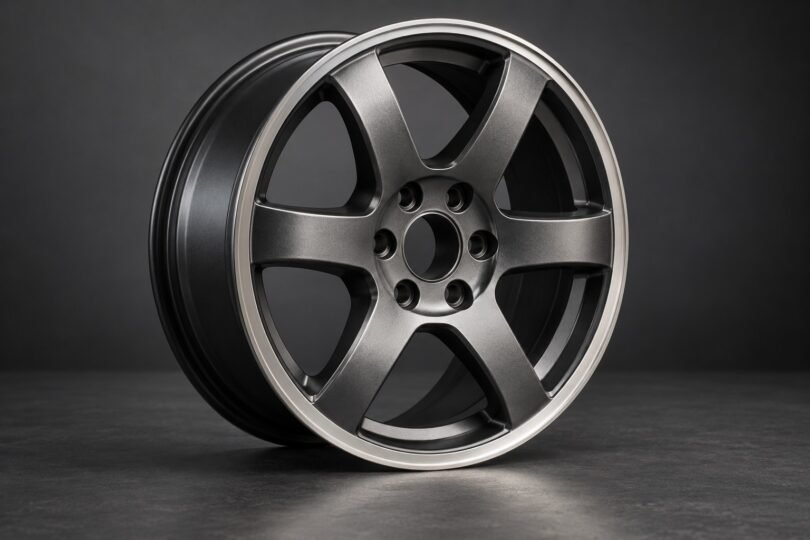

A 6×5.5 15×10 wheel has six lug holes on a 5.5-inch bolt circle, a nominal 15-inch rim diameter and a 10-inch width. The same bolt pattern is commonly written as 6×139.7 mm. Those numbers narrow the search, but they do not establish that a wheel fits your truck, SUV or custom build.
The next checks are offset, backspacing, center bore, wheel load rating, brake clearance and the correct lug-seat hardware. Have the wheel manufacturer or a qualified installer approve the exact wheel-and-vehicle combination before buying tires or mounting a set.
What the size actually tells you
- 6×5.5 or 6×139.7: six mounting holes arranged on a circle with a 139.7 mm diameter. It is not the same as 6×135.
- 15: the nominal diameter at the tire’s bead seat. The outside rim lip is larger, so measuring that lip is not a reliable way to identify nominal size.
- 10: the nominal width between the bead seats. Overall outside width includes the flanges and is wider.
A compatible tire must have the correct rim diameter and an approved rim-width range that includes 10 inches. The tire’s overall height, load capacity and vehicle suitability are separate checks. Do not assume every wide off-road tire is approved for this wheel width.
Two exact wheel specifications to compare
These examples show why the bolt pattern and headline size are only the beginning. They are product specifications to discuss with an installer, not universal vehicle recommendations.
Pro Comp Vintage Series 69, 1069-5183
Pro Comp’s exact 1069-5183 listing specifies a polished alloy wheel, 15×10 size, 6×5.5 bolt pattern, −47 mm offset and 3.625-inch backspacing. The listed maximum load is 2,500 pounds per wheel.
Its relatively negative offset is a reason to investigate outer clearance carefully. The product page reviewed does not provide a complete center-bore and lug-seat specification; obtain those details for this part number before purchase. A generic fitment icon on a catalog page is not approval for a particular vehicle.
The linked Amazon variant is one wheel, not a set of four.
Check the Pro Comp 1069-5183 polished 15×10, 6×139.7 mm, -47 mm offset wheel on Amazon (one wheel)
U.S. Wheel Smoothie Series 51, 51-5060N
U.S. Wheel’s 51-5060N specification identifies a raw steel 15×10 wheel with a 6×5.5 bolt pattern, 4.25-inch backspacing and a 107.95 mm hub bore. Its Series 51 technical table lists −32 mm offset and a 1,500-pound load rating for this exact SKU.
This is a different fitment and load specification from the Pro Comp example despite the matching diameter, width and bolt circle. Confirm the current specification directly before ordering, particularly the load rating and lug-seat requirements. The manufacturer says caps and lug nuts are not included; a photographed finish or accessory should not be assumed to be part of the raw-wheel package.
Before ordering, confirm the build and cancellation terms: U.S. Wheel warns that built orders involving nonstandard 10–14-inch widths, custom paint or special backspacing can be nonrefundable and noncancellable. Ask how that policy applies to this 10-inch-wide wheel.
Offset and backspacing: related, not interchangeable
As explained in the Wheel Pros specification guide, offset measures the mounting pad’s position relative to the wheel centerline, usually in millimeters. Backspacing measures from the mounting pad to the inner rim edge, usually in inches. Both affect where the wheel sits, but one number should not be substituted for the other.
For wheels of the same actual width and construction, a more negative offset generally moves the assembly outward. More backspacing places more of the wheel inward. However, different flange shapes and measurement conventions mean you should use the manufacturer’s published drawing or measurements rather than infer an exact backspacing from the nominal 10-inch width alone.
In the two examples, the offsets differ by 15 mm and the published backspacing figures also differ. That does not establish how either wheel will clear your fenders or suspension. Tire section width, steering movement, wheel profile and the existing vehicle geometry still have to be checked.
A 15-inch wheel needs a brake-clearance check
Matching lug holes does not ensure the barrel clears the brake caliper. Spoke shape, the position of the mounting pad and the brake package all matter. A wheel may slide over the studs yet contact the caliper when rotated.
The SEMA/Wheel & Tire Council aftermarket-wheel guidelines call for checking each wheel position before mounting tires. An installer should also assess the completed tire-and-wheel assembly for interference through the relevant steering and suspension movement, including room for balancing weights.
If clearance is inadequate, choose an approved wheel size and design. Do not grind brake parts, enlarge mounting holes or treat a spacer or adapter as an automatic fix for an incompatible wheel.
Center bore and lug nuts must match the application
The center bore must accommodate the vehicle’s hub, including any protruding hub or locking-hub assembly. A bore that is too small prevents the wheel from seating properly. A larger bore requires checking how the specific wheel is intended to locate on that hub.
Wheel Pros explains that hub-centric rings can help center a wheel during installation when the bore is larger than the hub. A ring does not alter the bolt circle, correct an unsuitable offset or raise a wheel’s load rating. Use one only when appropriate for the approved application.
Lug nuts need the correct thread diameter and pitch for the studs, plus the correct seat for the wheel. Conical, ball-seat and shank-and-washer hardware are not automatically interchangeable. Enough thread engagement, socket access and clearance inside closed-end nuts also matter. Wheel Pros’ lug-nut guidance stresses matching both the wheel and vehicle application.
Do not assume the original lug nuts are suitable because they screw onto the studs. Ask the wheel supplier to identify the required installation hardware for the exact SKU.
Check the load rating before choosing a style
A wheel’s load capacity is independent of its dimensions. The SEMA/WTC guidance uses half the vehicle’s heaviest gross axle weight rating as the wheel-load requirement for the ordinary two-wheels-per-axle arrangement it discusses. The installer must still verify suitability for the actual vehicle and intended use.
As an illustration, half of a 3,600-pound axle rating is 1,800 pounds. A wheel rated for 1,500 pounds would fail that screening check, even if all six studs line up. Do not divide total vehicle weight by four and assume every corner carries an equal share. Tires must meet their own requirements, and higher-rated wheels do not increase the vehicle’s payload or towing limits.
Order and installation checklist
- Provide the exact year, make, model, drivetrain, trim and brake package, plus any axle, brake or suspension changes.
- Record the manufacturer, full part number, diameter, width, bolt pattern, offset, backspacing, center bore and load rating.
- Confirm the tire manufacturer approves the intended tire on a 10-inch rim and that the assembly suits the vehicle.
- Ask what the price includes: a wheel or set, center caps, valves or TPMS parts, and compatible lug hardware.
- Check return terms before mounting; test-fit the bare wheels first.
- Have a qualified technician mount, balance and install the approved combination using the specified torque and follow-up check interval.
Wheel Pros recommends an experienced, certified installer. Obtain tightening values from the applicable vehicle and wheel instructions rather than a universal online figure. If vibration, rubbing or loose fasteners appear, stop using the vehicle until the cause is inspected.
The best 6×5.5 15×10 wheel is the one whose complete specification works with your vehicle. Establish that fit first; choose the finish afterward.