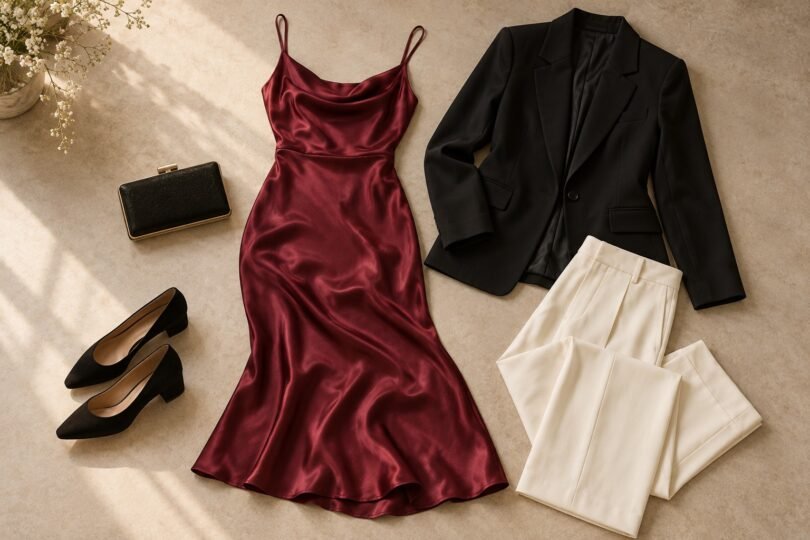

A good adult going-out outfit should suit the occasion, feel comfortable when you move and give you the coverage you want. If you are searching for sexy outfits, start with a silhouette or detail you enjoy: a satin finish, a fitted knit, an open neckline, a tailored jacket or a coordinated set. You can build a polished evening look around any of them.
The most useful purchase is usually a piece that works with shoes and layers you already own. The guide below focuses on adult eveningwear, with outfit combinations, specific clothing examples and practical checks for fit, fabric and care.
Choose an outfit around the evening you have planned
| Occasion | Outfit starting point | What to check |
|---|---|---|
| Dinner or a cocktail bar | Midi dress with a blazer and comfortable flats or low heels | Seated comfort, neckline stability and room for your outer layer |
| Dancing or a standing event | Stretch-knit dress or a top with wide-leg trousers | Arm movement, secure straps and a hem that clears your shoes |
| Smart-casual date or gathering | Simple fitted top, tailored trousers and a statement accessory | Venue dress code and how the waistband feels after sitting |
| Outdoor evening | Coordinated separates with a jacket you can keep on | Temperature changes, walking surfaces and usable pockets |
| Wedding or formal celebration | Dress, suit or dressy jumpsuit that follows the invitation | Requested formality, venue guidance and any host preferences |
These are starting points. A restaurant’s dress code or an event invitation is more useful than a product listing that claims one outfit suits every occasion.
Five outfit combinations that are easy to adapt
1. Satin midi dress with a tailored layer
A simple slip-style midi dress gives you a single-piece base. Add a blazer for more coverage or warmth, then choose shoes for the amount of walking involved. Keep the accessories restrained if you want the fabric’s sheen to be the main detail.
Check the dress in natural light and under indoor lighting. Confirm how the neckline and arm openings sit, whether the fabric is lined, and how much the hem moves when you take a full stride. Adjustable straps can change the neckline position, but they cannot correct a dress that is too tight elsewhere.
2. Fitted top with wide-leg trousers
This combination lets you choose different sizes for the top and bottom. It also makes it easier to change coverage: try a crew neck, square neck or V-neck according to your preference, then add a jacket if you want one.
Try the trousers with the shoes you plan to wear. A hem that works with heels may drag with flats. Check the rise and waistband while seated, and decide whether pockets are a requirement before buying.
3. Coordinated two-piece set
A matching top and skirt or trouser set can create a finished look with little styling. Separates also give you more ways to use each piece later. A longer top or high-rise bottom changes the amount of midriff coverage without changing the overall idea.
Read the package contents carefully. Some listings show several accessories that are sold separately, and some sets use one size for both pieces. If your usual top and bottom sizes differ, individually sold separates may be easier to fit.
4. Stretch-knit midi dress
A knit dress is worth considering when freedom of movement matters. Choose the neckline, sleeve length and hem length you would be happy wearing for the whole event. A simple jacket or cardigan can give you another option as the temperature changes.
Check the fabric while seated and gently stretched. Stretch does not guarantee opacity or a comfortable fit. Seams should stay in position, and the dress should let you sit and walk without repeatedly pulling it back into place.
5. Dressy jumpsuit with simple accessories
A jumpsuit is an alternative if you prefer trousers but want a one-piece outfit. Torso length matters as much as waist and hip measurements: sit down, raise your arms and check whether the shoulders or waistband pull.
Also try the fastening yourself. A design that takes considerable effort to put on can be inconvenient during a long evening. Check that the leg length works with your shoes before removing tags or arranging alterations.
Three clothing examples to compare
Use these as examples of different outfit components. Choose the size and color from each retailer’s current listing and check the return conditions for that exact selection.
Quince 100% Washable Silk Slip Dress
Quince lists a bias-cut midi dress made from 100% mulberry silk, with a satin finish and adjustable straps. It is a useful reference if you want a simple dress that can be paired with a separate jacket. The listed length is 46 inches in size small; that does not guarantee the same hem position on every wearer.
The care directions call for cold, gentle washing and line drying. “Washable” still involves specific care. Before choosing it, compare the size chart with your measurements and decide whether the neckline and thin straps meet your coverage preferences. See the Quince dress, size guide and care details.
SPANXsupersmooth PerfectFit Ponte Wide Leg Pant
This high-rise, pull-on trouser uses four-way-stretch ponte and includes compression through the upper section. The product page offers regular, petite and tall inseam choices. It has no zipper or buttons and no pockets at the hips.
It is an option for a fitted top-and-trouser outfit if you want a stretchy waistband and wide-leg shape. If you prefer a loose waistband or need hip pockets, choose a different trouser construction. Check the size and inseam separately rather than assuming your usual letter size will settle both. See the SPANX pant and fit options.
Everlane The Oversized Blazer in Stretch Linen
Everlane describes this as an oversized, fully lined blazer with a two-button front and flap pockets. Its shell is 55% linen, 43% viscose and 2% elastane; the lining is 98% rayon and 2% elastane. The lined construction makes it worth comparing with lighter, unlined layers when planning for a warm venue.
Use it as a reference for a structured layer over a dress or top. Check shoulder placement and sleeve length, and try reaching forward with your base layer underneath. An intentionally oversized cut does not automatically mean you should buy a larger size. See the Everlane blazer and garment details.
Read fabric descriptions beyond the style name
- Satin: Read the fiber label as well as the finish. A satin garment may be made from silk, polyester or another fiber, with different care instructions. Check lining and opacity for the color you want.
- Stretch knits: Look at both fiber composition and construction. Test whether the garment keeps its shape and stays comfortable when sitting; the presence of elastane alone cannot answer that.
- Woven separates: Check where the design allows movement, including waist shaping, pleats, vents and lining. A small amount of stretch does not remove the need for adequate room.
- Lace or mesh details: If you want an accent panel, confirm whether it has an opaque backing. Listing photos may show a separate layer that is not included.
- Embellishment: Inspect the placement of sequins, hardware or raised seams where a bag strap, jacket or chair could rub against them.
A fit and coverage check before you commit
- Measure against the specific chart. Use bust, waist and hip measurements, then check length or inseam. Distinguish body measurements from garment measurements.
- Try a normal range of movement. Sit, walk, reach and raise your arms. Check for pulling at seams, shifting necklines or a hem that restricts your stride.
- Use the layers you plan to wear. Check the complete outfit with your chosen base layers, jacket and shoes.
- Review the back and side views. Confirm that openings, slits and fastening positions give you the coverage you intended.
- Keep the full cost in view. Include any alterations, cleaning, separate lining or new shoes needed to make the outfit work.
- Check returns before alterations. Confirm the deadline, condition requirements and whether the selected item is final sale. Keep tags attached during the initial indoor fit check.
Common questions
Do I need a short or fitted dress for a going-out look?
No. A trouser suit, wide-leg jumpsuit, longer dress or coordinated set can all work. Choose the shape and coverage you enjoy, then adapt the fabric, shoes and accessories to the event.
Should I size down for a closer fit?
Use the garment’s measurements and intended fit. Sizing down can restrict movement or change how seams and openings sit. A closer-cut style in the correct size is often a better starting point than forcing a relaxed design to fit differently.
How do I make one outfit useful for several occasions?
Start with a simple base that works with at least two layers or shoe options you already own. A midi dress with a blazer and flats has a different feel from the same dress with evening accessories. Buy the core piece for its fit first.
What should I prioritize if I am ordering close to an event?
Choose a familiar size and silhouette, verify the delivery estimate and leave time for a fit check. If alterations or a replacement would be difficult to arrange, use an outfit you already know is comfortable.