
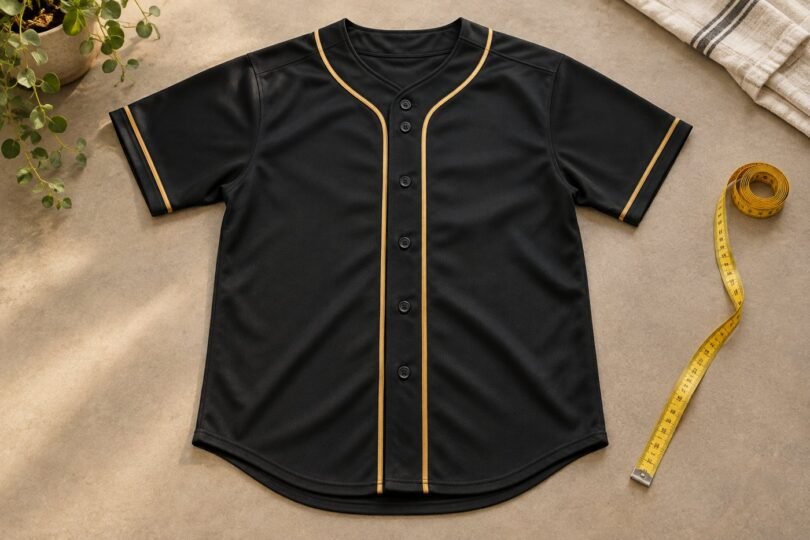

A Kobe baseball jersey can mean several different things: a Dodgers promotional tribute, a button-front fashion jersey honoring Kobe Bryant, or a basketball jersey that a seller has placed in a broad search category. Decide which one you want before comparing prices. Similar colors, an 8 or 24, and the word “Mamba” do not establish that two garments are the same product.
If you want a particular Dodgers giveaway, search by the event year and compare the actual garment with official event material. If you want a shirt to wear casually, focus on the stated manufacturer, design, fabric, measurements and return terms. Do not pay a collector’s premium for a listing whose identity and history remain unclear.
First identify the type of jersey
Dodgers event tribute
The Dodgers listed a Kobe Bryant jersey in their September 1, 2023 Lakers Night ticket package. A separate club announcement listed a Kobe Bryant jersey giveaway for August 25, 2024.
Those are historical promotions, not current redemption offers. A resale listing should identify the event it claims to come from. Ask for photographs of the front, back, sleeves, interior labels and any original packaging. Compare them with material for that specific event, rather than a picture from a different year.
A ticket or a seller’s account of attending the game can help explain provenance, but neither proves by itself that the pictured jersey is the item from that event. Keep the garment, its documentation and the seller’s claims distinct when deciding what you are willing to pay.
Casual tribute or fashion baseball jersey
This is the button-front, short-sleeve style many people mean when they search for a Kobe baseball jersey. Designs may combine a name, numbers, dates, embroidery or printed graphics. A product being described as a “tribute,” “legend” or “fan jersey” does not tell you who made it or whether it is licensed.
Request a clear manufacturer identity and item-specific photographs. If the seller claims official licensing, ask where that claim is documented for the exact garment. Do not treat a prominent name or familiar logo as evidence on its own. If the answer is unclear, do not describe the shirt to someone else as official or authentic.
For casual wear, the practical questions are whether the actual design is what you want, whether the measurements fit, and whether the construction and care requirements are acceptable. A large search-result ranking or a stitched number does not answer those questions.
Lakers basketball jersey
A sleeveless basketball jersey has a different cut and purpose from a baseball-style shirt. It should not be substituted if you specifically want short sleeves and a button front. Likewise, a team-only Lakers baseball shirt is not automatically a Kobe-specific design.
The numbers themselves have a genuine connection to Bryant’s career: NBA Communications records his change from No. 8 to No. 24 for the 2006–07 season. That history does not authenticate a particular garment bearing either number.
Why this guide does not name an Amazon jersey pick
We could not verify an exact Kobe-specific baseball-jersey listing, its selected size and color, and its product identity well enough to recommend a particular Amazon item. Several older linked products could not be confirmed; an available team-shirt listing was not the same subject. An unrelated jersey or display case would not solve the buying question.
Use the checks here to evaluate an actual offer, and ask the seller for the missing details before ordering. No current stock, official status or exact fit is implied for the older products that may still appear in search results.
Get the fit right with garment measurements
Start with a button-front shirt or baseball jersey that already fits the way you like. Lay it flat without stretching it, close the buttons and measure:
- Chest width: straight across from armpit to armpit.
- Body length: from the seller’s stated starting point to the hem. Check whether that means shoulder, collar seam or center back.
- Shoulder width: between shoulder seams, where the design has them.
- Sleeve length and opening: especially if you prefer a loose sleeve or plan to wear a layer underneath.
Compare like measurements with like. A 24-inch laid-flat chest width is not a 24-inch body chest circumference. Twice the flat width gives an approximate garment circumference, but the cut and construction still affect comfort. Do not use that conversion as a promise that the shirt will fit a particular body size.
If you plan to wear the jersey over a hoodie, measure a comfortably fitting layered garment rather than choosing a larger letter size at random. Check that the button front will close without pulling and that the shoulders allow normal movement. “Oversized,” “athletic” and “true to size” are descriptions, not a substitute for measurements.
Inspect fabric, graphics and construction
Ask for the fiber-content label and care instructions rather than inferring material from a glossy product image. A mesh fabric may feel different from a solid knit, and the amount of lining or backing behind decoration can affect comfort. If breathability matters, request a close-up that shows the actual fabric structure.
Look closely at button spacing, buttonholes, seams, piping and how the design aligns across the front opening. Check the spelling, number placement and both sides of the garment. A listing that shows only the back leaves important information missing.
Printed, sublimated, embroidered and sewn-on graphics can have different appearances and care needs. None of those methods proves licensing or collectible authenticity. Ask about the particular decoration rather than accepting “stitched jersey” as a complete description.
Used and collectible jerseys need different checks
For a used garment, request current photos of the collar, underarms, cuffs, buttons and hem. Ask about stains, odors, pulls, repairs and alterations. A shortened hem or changed side seam can make the label size misleading. Measurements of the actual item matter more than a copied size chart.
For a collectible purchase, decide what you are collecting: a specific event garment, an officially licensed retail piece, a signed item or something claimed to have been game-worn. These are different claims. A genuine signature would not by itself prove that a jersey was worn in a game; a retail authenticity label would not establish an autograph.
If a seller names an authentication service, verify the details through that service’s official channels and make sure its record describes the same object. Do not assume a certificate shown in a photograph covers every claim in the listing. For an expensive item, seek specialist authentication before committing.
Questions to settle before paying
- What is the exact manufacturer, model or event year?
- Are the photographs of the actual item, including all labels and both sides?
- Which size and color are selected, and what are the garment’s measurements?
- What is the fabric composition, and how should it be washed?
- Is any official, signed or game-worn claim documented for this exact item?
- What is the total delivered cost, and can the item be returned if it differs from the description?
Save the listing and order details for your own reference. Check the garment before removing tags or washing it, and follow its care label. A careful purchase starts with a clearly identified item and useful photographs, not with the largest list of jerseys or the most confident authenticity claim.
Image note: AI-generated editorial illustration; not a photograph of a named product or an installation/compatibility diagram.


