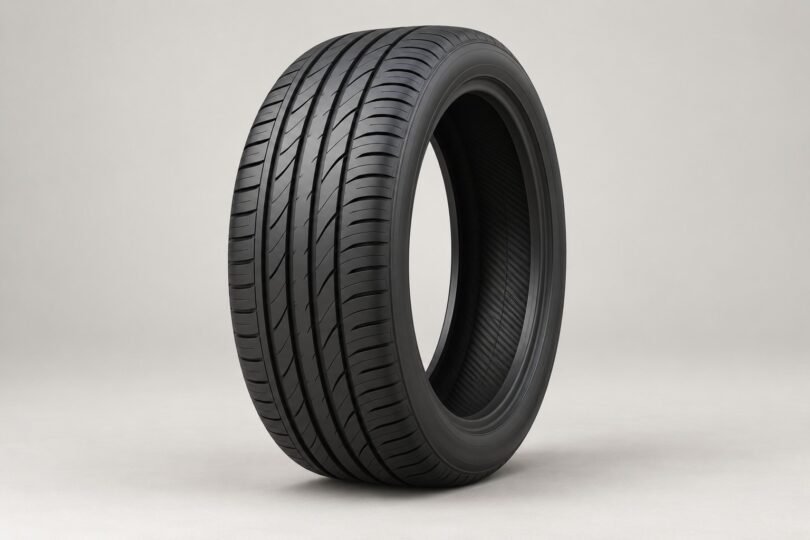

The right 255/40ZR20 tire starts with your vehicle’s required load rating, speed rating and wheel specification. This size is sold in different constructions and performance categories. A matching size search alone cannot tell you whether a tire is suitable for your car, its axle position or your climate.
For an all-season shortlist, the Continental ExtremeContact DWS06 Plus has a clearly documented 101Y XL specification and approved wheel-width range. For warm-weather use, Michelin’s Pilot Sport 4 S is another documented option in the exact size. Accelera Phi and Lexani LX-Twenty also have verified variants, but there are important buying and fitment qualifications below. These are specification-based options, not a ranking based on road tests.
Decode the complete size before comparing tires
- 255: nominal section width in millimeters.
- 40: sidewall height is nominally 40% of section width, not 40 millimeters.
- R: radial construction.
- 20: the wheel’s bead-seat diameter in inches, not the tire’s outside diameter.
- ZR: a high-speed designation within the size. You still need the separate service description, such as 101W, 101Y or (101Y).
Using the nominal dimensions, sidewall height is 102 mm and overall diameter is approximately 712 mm, or 28 inches. That calculation is a useful sense-check, not a substitute for a manufacturer’s measured specifications. A 255/35R20, 255/40R19 or 275/40R20 is a different size; do not accept one merely because a search result looks similar.
The load index and speed symbol describe separate limits. W corresponds to 168 mph and Y to 186 mph under the specified test conditions; these are not suggested driving speeds. A parenthesized Y service description identifies a different high-speed specification that should be confirmed with the manufacturer. Follow the vehicle requirement even if you never approach those speeds. Michelin explains load and speed ratings.
Four exact-size options and their important limits
Continental ExtremeContact DWS06 Plus: documented all-season fitment
Continental’s current specification page identifies 255/40ZR20 101Y XL, article number 15579500000. It lists an approved rim-width range of 8.5–10.0 inches, a 9-inch measuring rim, a 28-inch overall diameter and a maximum load of 1,819 pounds per tire. These details belong to this specific size, rather than another DWS06 Plus variant.
This is a practical starting point when you want an all-season performance tire and your vehicle permits this service description. The published 51 psi maximum inflation figure is a tire limit, not the pressure to put in every vehicle. Check the car’s inflation specification and ask the installer to confirm the exact article number. See Continental’s full specifications.
Michelin Pilot Sport 4 S: a summer-tire option
Michelin’s U.S. size selector lists 255/40ZR20 XL (101Y), MSPN 59321. Its manufacturer data book specifies an 8.5–10.0-inch rim-width range, measured on a 9-inch rim, with a 28-inch overall diameter. The size selector classifies this tire as summer. That makes seasonal suitability a deciding factor before any discussion of price or brand preference.
Choose it only if a summer tire suits the conditions in which the car will actually be driven and your installer confirms the application. A summer label does not become an all-season capability because the tire has a high speed rating. Also check the manufacturer part number: other Michelin products in this size carry different original-equipment markings and technologies. Check Michelin’s exact-size listings and the manufacturer data book, printed page 9.
Accelera Phi: verify the wheel application before ordering
The verified single-tire listing is 255/40ZR20 101Y XL, part 1200053175, ASIN B09DVV2FW3. It specifies one tire with no wheel. Accelera’s own size table confirms 101Y XL and a maximum load of 1,819 pounds, and describes the Phi as an all-season product.
The manufacturer table gives a single 9.0-inch rim-width figure, rather than an approved minimum-to-maximum range. Do not turn that into an assumed 8.5–10-inch approval by borrowing another brand’s specification. Have the installer obtain the approved range for your wheel. Amazon’s specification fields also contain inconsistent tread-depth and warranty details; those are not used here to promise tire life or rank performance. See Accelera’s Phi size table.
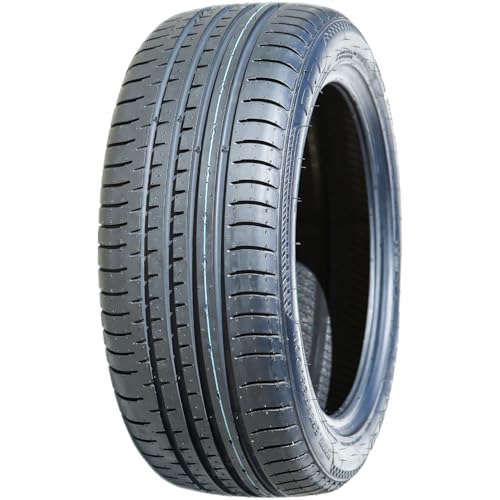
Accelera Phi 255/40ZR20 101Y XL, part 1200053175, one new tire, wheel not included
As an Amazon Associate we earn from qualifying purchases.
Lexani LX-Twenty: check the W speed rating carefully
Lexani identifies 255/40ZR20 101W XL, part LXST202040010. The direct Amazon listing, ASIN B01LZXZCX9, matches that part and size and specifies a one-count tire purchase; a wheel is not included. The manufacturer categorizes the LX-Twenty as all-season.
The key qualification is 101W: this is not an automatic replacement for a vehicle requiring 101Y or (101Y). Lexani’s downloadable table lists a 9J standard rim, not a complete approved-width range. Confirm the allowable wheel width before purchase. The retailer’s generic “universal fit” field does not establish vehicle compatibility, and its conflicting load-range field should not override the manufacturer’s XL specification. Check Lexani’s model specifications.

XL, run-flat and vehicle approval are different checks
XL means Extra Load; it does not mean run-flat. Reinforced tires carry their rated loads at specified pressures. Run-flat capability is a separate construction feature, with its own operating restrictions after pressure loss. Do not infer it from ZR, XL, a stiff-looking sidewall or an expensive brand. Continental distinguishes reinforced tires from run-flat tires.
If your car originally used run-flats, discuss any conversion with a qualified tire professional and consult the vehicle manufacturer. Wheel compatibility, the pressure-monitoring system and what happens after a puncture all matter. None of the purchase cards above should be treated as evidence of run-flat approval.
Likewise, a 20-inch wheel is not enough information. Its width must fall within the selected tire’s approved range; vehicle clearance and axle requirements must also be satisfied. A front tire size may differ from the rear on a staggered setup. For all-wheel-drive vehicles, have the installer check the manufacturer’s tire-matching requirements before replacing only one or two tires. See Michelin’s tire-matching guidance.
A short checklist for the quote and delivery
- Read the vehicle information first. Record the required front and rear sizes, load and speed requirements, cold pressures and any original-equipment restrictions from the placard and owner’s manual.
- Ask for a complete installed quote. Include the correct number of tires, mounting, balancing, valve or TPMS service, disposal and applicable taxes. A single-tire listing is not a four-tire set.
- Confirm the exact variant in writing. Model, manufacturer part number, size, service description, XL requirement and any run-flat or OE marking should agree.
- Inspect before mounting. Check the delivered sidewall and tire identification/date code against the order. Ask about a mismatch or visible damage before installation makes a return more complicated.
- Use the vehicle’s specified cold pressure. NHTSA recommends checking pressure monthly and explains why sidewall maximum pressure is not the vehicle’s recommended setting. Read NHTSA’s tire guidance.
Frequently asked questions
Are 255/40R20 and 255/40ZR20 interchangeable?
They share nominal dimensions, but the lettering alone cannot establish interchangeability. Compare the complete service description, load construction, run-flat requirement, wheel approval and vehicle instructions.
Does an all-season tire replace a dedicated winter tire?
Do not infer winter suitability from a broad product category or a retailer’s title. Check the exact tire’s winter markings and manufacturer guidance against your climate and route. No snow or ice performance ranking is established by the specifications in this guide. Compare summer, winter and all-season categories.
Which should I shortlist first?
Start with the tires that meet every vehicle requirement. Among those, compare the Continental for all-season use and the Michelin for summer use. Consider the Accelera or Lexani only after resolving their wheel-width checks and, for the Lexani, confirming that W satisfies the required speed rating.