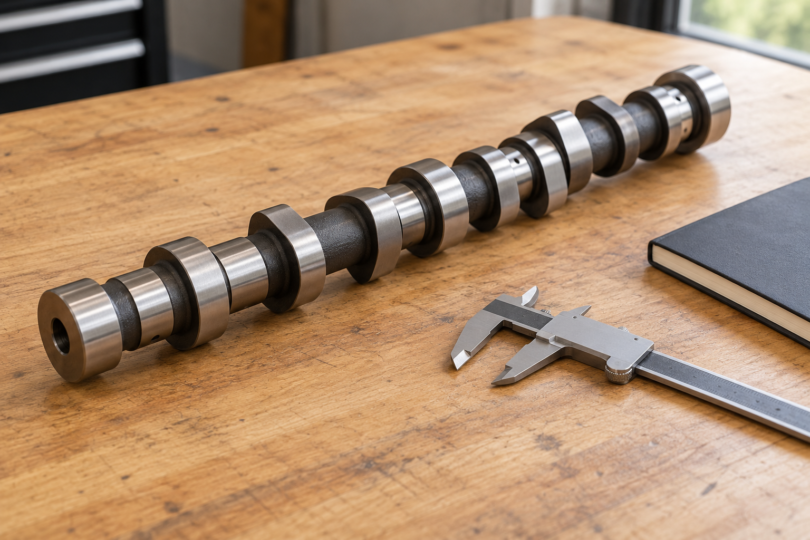

The best cam for a 350 with Vortec heads depends on the block, lifters and measured valve clearance. Two useful starting points are the COMP Cams XE256H 12-234-2 for an existing hydraulic flat-tappet combination and the XR258HR 08-500-8 for a compatible factory hydraulic-roller combination. Neither is a guaranteed bolt-in upgrade for untouched Vortec heads. Have an engine builder confirm the complete combination before ordering.
This comparison uses manufacturer specifications and installation guidance. It is a buying shortlist, with no claimed hands-on testing or promised horsepower increase.
Identify the engine before choosing a cam
This guide concerns a traditional Gen I Chevrolet 350 with small-block Vortec heads, including the iron 10239906 and 12558062 castings often shortened to “906” and “062.” LS-family truck engines also appear in Vortec searches, but their camshafts are a different architecture. Gen II LT1/LT4 applications also need their own cam selection. A shared displacement or the word Vortec does not establish interchangeability.
Check the actual block and lifter hardware, especially on a rebuilt or swapped engine. COMP distinguishes its early “12” cam cores from the stepped-nose “08” factory-roller design, which works with the corresponding retention plate and roller-lifter locating hardware. A roller conversion in an early block needs a coordinated retrofit system; installing a flat-tappet cam in a factory-roller block likewise requires changes to the cam, lifters, pushrods and timing set.
Two camshafts to discuss with your engine builder
| Exact camshaft | Manufacturer specifications | Potential fit | Main limitation |
|---|---|---|---|
| COMP Cams 12-234-2, XE256H | Hydraulic flat tappet; 212/218 degrees at .050 inch; .447/.454-inch valve lift with 1.5:1 rockers; 110-degree lobe separation; 1,000–5,200 rpm | A carbureted Gen I 350 already configured for flat tappets | Needs matched new lifters, suitable springs and measured clearance |
| COMP Cams 08-500-8, XR258HR | Hydraulic roller; 206/212 degrees at .050 inch; .480/.488-inch valve lift with 1.5:1 rockers; 112-degree lobe separation; 1,000–5,000 rpm | A Gen I 350 with the compatible factory-roller arrangement | Lift exceeds GM’s .475-inch machining threshold for head assembly 12691728 |
COMP Cams 12-234-2: a flat-tappet starting point
The 12-234-2 manufacturer page identifies a hydraulic flat-tappet cam for the Chevrolet 262–400 small-block family. It is worth discussing for a carbureted 350 build that is staying with flat tappets. Its lower listed lift than the roller option makes the head-clearance discussion different, but does not certify stock springs, retainers or guides as suitable.
Budget for the correct new flat-tappet lifters and the specified lubrication and break-in procedure. COMP’s installation instructions prohibit reusing old flat-tappet lifters with a new cam. If your engine already uses factory roller lifters, choose the matching roller path unless your builder has deliberately planned a complete conversion.
COMP Cams 08-500-8: a factory-roller starting point
The 08-500-8 manufacturer page specifies Chevrolet 305–350 engines with the O.E. roller arrangement. This is the factory-roller option to investigate first within this pair. Its XR258HR grind name alone is insufficient when shopping: verify the full 08-500-8 part number and the block’s timing and retention arrangement.
Its .480/.488-inch lift makes untouched Vortec heads a particular concern. Chevrolet says head assembly 12691728 requires guide-boss machining and seal-to-retainer clearance checks above .475 inch. COMP separately flags possible retainer-to-guide interference above .470 inch on production Vortec applications. Treat the required head work as part of the build cost, not an optional upgrade after installation.
What to verify before buying
Springs, retainers and guides
Ask the builder to document spring installed height, seat and open pressure, coil-bind clearance, retainer-to-seal and retainer-to-guide clearance at full lift. A spring advertised to accommodate a particular lift does not establish the clearance of the assembled head. The COMP installation booklet calls for .060 inch of additional retainer-to-seal space beyond total valve lift and checking spring pressure at the actual installed height.
Have the machine shop approve the spring outside diameter, spring pocket, retainers, locks, seals and rocker studs together. The Chevrolet catalog lists a 1.280-inch spring seat for head assembly 12691728. A generic small-block spring kit or a cam manufacturer’s suggested component list is a starting point for checking those measurements, not proof that machining is unnecessary.
Pistons and rocker geometry
Check piston-to-valve clearance after the cam is degreed, using the intended head gasket and valvetrain geometry. COMP’s linked booklet specifies at least .100 inch on the intake and .125 inch on the exhaust, with an additional .030 inch for aluminum connecting rods. Have the builder apply the current instructions for the actual components; a cam’s advertised lift alone cannot answer this clearance question.
The table’s lift figures assume 1.5:1 rockers. Changing the ratio changes valve lift and requires clearance checks again, including pushrod clearance and rocker-to-retainer clearance. Match the rocker alignment system to the heads: Chevrolet warns against combining its pushrod guideplates with self-aligning rockers. Pushrod length and geometry also need verification after component or machining changes.
Vehicle use, electronics and emissions
Give the cam supplier the engine details, compression ratio, intake and exhaust, transmission, converter, rear gearing, vehicle weight and intended use. COMP’s selection guidance emphasizes the whole vehicle rather than engine-family fit alone. For an injected engine, have the builder and tuner confirm the fuel and ignition calibration requirements for that specific combination; the “Computer Controlled” product name is not a promise that every factory calibration will work unchanged.
Confirm emissions eligibility for the exact part and vehicle before buying for road use. COMP’s emissions guide limits approval to the applications covered by the relevant designation or Executive Order. This shortlist does not establish street-use approval for either cam in your vehicle. Keep emissions equipment and required inspections in the plan.
Buy the complete combination
Compare the full installed cost: cam, appropriate lifters, springs and hardware, timing components, machining, gaskets, fluids, setup and any calibration work. The manufacturer lists CL, SK and K kits separately from these bare camshaft part numbers. Have the installer verify distributor-gear compatibility and cam retention before assembly. Check the exact kit contents with the seller and your builder before ordering; a shared grind name does not make every package equivalent.
Frequently asked questions
Which cam should I buy for completely stock Vortec heads?
Do not buy either choice on the assumption that stock heads guarantee clearance. First get the spring and guide measurements and a confirmed parts plan. If machining or spring changes are outside your budget, ask the cam supplier for a combination specifically approved for your measured heads.
Can I use a hydraulic-roller cam with flat-tappet lifters?
No. Match the cam to its specified lifter type and block hardware. A roller conversion requires the appropriate lifters, retention and supporting parts, rather than a camshaft-only substitution.
Can I add 1.6:1 rockers later?
Only after the builder rechecks the resulting lift and geometry. Higher-ratio rockers are not a way to bypass the head’s spring, guide, seal or piston-clearance limits.
How much horsepower will either cam add?
There is no defensible universal gain for an unspecified 350. Judge a proposed combination against your goals and use test results only when the engine configuration matches closely enough to make the comparison meaningful.
Can I choose a cam by idle sound alone?
Idle sound is not enough to select the parts. Start with the block and heads, then the vehicle’s working rpm range, drivetrain, fuel system and intended use. Have a qualified engine builder finalize the choice and carry out the setup.