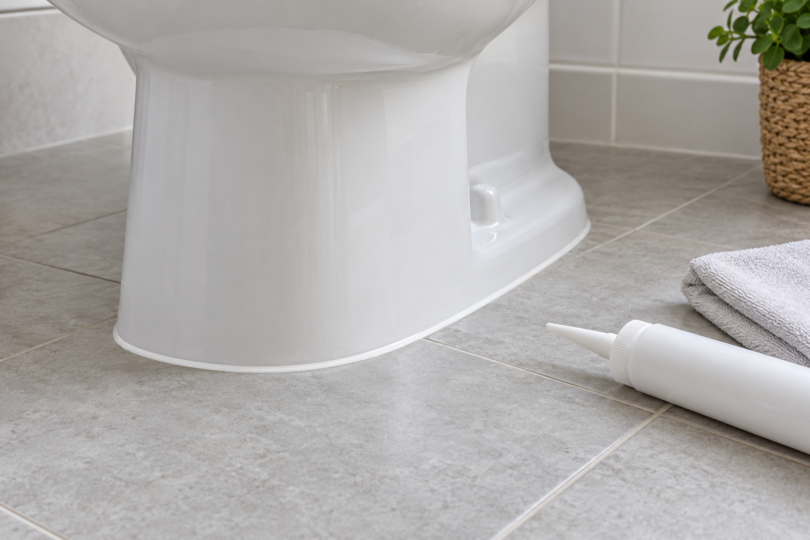

For a toilet-base finishing joint, choose a bathroom silicone sealant that suits both the toilet and the floor. GE Advanced Silicone 2 Kitchen & Bath in a white 2.8 fl oz squeeze tube is our compact option. Gorilla 100% Silicone Sealant in a white 10 fl oz cartridge is the larger option for someone who wants to use a caulk gun. Surface compatibility and the label’s curing conditions matter more than a broad “waterproof” claim.
Repair leaks or movement first. Water around the base, a loose or rocking toilet, persistent sewage odor or nearby floor damage can indicate a failed wax seal or another installation problem. Exterior caulk does not repair that problem. Oatey’s wax-ring guidance identifies these warning signs; have the cause assessed before covering the joint.
This is a feature-based comparison of two sealant purchases, using manufacturer documents and exact product listings. We have not performed adhesion, leak, mold-resistance or longevity tests. Neither choice is suitable for every flooring material or toilet installation.
Compare the two options
| Exact option | Best fit | Format | Paintable? | Key limitation |
|---|---|---|---|---|
| GE Advanced Silicone 2 Kitchen & Bath, 2812566, White | A compact tube for a smaller finishing job | 2.8 fl oz squeeze tube | No | 30-minute water readiness depends on bead size, temperature and humidity |
| Gorilla 100% Silicone Sealant, 108318, White | A larger amount dispensed with a caulk gun | 10 fl oz cartridge, one pack | No | Not for brick, masonry or cementitious materials |
1. GE Advanced Silicone 2: the compact bathroom option
GE lists ceramic and porcelain tile among the compatible materials for this 100% silicone kitchen-and-bath sealant. Its toilet-recaulking guide also names Advanced Silicone Kitchen & Bath as a suitable product for that project. This gives the choice a documented application basis.
The selected white squeeze tube is model 2812566, 2.8 fl oz. The smaller package is its main practical distinction here. Estimate your joint before purchasing: how much you need depends on the bead, and one small tube is not guaranteed to cover every toilet base.
GE permits water exposure after 30 minutes with a bead no larger than 3/16 inch, a temperature of at least 65°F and humidity of at least 50%. Otherwise, its technical sheet says to wait eight hours before water exposure. It also says not to touch or clean the sealant for 24 hours or until fully cured. Water-ready and fully cured are different milestones.
- Pros: compact squeeze-tube format, a bathroom-specific product family and documented ceramic/porcelain tile compatibility.
- Cons: it cannot be painted, and its quick water-exposure claim has specific conditions. GE also excludes structural repairs and continuous underwater use.
Check the white GE 2812566 tube at Lowe’s and the manufacturer’s technical sheet. Match the product code, white color and 2.8 fl oz size.
2. Gorilla 100% Silicone: the cartridge option
Gorilla lists this silicone sealant for kitchen, bath and plumbing applications. The selected listing is White model 108318, one 10 fl oz cartridge. Consider it if you prefer a caulk gun or need more material for additional compatible sealing jobs.
Gorilla excludes brick, masonry and cementitious materials, wet or contaminated surfaces, and corrosion-sensitive metals such as brass and galvanized metal. Check those limits carefully if the floor has an unusual finish or exposed cement-based material. The product is also non-paintable.
Gorilla’s 30-minute water-exposure instruction is based on a 3/16-inch bead at 70°F and 50% humidity; otherwise it says to wait 24 hours. Smooth the applied bead before a skin forms. Do not borrow GE’s eight-hour fallback for a different formula.
- Pros: more sealant than the compact GE tube and a cartridge format for applying the bead with a gun.
- Cons: you need a caulk gun, and the masonry/cementitious-material exclusions narrow where it should be used. A larger package is no advantage if the sealant does not suit the floor.
Review Gorilla’s directions and surface exclusions before choosing the exact white cartridge below.

Gorilla 100% Silicone Sealant 108318 — White, 10 fl oz, 1 Cartridge
As an Amazon Associate we earn from qualifying purchases.
Before applying either sealant
Follow your toilet’s installation instructions and test for leaks before sealing the finishing joint. Oatey’s installation guide puts testing before caulking around the floor-to-base seam. A loose fixture needs its mounting and seal assessed; an exterior bead is not a substitute.
Remove the old sealant and leave the joint clean and dry. Focus on the external floor-to-base seam. GE’s toilet-recaulking guide distinguishes this from the tank-to-bowl connection and internal components.
Use your exact toilet manual and sealant label for application details, including where the bead belongs. A general buying guide cannot determine every installation’s requirements. If the toilet instructions, floor-care directions or local requirements are unclear, ask the installer before applying the product.
Choose GE when the compact white bathroom tube and documented surface compatibility suit the job. Choose Gorilla when its surface exclusions are acceptable and you prefer the larger cartridge. Skip either one if its directions conflict with the toilet or flooring manufacturer’s instructions.
Frequently asked questions
Can I stop a toilet-base leak by caulking around it?
Do not use exterior caulk as the repair. A failed wax seal or installation problem can cause leakage or rocking. Find and repair the cause, then test for leaks before finishing the outside joint.
Can I use superglue or construction adhesive instead?
For this exterior finishing joint, choose a compatible sealant specified for the job. The sources supporting this shortlist call for caulk or sealant; they do not establish superglue or general construction adhesive as equivalent replacements.
Should I choose white or clear?
Once product compatibility is established, color is mainly an appearance choice. This shortlist verifies white versions. Check a clear variant separately instead of assuming the same listing, package and instructions apply.
Can I paint either selected sealant?
No. Both are non-paintable. If the joint needs paint, look for a different compatible product after checking the toilet and flooring instructions and its technical sheet.
Should I leave a gap at the back?
Do not apply one universal rule from a general article. GE notes that some professionals leave a rear gap to make leaks visible, but says its guide does not replace product-specific installation instructions or provide local-code advice. Follow your toilet’s instructions and applicable installation requirements.