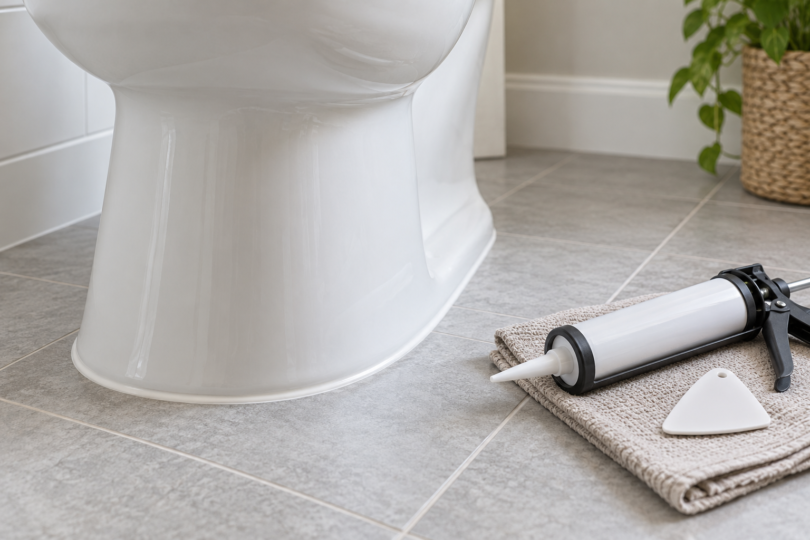

The best caulk for a toilet base depends on the floor, the toilet’s installation instructions and how you want to apply it. For a small bathroom job where 100% silicone is suitable, GE Advanced Silicone 2 Kitchen & Bath in a squeeze tube is our first choice. Gorilla’s white 10-ounce silicone cartridge suits buyers who prefer a caulk gun, while DAP Kwik Seal Plus offers a paintable, water-cleanup alternative when the installation permits siliconized acrylic latex.
These choices are for the outside joint where a securely installed toilet meets the floor. Caulk does not replace the wax ring or other specified outlet seal, repair a leaking connection or secure a rocking toilet. Resolve movement or unexplained water at the base before sealing the perimeter; a plumber can diagnose the underlying problem. Kohler’s installation guide, for example, treats the wax seal, mechanical fastening and perimeter caulking as separate steps.
This shortlist compares documented materials, package formats and application limits. The recommendations are editorial judgments, with no claim of hands-on testing or measured service life.
Best caulk for toilets: three options to compare
| Product and selected package | Best fit | Formula and finish | Main trade-off |
|---|---|---|---|
| GE Advanced Silicone 2 Kitchen & Bath, white, 2.8 fl oz squeeze tube | A small job without a caulk gun | 100% silicone; not paintable | Water exposure can begin in 30 minutes only under GE’s stated conditions; that is not full cure |
| Gorilla 100% Silicone All Purpose, white, one 10 fl oz cartridge | A larger resealing job using a caulk gun | 100% silicone; not paintable | More material to store after a small job; follow the cartridge’s water-ready and curing directions |
| DAP Kwik Seal Plus, white, 5.5 fl oz squeeze tube | Water cleanup and a paintable joint, where this formula is permitted | Siliconized acrylic latex; paintable | Allow 18 hours before water exposure; not a substitute where the toilet requires 100% silicone |
1. GE Advanced Silicone 2: best for a small silicone job
Choose GE’s 2.8-fl-oz white squeeze tube if you want to dispense a modest bead without buying a caulk gun. The neutral-cure silicone stays flexible, and GE lists ceramic and porcelain tile among its suitable materials. The small tube is a practical starting point for one toilet, but measure the joint and check the required bead size before assuming one tube will cover it. See GE’s product details for the available formats.

GE Advanced Silicone 2 Kitchen & Bath Sealant, White, 2.8 fl oz Squeeze Tube, 1 Pack
As an Amazon Associate we earn from qualifying purchases.
The short water-ready time needs qualification. GE’s technical data sheet permits water exposure after 30 minutes only with a bead no larger than 3/16 inch, a temperature of at least 65°F and humidity of at least 50%. Otherwise it specifies eight hours before water exposure. Do not touch or clean the sealant for 24 hours, or until fully cured. The formula is not paintable and is not intended for structural repairs or continuous underwater use.
Check the package selector before ordering: the intended choice here is one white 2.8-fl-oz tube. The captured listing’s title and selected volume identify that option, although a generic item-type field also mentions “Quantity 12.” Confirm the pack count in your cart rather than relying on that inconsistent field.
2. Gorilla 100% Silicone All Purpose: best for a cartridge applicator
Gorilla’s selected white 10-fl-oz cartridge makes sense if you already own a caulk gun or have other compatible bathroom joints to reseal. The package is labeled All Purpose, and Gorilla’s sealant comparison identifies its All Purpose silicone as flexible and non-paintable. Its larger container offers more material than the GE tube; it is not automatically better value if most of the contents will go unused.

The listing carries a 30-minute water-ready claim, while the manufacturer’s product guide lists 24 hours of drying for its 100% silicone. Treat water-ready and fully cured as different stages, and follow the conditions on the cartridge supplied. The guide’s restrictions exclude underwater applications, aquariums, brick, masonry and cementitious materials. Confirm compatibility with the actual floor finish, especially where exposed grout or stone is involved.
Mold resistance does not remove the need to clean the finished joint. Gorilla says its cured sealant must be cleaned regularly to prevent growth on surface residue. Choose this for its format and documented silicone properties, not a promise that the toilet base will remain maintenance-free.
3. DAP Kwik Seal Plus: best for water cleanup and paintability
DAP Kwik Seal Plus is siliconized acrylic latex, not 100% silicone. Its white 5.5-fl-oz squeeze tube is worth considering when you want water cleanup and a paintable finish, provided the toilet and flooring instructions allow that material. DAP lists porcelain, ceramic and bathroom fixtures among its applications. Check the manufacturer’s product page before selecting it for your installation.
DAP’s currently linked white-product data sheet specifies 18 hours before water exposure. The data sheet allows painting after at least two hours, with longer drying in cool or humid conditions, and limits joints to 3/8 inch wide by 3/8 inch deep. It is for interior use and is not for continuous underwater exposure. This is the slower-return-to-water option in the shortlist.
Use DAP’s manufacturer page to identify the current white 5.5-fl-oz tube, code 18526, with MoldGuard labeling. Older marketplace listings may show Microban packaging and a different model number. Verify the product code and supplied label with the retailer before buying; this comparison does not assume those packages have identical formulas or directions.
How to choose caulk for your toilet and floor
Start with the toilet manufacturer’s installation instructions and the flooring manufacturer’s compatibility requirements. A bathroom-use label alone does not establish adhesion to every plastic, coated floor or natural stone. GE recommends testing adhesion and compatibility before the full application. If the toilet specifies silicone, keep the acrylic-latex DAP option off your shortlist. All three choices here are for a finished perimeter joint, not an internal plumbing seal.
Check local requirements before deciding whether to seal the entire perimeter or leave a rear inspection gap. GE’s current FAQ explicitly directs readers to local rules. Installation details vary, so a general buying guide cannot settle that choice for every toilet and jurisdiction.
Preparation matters more than selecting the shortest advertised drying time. Remove the old bead and residue, then let the joint become clean, dry and sound. GE’s recaulking guide warns against sealing over old material or a damp surface. Use cleaning products and removal tools that the floor and sealant manufacturers permit, and follow the sealant label’s ventilation and protective-equipment instructions.
Apply and smooth the bead within the product’s working time. For GE Advanced Silicone 2, the technical sheet specifies a clean, dry gloved finger or finishing tool and tooling within five to ten minutes. DAP allows excess wet caulk to be removed with a damp sponge. Those are product-specific directions; do not assume the same cleanup method works for every formula.
Compare the cost of the amount you can actually use, including a caulk gun if you need one. Check color, tube versus cartridge, pack count and any use-by date. White is a simple visual match for many white toilet bases, but it is an aesthetic choice rather than a compatibility rating. A well-matched small package may be more useful than a larger discounted pack.
Frequently asked questions
What type of caulk is a good starting point for a toilet base?
For a compatible toilet and floor, a bathroom-rated 100% silicone such as GE Advanced Silicone 2 is a useful starting point. Confirm the installation instructions first. Siliconized acrylic latex can offer paintability and easier water cleanup, but it should not replace a specified silicone sealant.
Will caulking the base stop a leaking toilet?
Do not use perimeter caulk to conceal a leak or hold a moving toilet in place. The outlet seal and mechanical mounting are separate parts of the installation. Have the source of water or movement corrected before applying a cosmetic perimeter bead.
Should I leave the back of the toilet uncaulked?
Follow the toilet’s instructions and the local requirements for your installation. A rear gap is sometimes discussed as a way to reveal leaks, but it is not a universal instruction. Ask the local plumbing authority or your installer if the applicable requirement is unclear.
Can the toilet get wet after 30 minutes?
Only when the selected product’s instructions and conditions permit it. GE’s 30-minute allowance has bead-size, temperature and humidity limits, and its instructions still prohibit touching or cleaning the sealant for 24 hours or until fully cured. DAP Kwik Seal Plus specifies 18 hours before water exposure. Keep the new bead undisturbed for the required curing period.
Can I put a new bead over old toilet caulk?
For the products compared here, prepare the joint by removing the old material and residue, then cleaning and drying the surfaces. New caulk over an old or damp joint can fail to bond properly. Persistent dampness is a reason to investigate the cause before resealing.