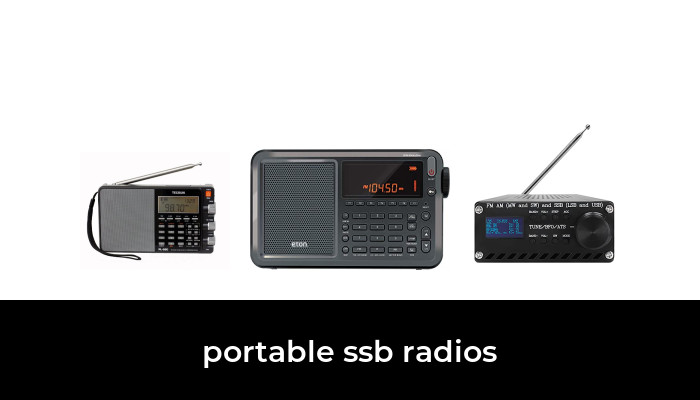

A good digital shortwave radio makes it easy to enter a frequency, save stations and adjust a weak signal. Our shortlist is the Tecsun PL-330 for a compact shortwave-focused setup, the C. Crane CC Skywave SSB 2 for travel with NOAA weather reception, and the Sangean ATS-909X2 for a larger receiver with extensive controls and memories. All three receive shortwave and single sideband; none is a two-way radio.
One important distinction: “digital” here means digital tuning and signal processing. It does not mean these radios decode digital shortwave broadcasts. For Digital Radio Mondiale broadcasts, you need equipment explicitly supporting DRM reception.
Digital shortwave radios compared
These are use-case recommendations rather than a measured reception ranking. All three include direct frequency entry and an external shortwave antenna connection.
| Radio | Best fit | Receiving features | Power | Main trade-off |
|---|---|---|---|---|
| Tecsun PL-330 | Compact broadcast and SSB listening | AM, FM, LW, SW; USB/LSB; synchronous detection | Replaceable BL-5C rechargeable battery; USB charging | No NOAA weather or VHF aircraft band |
| CC Skywave SSB 2 | Travel with weather and aviation listening | AM, FM, SW, USB/LSB, NOAA weather with alert, VHF aviation | Two AA batteries; micro-USB power input | Small speaker; AC adapter and batteries cost extra |
| Sangean ATS-909X2 | Home listening and organizing many stations | AM, FM, LW, SW, USB/LSB, VHF aviation, FM RDS | Four AA batteries or included AC adapter | Larger body; no NOAA weather band |
1. Tecsun PL-330: compact shortwave and SSB choice
The PL-330 suits someone who wants to explore broadcasts and amateur-radio voice without carrying a large receiver. Tecsun’s published specifications list 1,711–29,999 kHz shortwave coverage, 10 Hz fine tuning in SSB mode and a body measuring 139 × 85 × 26 mm. The product listing also documents selectable bandwidths and synchronous detection.
Its useful extra is ETM+, which keeps scanned stations in time-specific memories, separate from normal saved presets. That is handy when stations heard in the evening are absent the following morning. The Tecsun user manual explains the scanning workflow.
Choose it if: shortwave is the priority and you are happy to recharge a removable BL-5C lithium battery. Consider another model if: you want ordinary AA batteries, NOAA alerts or aircraft-band reception. Confirm the charging connector and included accessories for the seller’s particular revision before ordering.

Tecsun PL-330, Black AM/FM/LW/SW SSB Receiver, Single
As an Amazon Associate we earn from qualifying purchases.
2. C. Crane CC Skywave SSB 2: travel with weather coverage
The CC Skywave SSB 2 combines shortwave and single sideband with NOAA weather reception and an alert function. C. Crane also specifies 118–137 MHz aviation reception, 400 memories and 10 aviation memories that can be scanned. This makes it the most useful match here when your interests extend beyond international broadcasts. See the manufacturer’s specifications and included accessories.
The two-AA power arrangement is convenient when carrying spares. A reel antenna, wire antenna adapter, earphones and case are included, but the AC adapter and batteries are not. Its 1.5-inch speaker is a portability trade-off, so use the included earphones if compactness matters more than room-filling audio.
Watch the model name: the CC Skywave 2 and CC Skywave SSB 2 are different radios. Only the latter has SSB; C. Crane’s comparison chart also shows different shortwave coverage. Weather alerts require setup and suitable local reception, rather than working automatically everywhere.

3. Sangean ATS-909X2: larger controls and station organization
The ATS-909X2 makes sense for a listening desk or travel bag when a tiny pocket radio is not essential. Its manufacturer feature sheet lists 1,674 station presets across three banks, several tuning methods, USB/LSB reception and manual or automatic bandwidth control. These features favor listeners who want to manage a substantial station collection.
Sangean’s US product page specifies a 3-inch speaker, line output, four-AA operation and an included power adapter and shortwave antenna. Those are useful differences from a minimalist pocket receiver, although speaker size alone does not establish sound quality or reception superiority.
Choose it if: physical controls, audio connections and memories matter more than minimal size. Skip it if: your main requirement is NOAA weather alerts. This recommendation is specifically for the ATS-909X2; check suffixes carefully rather than assuming a similarly named model has identical specifications.

How to choose a shortwave radio
Decide whether you need single sideband
Conventional shortwave broadcasts can be received in AM mode. SSB becomes important for many amateur-radio voice transmissions. The ARRL’s guide to voice modes explains why SSB is widely used on HF bands. If that is part of your interest, buy a receiver with both USB and LSB and a fine-tuning control. All three radios here meet that requirement.
Prioritize tuning and filters over preset totals
Direct entry lets you type a known frequency instead of searching the entire dial. Selectable bandwidth lets you trade audio fullness for less adjacent-channel interference. Hundreds of presets are useful only if you can organize and retrieve them comfortably. Download the manual before buying and see whether saving, recalling and fine-tuning a station looks manageable.
Plan for the antenna and power source
Start with the built-in telescopic antenna, then try the supplied or a compatible external antenna if needed. A longer wire is not a guarantee of cleaner audio in an electrically noisy room. Tecsun’s manual recommends changing position and warns that external power can introduce interference. Compare reception on battery power before blaming the radio.
For a first listening session, choose a quiet location, extend the antenna and try several frequencies at different times. Lower shortwave bands often become more useful after dark, while higher bands can be productive during daylight; conditions and signal paths still matter. C. Crane’s shortwave band guide offers a starting point. Check a broadcaster’s current schedule and its time zone rather than relying on an old frequency list.
Frequently asked questions
Does a digital display mean a radio receives DRM?
No. An LCD frequency display, DSP chip or SSB mode does not establish DRM compatibility. None of these three models lists built-in DRM decoding. Check for explicit support for the digital broadcast standard you want.
Can these radios transmit or replace a walkie-talkie?
No. They are receivers. They let you listen to compatible signals but cannot transmit a reply or a distress call.
Why can I hear a station one evening but not the next?
Shortwave reception changes with propagation, time, interference and the station’s operating schedule. Try another frequency or time, a quieter location and battery power. An empty scan by itself does not show that the receiver is faulty.
Which would we shortlist first?
Start with the PL-330 for a small shortwave-focused receiver, the Skywave SSB 2 when weather and aviation coverage matter, or the ATS-909X2 for a larger home-listening setup. Choose by the signals and controls you need rather than an unsupported “best reception” claim.