If you need to replace a Jebao WP-450LV submersible pump, start with the pump label, transformer label, and connector layout. A pump with similar advertised flow is not necessarily a direct replacement. Low-voltage supply type, light connections, lift height, tubing, and the space inside the fountain all need to match.
The safest buying route is a replacement kit confirmed for your fountain’s exact model. For a Campania fountain that specifies PK120-LV, ask for that kit by name. For other fountains, have the supplier identify the correct WP-450LV variant from photos before ordering.
What the WP-450LV name tells you
The WP-450LV appears in small decorative fountain systems, but the complete kit varies. For example, Wacredo’s fountain manual lists a WP-450LV application with a 12V, 5W pump, maximum flow of 450 liters per hour, and maximum delivery height of 0.9 meter. That flow is approximately 119 US gallons per hour.
Those numbers are a useful identification starting point, not a guarantee for every pump offered under a similar name. Check the unit in front of you. Do not confuse the transformer’s mains input with its low-voltage output, and do not assume a similarly named WP-450 or WP450L has the same electrical arrangement.
Replacement routes worth checking
For a compatible Campania fountain: PK120-LV
Campania lists PK120-LV as its 120 GPH low-voltage pump. Its pump reference chart identifies WP450LV within that kit, with a transformer and a 16-foot cord. It lists a separate PK120-FG package that includes a light and power splitter.
Why this route makes sense: the fountain maker’s kit number narrows the search to the intended application. It also helps avoid choosing a pump with the right output but the wrong cord or accessories.
Still confirm: your fountain’s model, the current replacement kit contents, tubing adapters, and any later part substitutions. Campania’s chart specifically warns that its Jebao and Pond Boss parts are not interchangeable. Do not combine their light or power components based on appearance.
For other fountains: a supplier-confirmed pump-and-transformer set
Specialist replacement suppliers distinguish pump-only circuits from versions that supply fountain lighting. For instance, Wholesalepumps describes its RPTR-WP450LV-OD replacement as a pump-and-transformer arrangement without light connections. Its RWP-450LV-ODL version has a light connection and specifies 12V AC output.
Use these as identification leads: send the supplier clear label and connector photographs and ask it to confirm compatibility in writing. These are marketed replacement assemblies, not proof that any item bearing “450” fits your fountain. Existing light type, connector gender, pin arrangement, and electrical load need checking too.
No Amazon purchase box is included here because an exact WP-450LV replacement and kit configuration could not be reliably verified. Substituting an unrelated aquarium or fountain pump would make this guide less useful and could create an unsafe mismatch.
Five checks before you place an order
- Electrical supply: photograph the pump voltage, AC/DC marking, frequency, and wattage, plus the transformer’s input and output labels. A 12V AC pump is not automatically compatible with a 12V DC adapter.
- Connectors and lighting: photograph each connection separated with power disconnected. Record pin count, connector shape, male/female ends, locking collar, and whether lighting connects through the pump or a separate splitter.
- Flow at your lift height: measure from the reservoir’s water surface to the discharge point. Ask for the replacement’s flow curve at that height, accounting for tubing restrictions.
- Physical fit: measure the pump bay, access opening, outlet orientation, hose inside diameter, and existing barb outside diameter. Include room for the hose to bend without kinking.
- Cord and environment: confirm usable cable length, routing through the fountain’s stopper, outdoor suitability of the complete assembly, and the exact supplied transformer.
A useful message to a supplier includes the fountain model, those photographs, your measured lift, tubing dimensions, and a request for the complete compatible set. If the old transformer is damaged or its identity is uncertain, do not assume it can be reused.
Maximum flow is not flow at the top of the fountain
Maximum flow is generally quoted with little or no lift. As the pump pushes water higher, output falls. Maximum head or shutoff height is the limit where useful flow approaches zero; it is not a promise of a full stream at that height.
The specialist listing for the WP-450LV pump-and-transformer set, for example, quotes 120 GPH at zero lift and 55 GPH at 24 inches, with shutoff at 37 inches. Those are that supplier’s published figures for its listed assembly. Use the curve supplied for your actual replacement rather than transferring them to another pump.
This also explains why simply buying a much larger pump can disappoint. Excess flow may splash water out of a small basin, while a poorly matched connector or oversized body can make installation impossible. Size the pump for the fountain’s intended water effect and plumbing.
Try these checks before replacing the pump
Disconnect power before touching the water, pump, connections, or tubing. If there is a damaged cable, burning smell, water-damaged electrical component, or repeated protective-device trip, stop using the system and have it assessed.
- Low or no flow: check the water level, intake openings, hose kinks, blocked outlets, and flow adjustment.
- Humming or rattling: inspect for trapped air, debris, and contact between the pump body and fountain wall.
- Impeller obstruction: if the manual permits opening the intake cover, inspect and clean the accessible rotor area with the pump unplugged. Do not open a sealed electrical housing.
- Lights work but the pump does not: do not assume the transformer or connector is healthy under the pump’s load. Ask the supplier for the proper diagnostic process.
Campania’s maintenance guide emphasizes unplugging before troubleshooting, complete submersion, checking for a jammed rotor, and clearing tubing restrictions. Those simple checks can prevent replacing a pump whose real problem is a blocked water path.
Installation and water safety
Use a properly installed GFCI-protected supply and suitable outdoor connection protection. The CPSC’s electrical-safety checklist explains the importance of GFCI protection and weather-protected outdoor outlets. Low voltage at the pump does not remove the need for safe mains connections at the transformer.
Do not splice damaged pump cords, bypass a protective device, or force mismatched connectors together. Keep the transformer and connections out of water unless each component is explicitly rated for the proposed location. Follow the fountain’s instructions for cable routing and drip loops.
After fitting a confirmed replacement, fill to the specified level before applying power. Observe the fountain for leaks, excessive splashing, stable return flow, and a maintained water level. Never run the pump dry, even briefly as a test. Check more often in hot or windy weather when evaporation and splash loss can increase.
Bottom line
Replace a WP-450LV by matching the full fountain system. A confirmed OEM kit is the first choice; a supplier-verified replacement set is the next route when the original cannot be sourced. Correct voltage, connectors, light support, and flow at the required height are more important than buying the pump with the biggest advertised GPH number.
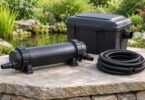
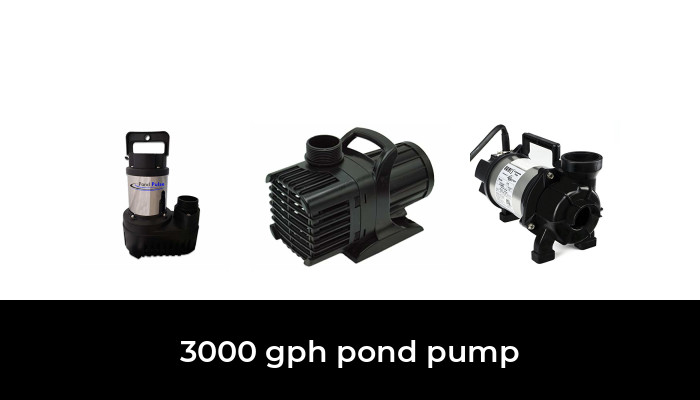
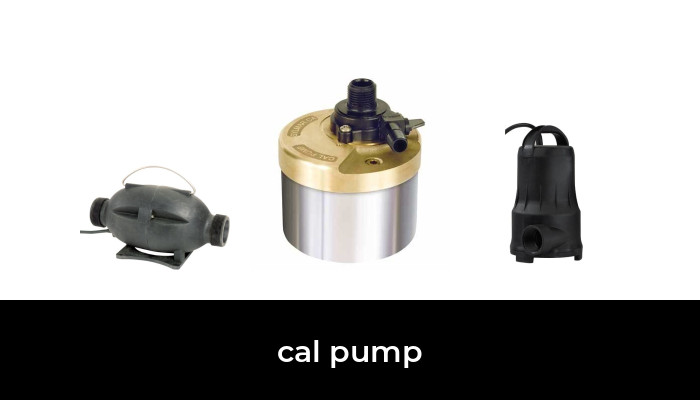
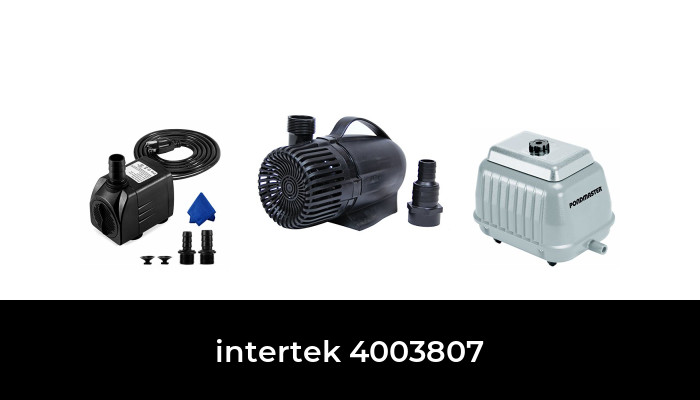
Image note: Examples from the product category; pictured models and variants may differ from the options discussed.