
“Oster Duralast Classic blender” is not one universal model number. Duralast describes Oster’s all-metal drive branding, while Classic Series appears on blenders with different jars, controls and model codes. If you are buying a complete blender, choose a specific model. If you need a replacement jar, blade or bottom cap, identify the blender you already own before ordering anything.
The gray Classic Series 8-speed, model BLSTMEG-G00-000, is a clear starting point for shoppers who want a 6-cup glass jar. Oster also lists a white 10-speed Classic model with a plastic jar. These are distinct products, and neither name establishes that every Oster accessory will fit.
Start with the number on the blender
Switch the appliance off, unplug it and check its identification label. Record the full model or service number, including letters and suffixes, and the electrical rating. Keep a photo for comparing listings or contacting support. The word “Classic” on the front is useful context, but a seller needs a more precise identifier to verify a replacement part.
Use that code to find the relevant instructions through Oster’s manual hub or Oster support. If the manual page does not resolve your older model, ask support rather than selecting a document solely because its picture looks similar. Controls, jar assembly and permitted uses can differ.
A specific complete-blender option
Classic Series 8-speed, gray, BLSTMEG-G00-000
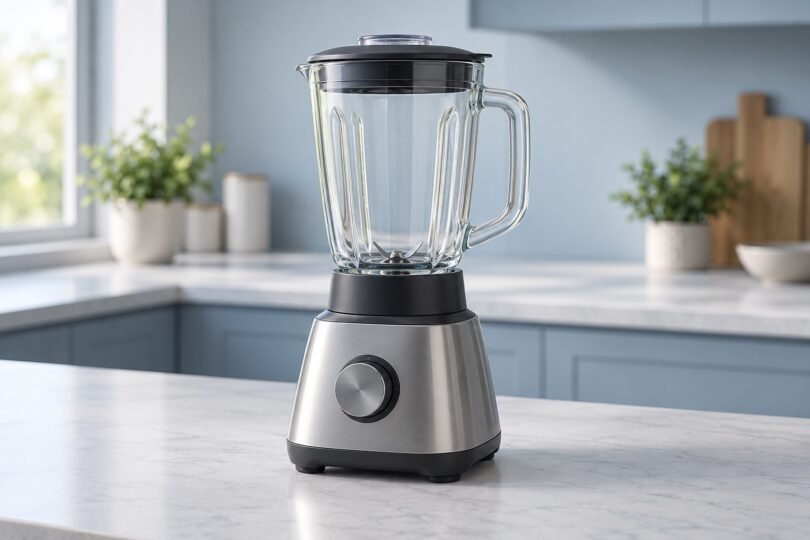
Oster’s product page specifies a 6-cup/48-ounce glass jar, eight speeds, a 700-watt motor and a four-point stainless-steel blade. The gray model is listed as BLSTMEG-G00-000, with SAP code BLSTMEGG00000. Its listed footprint is 7.75 × 7 inches, and height is 15 inches.

Oster Classic Series 8-Speed Blender, BLSTMEG-G00-000, 6-cup glass jar, gray
As an Amazon Associate we earn from qualifying purchases.
The selected Amazon ASIN identifies the same gray, glass-jar 8-speed blender and the matching unhyphenated model code. It is a single complete blender, rather than a replacement pitcher. Confirm that identity again if you change a retailer’s style or color selector.
On paper, this is a straightforward choice for everyday liquid-based blending when you prefer a glass pitcher. That is a specification-based assessment, not a claim from hands-on testing. The published wattage and number of buttons cannot establish how smooth a particular frozen-fruit mixture will become, how loud the machine is, or how long it will last in your kitchen.
White 10-speed with a plastic jar
Oster’s white Classic Series listing, SAP 6640022N00, specifies ten speeds, a 6-cup BPA-free plastic jar and 700 watts. This is worth comparing if you want plastic rather than glass, but make the decision on the exact product specification.
The page includes legacy review wording mentioning a black blender. The current title and specification identify white; reviews are therefore not reliable variant identifiers. Use the product code, jar material and seller’s selected option together. A plastic jar listed as BPA-free is not automatically approved for every hot-food application.
What Duralast does and does not tell you
Oster describes Duralast as an all-metal drive connection and advertises a smoothie life-test on some Classic models. Treat that as a manufacturer claim about the specified product, not a promise that your machine will produce a particular number of drinks or that every component is metal.
It also does not mean the motor housing, threaded jar collar, seals and controls have identical construction across the range. A drive-system name is not a replacement-part specification. Do not use it to decide that a blade from one model belongs in another.
Warranty wording needs the same care. The white 10-speed listing distinguishes a limited drive warranty from its satisfaction guarantee, while the gray 8-speed page lists a three-year limited warranty. Read the terms supplied for the exact model and market. Neither statement should be rewritten as an unconditional warranty on every part for ten years.
How to check a replacement jar or blade
Think of the jar, sealing ring, blade assembly, threaded bottom and motor connection as a matched system. A matching cup capacity or similar-looking thread does not establish safe fit. A six-cup replacement jar can also be sold without the blade, gasket or threaded bottom needed to assemble it.
- Identify the appliance. Start with its complete model or service number, not a retailer’s broad “fits Oster” search result.
- Identify the component. Ask for the replacement part number and check whether the listing supplies a jar only, a lid and jar, or a complete jar assembly.
- Verify the pairing. Get a compatibility statement covering your exact appliance and part. Confirm exclusions and whether you must retain any original components.
- Check before use. Follow the correct assembly diagram. Stop if parts do not seat as instructed, the jar rocks unexpectedly or liquid escapes.
For the gray BLSTMEG-G00-000, Oster’s product-page support answers direct owners to identify their model when asking about replacement parts. Follow that approach for each component. If you need a jar, confirm its matching blade, sealing ring and bottom cap as well as the jar itself. If your original components are damaged or missing, ask which complete assembly the manufacturer approves. A listing that says it contains a jar, lid and filler cap does not establish that it supplies the blade or threaded bottom.
Pro 1200, Versa, Master and Classic names should trigger a model-specific check, not a blanket yes or no. Some individual components may have overlapping compatibility, while others do not. An aftermarket seller’s claim for one jar cannot be extended to a different blade, gasket or coupling. When the pairing remains unresolved, use manufacturer support rather than treating an attractive price as proof of fit.
Match the blender to what you actually make
For smoothies, think about your usual batch and its liquid content. A jar’s maximum capacity is not a guarantee that a thick mixture will circulate when filled to the top. If you mostly make small servings, consider whether the main pitcher meets that need without assuming a personal cup is included.
For salsa or chopping, accessible pulse controls may matter more than an extra row of speed labels. For thick nut butter, dry grinding or other demanding mixtures, look for explicit instructions for the exact model. A photo of nuts beside a blender is not a duty-cycle specification.
Glass versus plastic is also a practical preference: consider how you lift, wash and store the filled pitcher. Measure the counter-to-cabinet clearance and leave room to remove the lid. Check the dimensions of the assembled appliance, not the shipping box.
Use and cleaning habits that prevent avoidable problems
Oster’s general blending tips recommend adding liquids before the other ingredients and checking liquid-to-solid balance when food does not circulate. They also recommend pulse for chopping and keeping the lid in place during operation. Apply these tips within your own model’s limits; do not override a model-specific restriction.
Unplug before removing parts or cleaning, and keep hands and utensils away from moving blades. Avoid filling or operating an incorrectly assembled jar. For hot ingredients, follow the exact manual’s temperature, quantity and venting instructions; if those instructions are unavailable, let the mixture cool before blending rather than guessing.
The gray 8-speed product page permits dishwasher cleaning of the removable parts and instructs users to wipe the motor base with a damp sponge. Keep the base out of the dishwasher and do not immerse it. Handle the blade carefully and inspect the jar and sealing components while cleaning.
When the blender leaks or stops blending
A leak calls for stopping and unplugging the appliance before checking the removable assembly. Look for a missing or displaced sealing ring, a cracked jar or a damaged bottom cap, using your model’s instructions. Do not keep blending to see whether the leak disappears, overtighten mismatched parts, or use improvised sealants.
If the motor runs but the blade does not turn, Oster’s FAQ directs users to check that the jar is seated correctly and contact support if the problem continues. It does not recommend opening the motor housing or bypassing safety features. A burning smell, damaged cord or persistent mechanical problem is a reason to stop using the appliance and seek qualified help.
Bottom line
Choose a complete Oster Classic blender by model number, jar material and the uses its instructions support. Choose replacement parts only after checking the exact appliance-to-part pairing. The gray BLSTMEG-G00-000 is a clearly identified glass-jar option; existing owners should establish what they have before replacing a pitcher, blade or base. That simple distinction makes the search far more useful than a long list mixing unrelated blenders and loose accessories.