
A paddle board for a dog needs enough usable deck space and appropriate capacity for the paddler, dog, and everything carried. A high advertised weight limit alone does not establish how stable it will feel when a dog stands up, turns around, or jumps.
The ISLE Pioneer 3 is a useful starting point for a lighter all-round setup with a full-length pad. The BOTE HD Aero offers a longer platform and a higher listed capacity, with more weight to carry. The Red Paddle Co 10’8″ Ride MSL is another wide all-round design to compare, subject to load advice and availability.
Research checked October 4, 2026. This guide compares manufacturer information and professional water-safety advice, not hands-on board testing. Model years, packages, capacity terminology, and regional availability can differ. Confirm the exact board and your combined load with the manufacturer.
Board comparison
| Exact board | Length and width | Published load information | Main consideration |
|---|---|---|---|
| ISLE Pioneer 3 10’6″ | 10’6″ × 34″ | 285 lb capacity | Full-length deck pad; less load room than some larger boards |
| BOTE HD Aero 11’6″ | 11’6″ × 34″ | 315 lb capacity | Longer platform; approximately 30 lb board weight |
| Red Paddle Co 10’8″ Ride MSL | 10’8″ × 34″ | 265 lb maximum weight on the US page | Confirm total-load suitability and exact package |
These figures are manufacturer descriptions, not results from a common test. Ask whether a limit describes rider weight or total carrying load, and what the brand recommends for a moving dog. Do not assume the numerical difference between two ratings predicts their handling.
1. ISLE Pioneer 3: full-length padding in a lighter package
The ISLE Pioneer 3 10’6″ is listed at 34 inches wide and 6 inches thick, with a 285-pound capacity and a 19-pound board weight. Its full-length deck pad is particularly relevant to a dog that needs room to settle without standing directly on unpadded board material.
The ISLE-LINK attachment system supports compatible accessories and kayak conversion. That flexibility may appeal if you also want seated outings, but a seat, footrest, and other cargo reduce the clear space available for the dog.
Tradeoff: this is not automatically the right board for a heavier adult and large dog. Calculate the whole load before choosing it. The cited regional manufacturer page establishes the model specifications; verify your local package and do not confuse Pioneer 3 with an older Pioneer or Pioneer Pro.
2. BOTE HD Aero: a longer deck with a carrying penalty
The BOTE HD Aero 11’6″ is listed at 34 inches wide, 6 inches thick, and 315 pounds capacity. Its approximate board weight is 30 pounds. The extra length may give you more options for separating the dog’s resting spot from the paddler’s stance, but check the actual padded area and fittings.
BOTE advises upgrading when rider weight is within 50 pounds of the stated capacity. With a dog and gear aboard, ask BOTE about the entire planned load rather than treating those extra pounds as unused capacity.
Tradeoff: 30 pounds is significant when carrying a board while also managing a dog. Package accessories, racks, and cargo can create clutter. Keep the dog’s area clear and verify the selected colorway’s deck coverage. This is a candidate for space and features, not a proven stability winner.
3. Red Paddle Co 10’8″ Ride MSL: compare the exact package
The Red Paddle Co 10’8″ Ride MSL has a 34-inch width, EVA deck pad, adjustable cargo system, and twin fins. The US listing displays a 265-pound maximum weight. The rounded all-round shape makes it worth considering alongside the other wide boards.
Tradeoff: the checked selection was a no-paddle package, and it showed unavailable when researched. Do not assume that “package” includes a paddle or that a retailer’s older bundle matches this version. Confirm the combined rider-and-dog load, model year, and availability before planning a trip around it.
The page also contains inconsistent thickness and board-weight descriptions, so those figures are deliberately omitted here. Have the brand resolve any specification that matters to your purchase.
Work out capacity and usable space before ordering
Add the paddler’s weight, the dog’s weight, clothing, water, safety equipment, and cargo. For example, a 180-pound paddler, 65-pound dog, and 15 pounds of gear total 260 pounds. That arithmetic is useful, but it does not establish that a nominal 285-pound board will be comfortable or appropriate.
Then look at deck layout. Can the dog lie down without sitting on bungees, exposed fittings, or your feet? Can you paddle and change position without repeatedly stepping over the dog? Ask about a demo or rental before committing if you cannot confidently answer those questions.
Do not assume an inflatable is claw-proof. Maintain the dog’s nails, inspect the pad and board, and follow the manufacturer’s inflation, cleaning, and storage instructions. Hot sun can change pressure; the correct handling procedure is model-specific.
Introduce the dog gradually
- Start on land. Secure the board so it does not wobble unexpectedly. Reward voluntary investigation, getting on, settling, and getting off. Let the dog move away if unsure.
- Fit a canine life jacket. Choose a correctly sized jacket with a usable handle and introduce it before the outing. Check comfort and movement; flotation does not replace supervision or recovery skills.
- Build up in protected conditions. Practice with qualified help close to an easy exit. Keep the first session short and stop if the dog is frightened, tired, cold, or overheated.
- Have a recovery plan. Know how you will reboard and assist the dog without being pulled into difficulty. A large wet dog may be much harder to recover than expected.
Ruffwear’s dog-SUP guidance discusses life-jacket handles, hydration, and the risk of dog leashes becoming tangled or catching debris. Do not tie the dog to the board or yourself in the water. Check access and leash rules before choosing a location; if you cannot satisfy them safely, choose another activity or site.
Check conditions, not just the forecast temperature
The RNLI recommends a suitable buoyancy aid, an accessible phone in a waterproof pouch, the correct paddler-to-board leash, and avoiding offshore winds. The human SUP leash is separate from a dog leash. Get location-specific instruction: an ankle leash supplied in a kit is not appropriate for every environment, particularly where entrapment is a risk.
PDSA’s water-safety advice emphasizes supervision, not forcing reluctant dogs, and avoiding dangerous currents and rough water. Check local water-quality alerts, including toxic algae, and bring fresh drinking water. For early dog outings, skip surf, flowing water, busy channels, and conditions beyond your skills.
Frequently asked questions
Does every dog enjoy paddleboarding?
No. A dog that dislikes the board or water should not be forced into the activity. Calm shore time may be the better outing.
Can a strong swimmer skip the life jacket?
Swimming ability does not remove fatigue or separation risks. Use appropriate flotation and practice a realistic recovery plan.
Is the widest board always best?
No. Width is only one factor alongside shape, load, stiffness, deck layout, and paddler control. Compare the complete setup and try it when possible.
Bottom line: buy enough usable space and appropriate load capacity, then invest equally in training, flotation, and conservative conditions. The dog’s comfort and your ability to recover together matter more than a dog-friendly label.
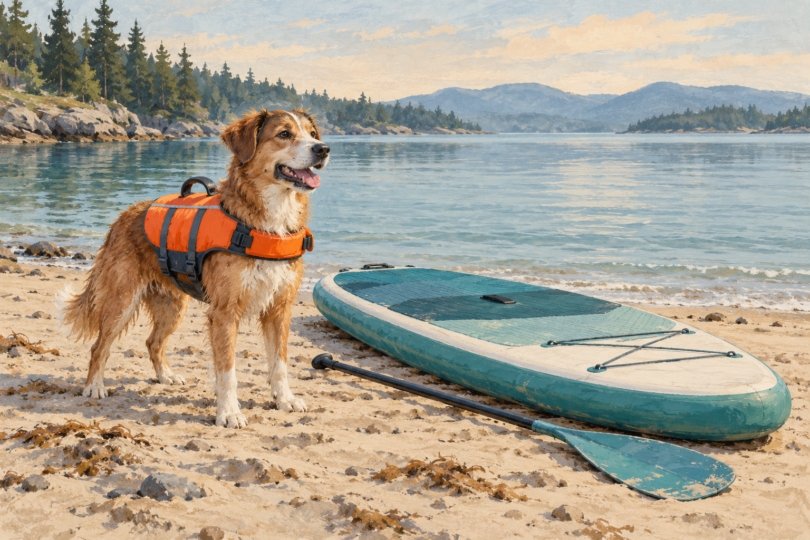
Image note: AI-generated generic editorial illustration; the board and dog flotation vest do not depict tested products or establish capacity, fit or water safety.