
The right roller cam for a 350 with Vortec heads depends on the complete engine and vehicle. Confirm the block’s roller-lifter arrangement and the exact cylinder-head assembly before choosing a part. A cam advertised for a small-block Chevy is not automatically compatible with the springs, clearances, fuel system, or accessories on your engine.
This guide compares three documented hydraulic-roller catalog options and explains what to take to an engine builder. These are comparison examples, not a ranked list of cams that will fit every Vortec-headed 350.
Research checked October 4, 2026. This is a manufacturer-documentation review. We did not install these camshafts, dyno-test an engine, or verify a particular vehicle’s fitment.
Start with the engine you actually have
“350 with Vortec heads” can describe a factory combination or an older small-block with replacement heads. The head name alone does not identify the block’s camshaft and lifter provisions. COMP distinguishes conventional hydraulic-roller applications from retrofit hydraulic-roller designs intended for engines originally equipped with a flat-tappet valvetrain. Its camshaft-type guide explains that this distinction includes differences needed to accommodate the lifters.
- Factory-style roller system: have the builder confirm the exact block, lifter-retention hardware, cam retention, and compatible components before considering an OE-roller catalog part.
- Earlier or converted engine: have the builder identify the required roller system. Do not order the OE-roller version simply because a retailer lists “Chevy 350.”
- Unknown or used heads: obtain casting or part numbers and an inspection of the installed valves, springs, retainers, and seals. Previous work can change the available clearances.
For an otherwise stock repair, ask the builder or parts supplier to identify the correct original-equipment replacement first. That gives you a baseline before considering a different camshaft specification.
Three catalog options compared
The figures below are manufacturer-published specifications, presented to show meaningful differences between part numbers. Intake/exhaust values are listed in that order. Published valve lift is a catalog value, not a measurement of your assembled engine or proof of safe clearance.
| Camshaft | Manufacturer application category | Duration at 0.050 inch | Listed valve lift | Lobe separation |
|---|---|---|---|---|
| COMP Xtreme 4×4 08-411-8 | 305–350 Chevrolet OE roller, 1987–1998 | 210° / 214° | 0.474 / 0.474 inch | 111° |
| COMP Xtreme Energy 08-412-8 | 305–350 Chevrolet OE roller, 1987–1998 | 212° / 218° | 0.487 / 0.495 inch | 110° |
| COMP Xtreme Energy 12-412-8 | 262–400 Chevrolet small-block; product description specifies retrofit | 212° / 218° | 0.487 / 0.495 inch | 110° |
None of these rows is a stock-Vortec-head fitment approval. Read the exact product page with your builder and obtain the current cam card before purchasing. These three products illustrate two cam families and two application architectures; they do not represent the entire market.
COMP Xtreme 4×4 08-411-8
This is the OE-roller example from the Xtreme 4×4 family. COMP positions that family around towing and off-road applications. It has lower listed lift and slightly shorter duration than the two Xtreme Energy examples above.
Useful distinction: it gives a builder a different catalog profile to evaluate when the vehicle’s intended use fits that family. Limit: its lower lift does not establish clearance with your Vortec heads or compatibility with existing valve springs. The manufacturer’s 08-411-8 page lists supporting components separately.
COMP Xtreme Energy 08-412-8
This example belongs to the OE-roller application category. Its published duration is 212°/218° at 0.050 inch, and the exhaust valve-lift listing differs from the intake listing. Keep both figures in the comparison rather than reducing the cam to a single “lift” number.
Useful distinction: this is the OE-roller part number to distinguish from the similarly named retrofit version below. Limit: the 08-412-8 listing does not certify that an unknown Vortec head assembly can use it unchanged.
COMP Xtreme Energy 12-412-8
The 12-412-8 product description identifies a retrofit hydraulic-roller cam. Its headline duration, lift, and lobe-separation figures match the 08-412-8 example, but the application category and recommended supporting components differ.
Useful distinction: identical headline specifications do not make different part numbers interchangeable. Limit: the dyno combination on its page uses Dart S/R heads, so those results should not be presented as expected output from your Vortec-headed engine.
What a builder needs before recommending a cam
COMP’s cam-family selection guidance considers the engine, transmission, gearing, induction system, vehicle type, and vehicle weight. Use the following as an information checklist for a professional recommendation:
- Engine identity: block identification, displacement, existing cam and lifter type, rebuild history, and documented compression ratio.
- Head assembly: casting or manufacturer part number, machining history, valve and spring specifications, and rocker-arm arrangement.
- Vehicle and use: vehicle weight, transmission, converter information where applicable, gearing, and whether the priority is ordinary road use, towing, or a sanctioned competition application.
- Current systems: intake, fuel delivery or engine management, exhaust, and vacuum-operated equipment such as brake assistance.
- Constraints: applicable road-use and emissions requirements, budget for the complete job, and the existing components you intend to retain.
Mark unknown information as unknown. A receipt for “Vortec heads” or a seller’s assurance that a part is “mild” is not a substitute for identification and measurement. The manufacturer’s recommendation service is a useful next step once the builder has established the combination.
Fitment checks that belong with a qualified engine builder
A safe selection requires validation of the complete valvetrain. COMP’s valve-spring guidance identifies spring pressure, installed height, coil-bind clearance, retainer-to-seal clearance, and rocker/retainer compatibility as important considerations. Ask the builder to document the appropriate checks for the actual parts being used.
Pushrod length also depends on the specific block, heads, lifters, rocker design, and other dimensions. COMP’s valvetrain-geometry guidance warns against assuming that a length which works in one engine will work in another.
Other required checks include piston-to-valve clearance, camshaft retention, timing-system compatibility, and the distributor gear specified for the particular cam core. These checks are covered in COMP’s supporting technical documentation. They are professional fitment requirements, not adjustments that this buying guide can prescribe. Manufacturer documentation for the exact parts and the builder’s measurements take priority over a generic internet clearance rule.
How to compare the total purchase
- Get a complete written quote. Compare the cam, necessary matched components, inspection work, labor, and any required professional verification.
- Check the exact kit contents. Cam-only, cam-and-lifter, and larger kit listings can contain different parts. A kit label does not establish compatibility with your heads.
- Confirm road-use suitability. Ask the manufacturer or supplier for the current application and emissions information for the specific part and vehicle.
- Check returns before ordering. Establish how the seller treats opened, installed, or special-order parts. A cheaper incorrect part can be the more expensive purchase.
We have omitted retailer prices and affiliate purchase links because neither price nor a marketplace fitment badge resolves the underlying application questions.
Frequently asked questions
What is the best roller cam for a 350 with Vortec heads?
There is no universally best part number. Start by establishing the engine’s roller system and head assembly, then have a builder select a profile for the complete vehicle and intended use. The table above is a reference for that discussion.
Is there one maximum lift that applies to all Vortec heads?
No single figure should be used to approve every head assembly. Identify the exact heads and installed components, and have the builder verify the relevant clearances. A claim that a cam is “under the Vortec limit” leaves too much unspecified.
Can I keep the original springs?
Only if their condition and measured specifications are approved for the selected cam and complete valvetrain. Do not assume that a cam’s application listing also approves your existing springs.
Does a rougher idle mean a better cam?
Idle sound alone is not a useful selection rule. Give the builder your actual operating needs, including accessory requirements, instead of choosing by a recording or a “stage” label.
Why does this guide include only COMP examples?
These directly documented examples make the OE-roller versus retrofit distinction easy to compare. Their inclusion is not a claim that COMP is the only suitable manufacturer or that these are the right choices for every engine.
How this guide was researched
We checked the linked manufacturer product specifications and technical guidance on October 4, 2026. We compared part identity, application category, and published specifications, then separated those facts from vehicle-specific fitment. There are no hands-on scores, claimed testing hours, guaranteed power gains, or verified-installation claims in this guide. Have a qualified engine builder approve the exact combination before purchase or installation.
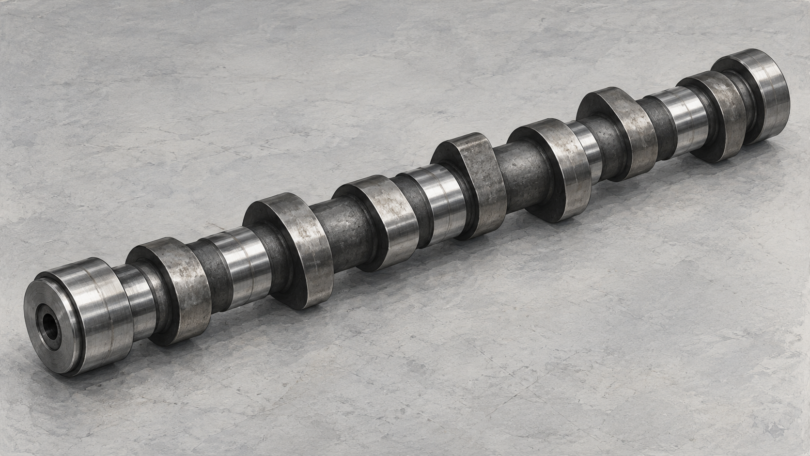
Image note: Illustrative generic camshaft only; it does not depict a specific product or establish compatibility with a 350 engine, Vortec heads or any other engine combination.