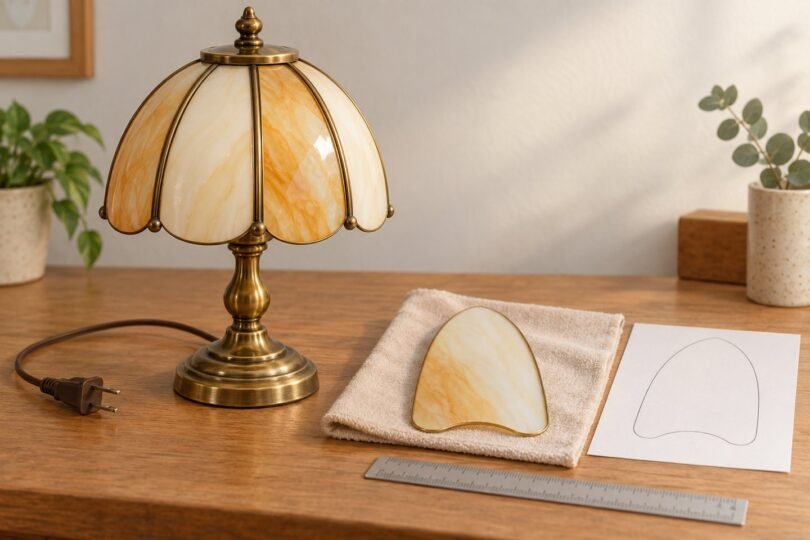

Touch-lamp glass panels are not universal. The safest replacement matches the lamp’s model, shade frame, panel shape and mounting arrangement. A similar floral pattern or the same overall shade diameter is not enough to establish a fit.
This is a parts-identification guide, not a ranking of generic lamp accessories. A touch-control module, complete lamp or ordinary glass shade is not a replacement for one missing panel.
Start with the lamp’s identity
Unplug the lamp and let it cool before inspecting it. Look for a manufacturer, model or pattern label on the base or other accessible exterior surface. Photograph the complete lamp, shade frame and an intact panel without dismantling electrical parts.
Count the panels and note whether they are flat, curved or bent. Check how they are retained: clips, tabs, threaded fasteners and holes require different parts. A six-panel shade does not necessarily accept the glass from another six-panel shade.
What to measure and send to a supplier
- Panel height and width at the top, middle and bottom.
- Curvature and thickness, if they can be measured without handling a sharp edge.
- The position and diameter of mounting holes, if present.
- The number of panels and any stamped model or pattern code.
- Clear photos with a ruler alongside an intact panel, plus a photograph of the frame.
Do not press cracked glass flat, force it out of clips or trace jagged shards with bare hands. If the remaining panel cannot be measured safely, let a lamp-repair or glass specialist inspect it.
Where to look for an exact panel
Ask the lamp manufacturer or original retailer first. A specialist may be able to identify an obsolete pattern or supply a matched set. For example, Lifestyle Lighting’s replacement-parts catalog separates six-panel and eight-panel touch-lamp glass and asks buyers to identify the pattern. That is a model-specific inquiry, not evidence that its pieces fit every lamp.
If an exact part cannot be found, ask a qualified repairer whether suitable replacement glass can be made or whether the shade assembly should be replaced. Do not substitute acrylic, ordinary picture glass or improvised adhesive without approval for the lamp’s heat and mounting requirements.
Glass damage and electrical faults are separate
A new panel will not repair a damaged cord, faulty socket or failed touch controller. If the lamp has scorching, a damaged cable, flickering accompanied by buzzing, or repeated electrical faults, stop using it and obtain qualified service.
Electrical Safety First advises unplugging before bulb changes, letting bulbs cool, respecting the lamp’s bulb rating and stopping use when wiring or plugs are damaged. Follow the lamp manufacturer’s instructions and use the correct bulb type and wattage.
Bottom line: buy by verified dimensions and mounting fit. When the identity or safe condition is uncertain, a specialist assessment is more useful than an inexpensive panel that almost fits.
Image note: Original AI-generated illustration of a panelled lamp; replacement glass must match the actual model.