

The most useful under-desk cord management setup combines a place to support cables with a simple way to group them. A tray handles the bulk; reusable ties make individual runs easier to change. Small clips can guide a charging lead, but they are a poor substitute for proper support when a power brick is hanging underneath a desk.
Start by checking the desk and the cables you already own. You may need only a few ties, or you may need a tray plus a better route to the wall outlet. The two products below serve different jobs and can be used together when they fit the desk.
Choose the mounting method before the organizer
- Screw-mounted tray: useful when the desk manufacturer permits drilling and the underside can accept the specified hardware.
- Clamp-on tray: worth considering for a suitable exposed edge when you do not want screw holes. Check thickness, edge shape and frame clearance.
- Adhesive clips or channels: useful for light cable routing on a compatible surface. Follow the stated preparation, load and curing directions.
- Reusable ties: useful for grouping or shortening slack, but they do not create an under-desk mounting point by themselves.
Look under the desk before shopping. Drawers, braces, monitor-arm clamps and a sit-stand motor can occupy the space that looks empty from above. A simple cardboard template matching a proposed tray’s dimensions can help you check legroom and access before making holes.
VIVO DESK-AC06-1C: a compact screw-mounted tray
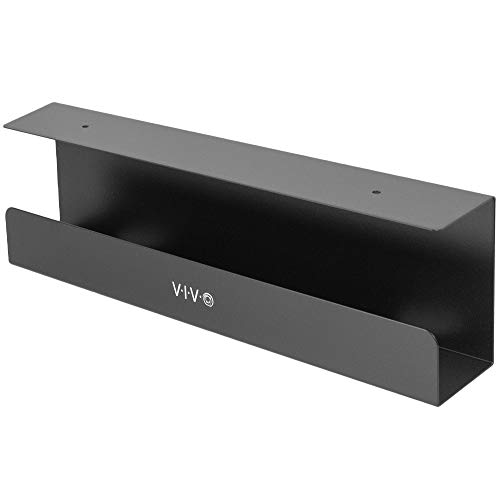
VIVO DESK-AC06-1C, Standard Black Under-Desk Cable Tray, One Tray
As an Amazon Associate we earn from qualifying purchases.
This is the standard black single-tray version. VIVO’s product page lists metal construction, dimensions of 16.5 by 3 by 4.5 inches, mounting holes 11 inches apart and an 11-pound capacity. Its current product page includes one- and two-tray variants, so check the quantity and model rather than relying on the page’s plural title.
The manufacturer’s stated mounting surfaces are wood and particle-board/MDF desktops. The tray is screw-mounted, not a no-drill adhesive product. Check your desk’s construction and hardware requirements before installation. A hollow desktop, glass top or obstructed underside needs a different solution or confirmation from the desk maker.
The open front makes the cables accessible, which is useful when you often unplug a laptop or replace accessories. Measure the actual power strip and adapters you intend to place inside. A 16.5-inch length does not guarantee that a long strip, bulky plugs and cable bends will fit together comfortably.
Do not treat the tray’s weight rating as an electrical rating or a promise that every desk can support that load. Mounting security depends on the desk and installation. Leave equipment ventilation clear and keep controls and plugs reachable.
VELCRO Brand ONE-WRAP: reusable ties for cable groups

This selected listing is the black 8-by-half-inch, 100-tie pack. It is different from the black-and-gray 50-pack and other ONE-WRAP sizes. The selected packaging image confirms the dimensions and count, while the manufacturer’s product guidance confirms the reusable, self-fastening design and slotted head.
These are a practical starting point for a desk that already has a cable support system. Group the monitor cables separately from a laptop lead that needs to move every day. The ties can be opened to remove one cable instead of cutting away a disposable plastic tie.
Use enough overlap for the tie to hold without crushing a cable bundle. Let connectors and cable bends sit naturally. These ties are for organization, not a certified lifting point, a repair for damaged insulation or a way to suspend heavy equipment. If the main problem is adapters on the floor, add suitable support rather than hanging their weight from the cords.
A layout that stays easy to use
Shut down and disconnect equipment as appropriate before rearranging it. Identify both ends of every cable. Remove unused leads, then position the equipment and test the new routing loosely before securing it. Labeling the ends is especially useful when several similar black cables disappear behind a monitor.
Keep a frequently removed laptop charger or USB cable on its own accessible route. Put the fixed monitor and dock connections where they can remain undisturbed. Avoid routing everything through a single tight bundle simply because it looks neat in a photograph; a setup that you can service is more useful than one that requires dismantling whenever a cable changes.
Arrange extra length into broad, relaxed runs rather than sharp folds. Check the cable maker’s bend guidance for delicate or specialized cables. Keep leads clear of chair wheels and away from places where drawers or desk mechanisms could trap them.
Standing desks need a movement check
Route the cables so the desk can reach both its lowest and highest positions without pulling a connector or dragging an adapter. The floor-to-desktop section needs enough slack for the full travel. A cable that looks correct while sitting may become taut when you stand.
Test slowly through the permitted height range after the initial setup and after adding equipment. Watch the entire route, including where it passes the desk frame and the wall outlet. Stop if anything snags. Follow the desk manufacturer’s cable-routing instructions where they specify dedicated clips or channels.
Keep electrical safety separate from tidiness
The Electrical Safety Foundation International warns against overloaded or damaged cords and chained power strips. Use a power strip according to its own instructions and connect it directly to the appropriate wall receptacle. Extra sockets do not increase the circuit’s capacity.
Do not hide hot, frayed or pinched wiring inside a tray. Keep cords out from under rugs and do not run them through walls as a substitute for installed wiring. If you rely on extension cords because the workspace lacks suitable outlets, have a qualified electrician assess the supply. A cable organizer cannot correct an electrical problem.
Which should you buy first?
Choose the VIVO tray when the desk supports screw mounting and the main problem is a collection of unsupported cords and adapters. Choose ONE-WRAP ties when your support is already adequate but individual leads are tangled or hard to change. For a no-drill desk, first identify a compatible clamp-on or manufacturer-approved routing option, then add ties as needed.
A successful setup leaves clear legroom, accessible plugs and enough slack for normal movement. Recheck it whenever the desk layout changes instead of adding another cable to an already cramped bundle.
Image note: AI-generated editorial illustration; not a photograph of the named product.