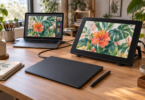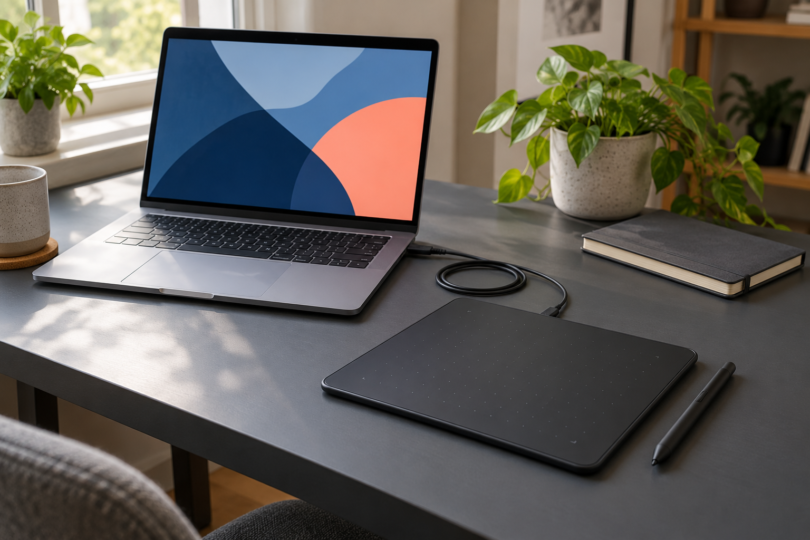

For a MacBook Pro, the Wacom Intuos Pro Medium PTK670 is our pick when you want pen input while keeping your laptop or external monitor as the drawing view. The Wacom Cintiq 16 DTK168 is the alternative for drawing directly on a separate screen. Choose between those workflows first, then check your exact macOS version and connections.
These recommendations compare documented features and setup requirements. We have not tested every MacBook Pro, dock or design application, and a shared USB-C connector does not establish complete compatibility.
Two Wacom options for a MacBook Pro
| Pick | Best fit | Connection | What to check |
|---|---|---|---|
| Intuos Pro Medium, PTK670K0A | Pen input beside your MacBook display; 411 g tablet | Bluetooth or USB; supplied USB-C-to-A cable | No screen or multi-touch; wired USB-C adapter may be needed |
| Cintiq 16, DTK168K0A | Drawing on a 16-inch, 2560 × 1600 display | Wired video/data and power | DisplayPort Alt Mode and USB Power Delivery for one-cable use; no multi-touch |
Wacom Intuos Pro Medium: best for a compact Mac workspace
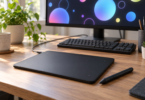
The PTK670 has a 263 × 148 mm active area and weighs 411 g. It is a practical fit for designers who already use the MacBook screen or a larger monitor and want a pen without another display. The tradeoff is that you draw on the pad while watching your work elsewhere; a pen display is worth considering if that separation bothers you.
Ten customizable ExpressKeys and two mechanical dials give you physical shortcut controls. The included battery-free Pro Pen 3 has three side switches, 8,192 pressure levels and tilt support. This exact Intuos Pro generation does not support finger multi-touch, so older listings describing a Touch Ring and touch gestures are not descriptions of the PTK670.
Bluetooth avoids occupying a USB port for pen input. For wired use, Wacom specifies a supplied 1.8 m USB-C-to-A cable and says an adapter may be required. Check your chosen package before assuming it includes an adapter for the MacBook’s ports. The standard set also includes Pro Pen 3, a pen stand, nibs, grips and switch accessories; it is not a standalone computer or a software license for every design app.

Wacom Intuos Pro Medium, PTK670K0A, with Pro Pen 3
As an Amazon Associate we earn from qualifying purchases.
Wacom Cintiq 16: best for drawing directly on screen
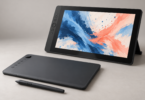
Choose DTK168K0A for its 16-inch IPS panel, 2560 × 1600 resolution and Pro Pen 3. Its 345 × 215 mm active area gives you a direct drawing surface for illustration and visual edits. This is the non-touch Cintiq 16 DTK168, not the older DTK1660 or a Cintiq Pro model. Match the code as well as the product name when comparing listings.
The 2 kg display is a less convenient carry-along than the Intuos Pro. It has no wireless connection or multi-touch. Fold-out legs give a 20-degree working angle; Wacom’s adjustable stand is sold separately. Plan a desk position that leaves access to your MacBook keyboard and trackpad rather than assuming the tablet replaces either.
The supplied USB-C video/data cable works with a suitable host connection; Wacom lists DisplayPort Alt Mode and Thunderbolt 3 or later support. Single-cable operation also requires USB Power Delivery. The package includes an AC adapter and a separate USB-C power cable when additional power is needed. If you use HDMI plus USB instead, the necessary HDMI-to-mini-HDMI and USB cables are separate purchases. Check the exact Cintiq connection requirements against your Mac and any dock, including support for 2560 × 1600 at 60 Hz.

A Mac compatibility check before you buy
Start with your exact macOS version and tablet model. Wacom’s checked driver 6.4.15-1 lists macOS 13–15, 26 and 27 and includes PTK670 and DTK168 in its compatible-products list. Use the release notes and driver downloads before installation or a major OS upgrade. Avoid treating the product page’s “macOS 13 or later” wording as a guarantee for every future release.
On macOS 27, Wacom’s setup guide calls for the driver, a restart, Accessibility and Input Monitoring permissions, and the relevant Wacom background item. Follow the guide for the OS actually installed on your Mac. On macOS 26, Wacom also documents a limitation in some System Settings windows where you may need the mouse or trackpad.
Driver support and application setup are separate checks. Adobe’s Photoshop instructions cover adding Photoshop to Wacom application settings and selecting Pen Pressure in the brush controls. Confirm the requirements and feature support of your own Photoshop version and other apps; buying a pressure-sensitive tablet does not turn on every brush feature automatically.
Be particularly careful with a used tablet. The same current driver explicitly drops Cintiq Pro DTH-1320 and DTH-1620 and directs owners to an earlier driver. That does not describe either recommended model, but it shows why “works with Mac” in an old listing is insufficient. Verify the exact device, OS, required driver and included cables together.
Frequently asked questions
Do Wacom tablets work with every MacBook Pro?
There is no blanket compatibility promise here. The two exact models are listed in the checked Mac driver, but your Mac must run a supported OS and provide the needed connection. The Cintiq also needs suitable video and power, including through any adapter or dock.
Which model needs fewer cables?
The Intuos Pro can use Bluetooth for pen input. Cintiq 16 is wired; one-cable use is conditional on the host’s DisplayPort Alt Mode and USB Power Delivery support. Otherwise, plan the supported video/data and power connections.
Is a pen included with either choice?
Both standard packages include Pro Pen 3. Check the exact seller bundle and model code, especially when comparing used devices, optional pens or accessory-only listings.
Can I use either without a Mac or another computer?
No. Intuos Pro PTK670 supplies pen input to a computer, and Cintiq DTK168 is an external pen display. Neither is the standalone tablet computer you might expect from the word “tablet.”
Why does the pen move but pressure not work in Photoshop?
Adobe identifies driver problems and brush settings among the possible causes. Check the Wacom driver and macOS setup, then the Photoshop application profile and brush pressure settings. Use the official troubleshooting steps for your software versions rather than assuming the pen hardware is faulty.