The best Wacom drawing tablet depends on where you want to see your work. The Intuos Small is a simple starting point for drawing while looking at your computer monitor. The Intuos Pro Medium adds a larger active area and more controls. The Cintiq 16 puts your computer’s canvas under the pen, while the MovinkPad 11 is a self-contained Android drawing tablet for use away from a computer.
This shortlist compares four actual Wacom devices using manufacturer documentation and the exact retail configurations below. It is a buying guide, not a hands-on test or a ranking based on measured drawing performance. Choose the device type first, then check your computer, software and connection requirements.
Compare the best Wacom drawing tablets
| Selected model | Best fit | Drawing surface and controls | Essential limitation |
|---|---|---|---|
| Wacom Intuos Small, wired, Black (CTL4100) | Learning pen input with an existing computer | 152 × 95mm active area; Pen 4K; four ExpressKeys | No screen or Bluetooth on this wired configuration |
| Wacom Intuos Pro Medium, Black (PTK670K0A) | Desktop work with room for broader pen movements | 263 × 148mm active area; Pro Pen 3; ten ExpressKeys and two dials | Still screenless; no multi-touch |
| Wacom Cintiq 16, non-touch, Black (DTK168K0A) | Drawing directly on a computer-connected display | 16-inch, 2560 × 1600 display; Pro Pen 3 | Needs a compatible host and video/data connection |
| Wacom MovinkPad 11, 8GB/128GB, Light Gray | A portable Android sketchbook | 11.45-inch, 2200 × 1440 touchscreen; Pro Pen 3 | Android app workflow; desktop display mode remains beta |
1. Wacom Intuos Small: a straightforward first pen tablet
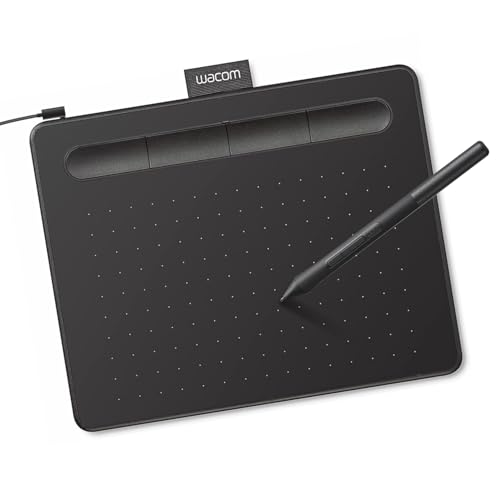
Wacom Intuos Small, Wired, Black, with Pen 4K
As an Amazon Associate we earn from qualifying purchases.
The wired Intuos Small makes sense when you already have a computer and want to add a drawing surface without adding another display. Its active area is 152 × 95mm, and the included battery-free Pen 4K has 4,096 pressure levels. Four ExpressKeys provide customizable shortcuts on Windows and Mac.
The CTL4100 selection here is the black wired model. Do not confuse it with the CTL4100WL Bluetooth version or the larger CTL6100WL. It connects using a USB-A to Micro-B cable; a computer with only USB-C ports may need an appropriate adapter.
- Why buy it: compact dimensions and an included pen make it an uncomplicated entry to screenless drawing.
- Know the limit: your hand moves on the tablet while your eyes follow the monitor. The small active area gives less physical room for large strokes than the Pro Medium, and this configuration has no Bluetooth or touch gestures.
See Wacom’s Intuos specifications. Check the current driver requirements for your operating system rather than buying on an old Windows or macOS minimum alone.
2. Wacom Intuos Pro Medium: more control at the desktop

The PTK670 generation of Intuos Pro Medium is the step up for someone who wants a screenless tablet with more working space. Its 263 × 148mm active area is substantially larger than the Intuos Small’s. Ten ExpressKeys and two mechanical dials give you more ways to assign shortcuts for tools, navigation and brush adjustments.
Wacom includes Pro Pen 3 and supports both USB and Bluetooth connections. The pen offers 8,192 pressure levels and tilt support, but those numbers alone do not establish better artwork or a guaranteed feel in every application. Choose it for the surface size, controls and supported workflow.
- Why buy it: a larger active area and extensive physical controls without needing a second display.
- Know the limit: this model has no multi-touch. Shoppers replacing an older touch-capable Intuos Pro should not assume that feature carries over. The selected model is PTK670K0A, not the older PTH660 generation.
Wacom’s specifications list Windows 10 or later and macOS 13 or later, with a driver required for full functionality. Check the current driver and your drawing application’s requirements together.
3. Wacom Cintiq 16: draw directly on your computer’s canvas

The Cintiq 16 DTK168 is a pen display, so it is the natural option here if you want the image under your pen while continuing to use a computer’s drawing software. It has a 16-inch, 2560 × 1600 IPS display, anti-glare glass, direct bonding and an included Pro Pen 3. Its built-in support provides a 20-degree working angle.
This is the newer DTK168 model, not the older DTK1660 Cintiq 16. The shared “Cintiq 16” name makes the model code important when comparing offers, cables and specifications.
- Why buy it: a larger direct drawing surface than the MovinkPad 11 while keeping your compatible desktop applications.
- Know the limit: the selected display is non-touch and cannot run applications by itself. It also does not provide the Intuos Pro’s bank of ExpressKeys and dials; plan around your keyboard, pen controls or an optional remote.
Wacom’s connection requirements call for USB-C with DisplayPort Alt Mode, or an HDMI and USB connection. An ordinary charge-only USB-C connection is insufficient. Check the required cables and power arrangement for your host; a simple connector-shape match does not establish compatibility.
4. Wacom MovinkPad 11: the standalone sketching choice

The MovinkPad 11 is the self-contained option in this shortlist. Wacom specifies an 11.45-inch, 2200 × 1440 touchscreen, 8GB RAM, 128GB storage and a 588g body. The included battery-free Pro Pen 3 works with its built-in Android drawing environment; a separate computer is not needed for that use.
It is a good fit for sketching on the sofa, between classes or away from a desk if your preferred work can be done in Android apps. Wacom Canvas is included, and the advertised Clip Studio Paint DEBUT offer is a two-year license requiring a CELSYS account and applicable terms. It is not a promise of every paid drawing app forever.
- Why buy it: screen, computer and pen are brought together in a portable drawing device.
- Know the limit: Android apps are a different software environment from Windows or macOS. The selected 11-inch retail option is the MovinkPad 11, not the Movink 13 external display or MovinkPad Pro 14.
Wacom now offers Instant Pen Display mode for this model through Wacom Lab, but labels it beta and does not guarantee performance. Do not make that feature the sole reason to buy it as a Cintiq replacement.
Choose by software and connections, then by size
For an existing Windows or Mac workstation, verify the exact model in Wacom’s driver support and check the drawing app’s system requirements. Wacom’s current download page lists Windows 10/11 and macOS 13 or later among its supported systems; the older minima still printed on some product pages are not proof that the newest driver will run on an old computer.
Do the connection check separately. A screenless tablet needs a supported data connection; a pen display also needs video and sufficient power. For Cintiq, verify DisplayPort Alt Mode or the necessary HDMI/USB route. Wacom also lists qualified Android and ChromeOS support for the DTK168, with device-specific video and feature limits, so do not generalize desktop behavior to every phone or Chromebook.
For MovinkPad’s beta computer-display mode, Wacom lists Windows 11 with exclusions for Arm Windows, and supported macOS versions on non-Intel Macs. These are distinct requirements from its ordinary standalone Android operation. Read the current setup instructions before planning a mixed desktop/mobile workflow.
What matters more than the pressure-level number?
- Where you look: choose screenless drawing at a monitor, direct drawing on a connected display, or a standalone Android device.
- Active area: compare the drawing area, not just the outside dimensions. Think about desk space and the size of your usual pen movements.
- Shortcuts and touch: ten keys and two dials can be useful if you assign them. They are different from finger gestures, which the selected Intuos Pro and Cintiq do not support.
- The complete setup: include any adapters, alternative stand, case and software subscription in your budget. Confirm the exact model, condition, seller and bundle before checkout.
Software must support the pen features you want. A pressure-sensitive brush, tilt-aware tool and your own settings matter more than choosing a tablet solely because its specification has the largest number. None of these recommendations claims a measured latency or drawing-quality advantage.
Frequently asked questions
Which Wacom tablet is a sensible first purchase?
The wired Intuos Small is a sensible starting point if you already have a compatible computer and are willing to learn screenless drawing. Choose Cintiq if seeing the canvas under the pen is essential, or MovinkPad 11 if you specifically want a standalone Android sketching device.
Do all Wacom tablets need a computer?
No. The Intuos models need a host, and the Cintiq 16 is a connected pen display. MovinkPad 11 has its own Android computing hardware for standalone drawing. Its optional beta computer-display mode is a separate feature with additional requirements.
Does the Intuos Pro Medium support touch gestures?
The PTK670 generation recommended here does not have multi-touch. Its ten ExpressKeys and two dials are physical controls. Check the model code carefully if you are comparing it with an older touch-capable Intuos Pro.
Will any USB-C cable connect a Cintiq 16?
No. The USB-C route needs a host and cable that support DisplayPort Alt Mode, plus the required power. Wacom also documents an HDMI and USB route. A charge-only cable or data-only USB-C port is not enough to carry the picture.
Can I reuse an existing Wacom pen?
Do not assume Wacom pens are interchangeable. The Intuos Small here includes Pen 4K; the other three selections include Pro Pen 3. Check the exact tablet and pen compatibility before buying a spare or relying on an older pen. Included software offers also have their own eligibility, account and license conditions.