

For a mobile or manufactured home, compare floating rigid vinyl, glue-down luxury vinyl, and sheet vinyl after checking the subfloor and the home’s temperature conditions. Waterproof flooring can be practical for everyday spills, but the right product depends on the complete installation. Get written confirmation that the exact flooring and installation method suit your home.
A waterproof plank does not make the subfloor, seams, room perimeter, or plumbing connections waterproof. Repair active leaks and have soft or damaged areas assessed before covering them. This guide concerns a residential manufactured home; approval for that use does not automatically cover a motorhome, travel trailer, or a home being transported.
Research disclosure: Manufacturer product pages, installation instructions, and warranty documents were reviewed October 4, 2026. We have not installed or flood-tested these floors. The examples below illustrate three constructions, not a guarantee of suitability for every manufactured home.
Three product families worth comparing
| Example | Construction | Useful starting point | Important tradeoff |
|---|---|---|---|
| Mannington ADURA Rigid | Floating solid-polymer-core vinyl | A plank or tile look with click installation | Requires flatness, expansion space, and freedom to move |
| Mannington ADURA Flex | Fully adhered luxury vinyl | Long runs and layouts with fewer transition strips | Substrate preparation and adhesive selection are central |
| Mannington Luxury Vinyl Sheet | Sheet vinyl; several installation methods | A room layout that can minimize seams | Method, seams, and temperature requirements need checking |
These are examples from one manufacturer with published installation documents, chosen to make the construction differences clear. Compare alternatives using their own current instructions rather than assuming that all waterproof vinyl follows the same rules.
1. ADURA Rigid: a floating-plank candidate
ADURA Rigid uses an SPC, or solid polymer core, construction. It is a candidate when you want separate planks or tiles without a full adhesive installation.
Its installation guide requires a suitable, flat substrate and expansion allowances. It permits several wood-panel substrates only when they meet the stated condition requirements. That does not approve a soft, swollen, or flexing floor.
Buying checks: The product already has an attached pad; Mannington does not recommend adding another. Its floating installation must not be trapped under cabinets or kitchen islands. Ask the installer how fixed cabinets, doorways, floor registers, and transitions will be handled before accepting a quote.
2. ADURA Flex: compare the preparation cost
ADURA Flex is a waterproof glue-down LVT family with wood and tile looks. Mannington identifies long runs without transition strips as a benefit, and allows cabinets above this product. Those characteristics make it worth comparing for an open layout.
Buying checks: The 2026 installation instructions specify compatible adhesives and prepared substrates. For wood subfloors, the required underlayment preparation matters; do not assume existing particleboard or construction panels are ready for direct glue-down installation.
Get a separate line item for preparation, moisture assessment, adhesive, and installation. A lower material price can lose its advantage if the existing surface requires extensive work. Keep spare matching pieces and ask the installer to explain the approved repair procedure.
3. Luxury Vinyl Sheet: plan the room and seams
Mannington Luxury Vinyl Sheet, including REVIVE designs, is marketed as waterproof and comes in Silver, Gold, and Platinum constructions. A sheet layout can reduce the number of joints compared with individual planks, depending on room dimensions and roll width.
Buying checks: The current sheet-vinyl instructions distinguish fully adhered, releasable-bond, and loose-laid methods. Loose lay is not a universal shortcut: the guide limits that method to one major seam and requires the floor to remain unpinned. It also says not to install LVS beneath permanent fixtures such as cabinets.
Have the installer provide a seam plan, identify the exact construction, and confirm the approved adhesive or seam treatment. Check the sample in your own lighting before choosing a large, repeating pattern.
Manufactured-home checks that matter more than color
- Home identification: Give the installer the home’s manufacturer, year, and relevant records. Ask the home manufacturer and flooring supplier about restrictions, especially if relocation is planned.
- Existing floor: Identify panel material, previous coverings, moisture damage, and movement. Request a written assessment where the floor feels soft or uneven. Decorative flooring and underlayment are not repairs for structural problems.
- Total added weight: Ask for the combined weight of flooring, underlayment, and preparation materials. Have a qualified manufactured-home professional assess suitability; no universal weight allowance applies to every home.
- Climate: Disclose whether heating and cooling stay on year-round. Room temperature, direct sun, and seasonal shutdowns can change which installation is permitted.
- Movement and details: Ask how expansion, door clearances, transitions, multi-section-home joints, and fixed fixtures will be handled without restricting required movement.
- Written scope: Obtain the exact SKU, installation-method instructions, preparation specification, waste allowance, and warranty. Keep these with the invoice.
If older flooring or adhesive may contain asbestos, stop before disturbing it. EPA guidance advises against sanding, scraping, or drilling suspect materials and recommends trained professionals when assessment or removal is needed.
Read “waterproof” alongside the warranty
The ADURA Rigid warranty excludes improper installation, inadequate subfloor preparation, and specified damage involving flooding or leaks. Similar-sounding lifetime warranties can protect different things.
Ask exactly what happens after a dishwasher leak: which flooring damage, removal, drying, subfloor work, and reinstallation would be covered? Continue cleaning spills promptly and investigate moisture underneath. A waterproof surface is not a reason to leave a leak unresolved.
Frequently asked questions
Can I leave the home unheated in winter?
Do not assume so. ADURA Flex and Luxury Vinyl Sheet instructions require temperatures to remain at least 55°F after the specified installation period. ADURA Rigid’s seasonal-home recommendation specifically refers to a concrete substrate. That wording is not blanket approval for an unheated manufactured home with a wood subfloor.
Is thicker flooring always better?
No. Compare the construction, wear warranty, finished floor height, total installed weight, and substrate requirements. Thickness alone does not establish suitability or fix unevenness.
Can I install waterproof vinyl over a damaged floor?
Have the damage and its cause addressed first. Ask a qualified installer or manufactured-home professional to confirm that the repaired substrate meets the flooring instructions before installation begins.
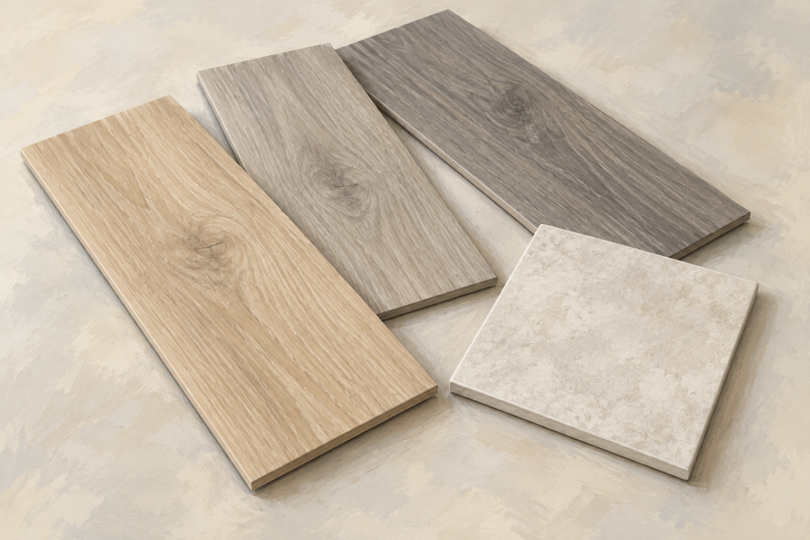
Image note: Generic editorial flooring illustration; appearance alone does not establish waterproofing, subfloor condition or suitability for a manufactured home.