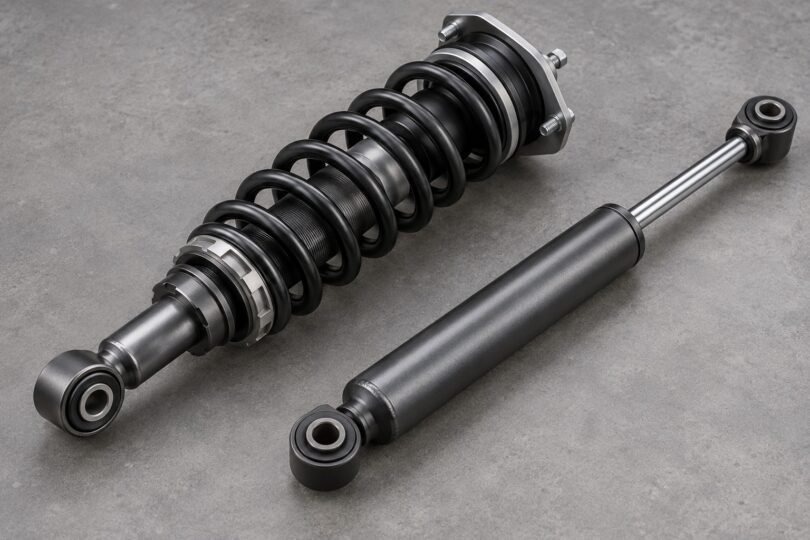

For a 2004 Nissan Armada, start with the vehicle’s VIN, drivetrain and suspension equipment before choosing front replacement parts. Parts catalogs may call this model the 2004 Nissan Pathfinder Armada. Selecting a regular 2004 Pathfinder can lead to the wrong components.
Also decide whether you need a bare front damper or a complete spring-and-damper assembly. Those purchases can have very different contents and labor requirements, even when a retailer calls both products “front struts.”
What suspension does the 2004 Armada have?
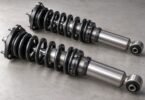
Nissan describes the front suspension as an independent double-wishbone arrangement with coil-over shock absorbers. The spring surrounds the front damper, but that does not make every product labeled “strut” interchangeable. Match the catalog application and part number, not the shape of a product photo.
The 2004 Nissan press kit identifies SE, SE Off-Road and LE equipment, 2WD and 4WD versions, and Rancho shock absorbers for the Off-Road equipment. It describes the air-leveling system as a rear suspension feature associated with towing equipment. A rear air-leveling repair or conversion is a separate job from replacing front dampers.
Record these details before looking up parts
- Model and VIN: identify the 2004 Pathfinder Armada/Armada rather than the smaller Pathfinder.
- Drivetrain: record 2WD/RWD or 4WD. Do not substitute the drivetrain selected by a retailer’s default vehicle filter.
- Trim and equipment: check SE, LE and any Off-Road equipment or factory shock specification.
- Present suspension: tell the supplier about replacement springs, leveling spacers, lift kits or other changes. The original VIN does not describe aftermarket modifications.
- Position and repair scope: request front parts and say whether the job is damper-only or includes springs and upper mounts.
Ask the installer or parts supplier to confirm the application against those details before ordering. A listing that says only “fits 2004–2015 Armada” leaves important questions unanswered.
Bare damper or complete assembly?
| Purchase type | What it means | What must be checked |
|---|---|---|
| Bare front damper | The shock absorber component, sometimes supplied with a spring seat or small hardware | Which existing spring, mount, isolators and other parts are reused or replaced; exact supplied hardware |
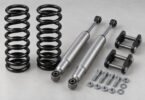
| Complete or loaded assembly | A preassembled unit intended to include the damper, spring and mounting components | The exact vehicle application, spring specification, contents, side and number of assemblies |
| Front-and-rear kit | A seller’s package covering more than the front axle | Every individual part number and any rear air-leveling exclusions or conversion requirements |
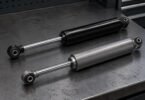
“Assembly” in a product title is not proof that a coil spring is included. Inspect the bill of materials and written description. For example, KYB describes its Strut-Plus product family as preloaded with a spring, top mount and insulators, but that family description alone does not establish an application for your Armada.
If the existing springs or mounts need replacement, compare the complete installed cost of a verified loaded unit with the cost of a damper plus the necessary separate parts. Have the suspension inspected before assuming a new damper alone will correct a sagging corner or a noise.
Two manufacturer-listed front damper candidates
Bilstein’s manufacturer pages list the 2004 Pathfinder Armada among the applications for the following part numbers. These are useful starting points for a vehicle-specific quote. The public model lists do not, by themselves, resolve every drivetrain, trim and modified-suspension combination; have the supplier confirm your exact configuration.
Bilstein B6 4600: 24-197656
Bilstein 24-197656 is a B6 4600 suspension shock absorber from the manufacturer’s stock-height product family. Its specifications list a spring seat and boot, and non-adjustable damping. It is a candidate to investigate when keeping the factory ride-height arrangement.
It is not a complete loaded spring assembly. The linked installation instructions describe reusing original suspension components only when they are in suitable condition. Budget for any additional parts your installer identifies rather than treating the damper as a complete front-suspension rebuild.
Bilstein B8 5100: 24-197649
Bilstein 24-197649 is the B8 5100 ride-height-adjustable option listed for this model. The adjustment concerns spring-seat position; the manufacturer lists damping as non-adjustable. A height-adjustable damper is not the same thing as an electronically adjustable shock or a loaded assembly.
Its application-linked instructions use the original coil spring and upper mount. They describe typical height settings and note that the actual result depends on the factory suspension, its condition, accessories and modifications. Have a suspension specialist confirm whether this is appropriate for the planned setup. Raising the ride height can raise the vehicle’s center of gravity and increase the risk of loss of control or rollover. Do not order it on the assumption that the maximum advertised lift will suit every vehicle.
Neither candidate is presented here as a universal fit for every 2004 trim, a complete two-piece package or a tested ride-quality winner. The manufacturer’s application guide and your vehicle details should control the final selection.
Check left, right and quantity before checkout
A front-axle replacement involves two corners, but a listing may sell only one damper. A photograph showing two parts does not establish the quantity supplied. Equally, a “quantity per vehicle” field is not a reliable description of what is inside the seller’s package.
Ask for a written answer to three questions: Does this exact part number fit the front left, front right or both? Is the price for one unit or a pair? What spring, mount, boot, washers, bushings and fasteners are actually included? Do not assume left/right interchangeability from visual similarity or copy the contents of another seller’s kit.
Bilstein’s instructions call for installation as a set when replacing another brand. Discuss matched front dampers with the installer, especially if the existing parts are different brands or have unknown histories.
Why rear air-leveling notes need separate attention
If you are buying only front dampers, a rear air-leveling fault is not a reason to choose a front “air strut.” If you are buying a four-corner package, the rear parts must also match the actual rear suspension and the intended repair.
Do not assume a generic rear shock substitutes for an air-leveling component, and do not assume a kit includes conversion springs or every required component. Keep front replacement and any rear conversion as separate, explicitly specified jobs. A parts change does not establish a higher towing or payload rating.
Installation and alignment
Coil springs store substantial force. Bilstein’s instructions require installation by a qualified suspension specialist with appropriate tools and direct the installer to the vehicle service manual. A bare damper replacement can require transferring a loaded spring and associated components, so this is not a job to improvise from a shopping guide.
A complete preassembled unit changes the parts-handling work, but it still requires correct fitment, vehicle support and installation. Ask the shop to inspect related mounting components, follow the exact part instructions and use the vehicle manufacturer’s service specifications.
For the Bilstein options above, the instructions call for checking wheel alignment and adjusting it to the vehicle specifications as needed. Include that assessment in the quote. Do not treat an unchanged steering-wheel position after installation as proof that the alignment is correct.
How to compare quotes fairly
Request an itemized quote with the manufacturer and part number, front-left/front-right application, number of units, any new springs or mounts, labor, alignment assessment and applicable warranty terms. Compare the total for the same repair scope. A cheaper bare damper and a complete assembly are not like-for-like purchases.
For a stock vehicle, begin with a VIN-confirmed stock-height solution and a condition assessment of the existing springs and mounts. For a lifted or modified vehicle, start with the suspension specialist’s application recommendation. In both cases, exact fitment and package contents matter more than an unqualified “best struts” ranking.