
The best struts for a Toyota Matrix are the ones cataloged for its exact year, drivetrain, trim and suspension position. Start with a VIN-based fitment check, then decide whether the repair calls for complete strut assemblies or individual dampers. A well-known brand cannot make an incorrectly specified spring or mounting bracket fit safely.
For a stock-height daily driver, useful options to compare are KYB Excel-G individual shocks and struts, KYB Strut-Plus complete assemblies, Monroe Quick-Strut assemblies and genuine Toyota service parts. Availability must be checked for each corner of your particular car. None of those product families is a universal four-corner Matrix kit.
Identify your Matrix before comparing parts
Divide the search into the original 2003–2008 model range and the redesigned 2009-onward range, then narrow it further. Toyota introduced the all-new Matrix for the 2009 model year. A part that physically resembles one from the earlier car is not proof of interchangeability.
Record these details before asking for a quote:
- Model year and market: use the car’s model year, and specify whether it is a U.S. or Canadian vehicle.
- Drivetrain: front-wheel drive or all-wheel drive. Early Toyota material may describe the latter as 4WD.
- Trim and engine: include the full designation, such as Base, XR, XRS, S or L, where applicable.
- Transmission and build information: keep the VIN available for any catalog qualifiers or production breaks.
- Position: front or rear, then left or right.
- Current suspension: tell the shop about lowering springs, coilovers, spacers or earlier modifications.
Do not substitute the year of registration for the model year. If the badge is missing, the VIN and vehicle records are better starting points than appearance. The KYB catalog supports vehicle and VIN searches; Toyota’s official parts store also accepts a full VIN for U.S. vehicles.
Why front, rear, FWD and AWD matter
Front struts and rear dampers are not interchangeable categories. A rear suspension may use a different layout even when the front uses MacPherson struts. Retailers sometimes group shocks, struts and spring assemblies under one heading, so match the actual catalog description and mounting position rather than the search-result wording.
- Early FWD example: Toyota’s 2003 FWD specification sheet lists MacPherson front struts and a torsion-beam rear suspension with gas shock absorbers.
- Early 4WD example: the separate 2003 4WD specification sheet lists an independent double-wishbone rear suspension. That is a direct reason to keep FWD and 4WD rear parts separate.
- Redesigned-model example: Toyota Canada’s 2009 specifications distinguish the torsion-beam rear arrangement of Matrix and XR models from the double-wishbone arrangement on AWD and XRS models. FWD alone is therefore not enough to identify every rear setup.
- Later Canadian example: Toyota’s 2014 Canadian announcement describes a 1.8-liter lineup with independent front and torsion-beam rear suspension. Do not carry an earlier AWD or XRS assumption into that model year.
These examples explain the fitment traps; they are not a replacement for a current parts catalog. Check the precise year and market even within one generation. A listing that says “Corolla/Matrix/Vibe” still needs to identify your exact application.
Four replacement options worth comparing
KYB Excel-G: individual damper replacement
KYB Excel-G is positioned by its manufacturer as an original-handling replacement line, using a nitrogen-gas-charged twin-tube design. It is a sensible line to investigate when a technician plans to retain serviceable springs or select surrounding components separately.
The important buying distinction is what the specific box contains. An individual strut is not automatically supplied with a new spring, upper mount, bearing, boot and bump stop. Ask for those items to be inspected and itemized in the quote. A low damper price becomes less meaningful if several additional parts and assembly labor are needed.
KYB Strut-Plus: a complete-assembly route
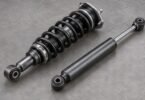
KYB Strut-Plus assemblies combine a strut with a spring, top mount and insulators. That packaging is useful when the repair should renew the assembly’s components together, rather than transferring old pieces onto a replacement damper.
First confirm that Strut-Plus is cataloged for the specific Matrix position being repaired. Do not assume that front availability means a matching rear assembly exists, or that one listed spring specification covers every engine and trim. Compare the total installed quote with an individual-strut repair.
Monroe Quick-Strut: another complete-assembly option
Monroe Quick-Strut is a fully assembled replacement family with application-specific springs and mounts. Monroe describes it as designed to restore factory ride height and ride quality. Those are manufacturer design aims, not evidence that every Matrix owner will prefer the same ride feel.
Use Monroe’s vehicle catalog to choose the exact part. Read every qualifying note before comparing listings. A retailer’s broadly worded title or a visually similar assembly should not override a manufacturer exclusion.
Genuine Toyota service parts: a VIN-led alternative
Ask a Toyota parts department for the current service part numbers against your VIN when aftermarket applications are unclear, the vehicle has an unusual specification or you want an original-parts quote. Request a written breakdown of the dampers, mounts, springs and associated hardware included.
Do not assume a Toyota quote is for a preassembled unit, or that an aftermarket brand’s original-equipment relationships make every retail product identical to the factory part. Compare the actual repair contents and fitment evidence.
Complete assembly or bare strut?
A complete assembly can simplify a repair when several surrounding parts are worn. An individual strut can make sense when a professional has assessed the spring and other components and intends to reuse appropriate serviceable items. Neither format wins on price until the whole job is quoted.
Keep three questions separate: does the part fit, does its package include what the repair needs, and does the installed cost make sense? A cheaper bare strut and a more expensive loaded assembly may cover substantially different work. Conversely, replacing an entire assembly is not a diagnosis for a noise caused elsewhere.
Request an inspection before ordering on the strength of a rattle alone. KYB’s professional installation guidance notes that stabilizer bushings and links can be mistaken for strut-related noise. Ask the shop to distinguish the damper, mount, spring and other suspension components in its findings.
Left, right and pack quantity: check all three
Use left and right as viewed from the vehicle’s seating position facing forward. For a left-hand-drive Matrix, the front left is the driver’s side. Record both the position and the manufacturer’s complete part number; similar numbers can distinguish opposite sides.
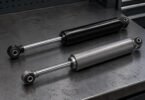
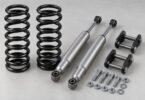
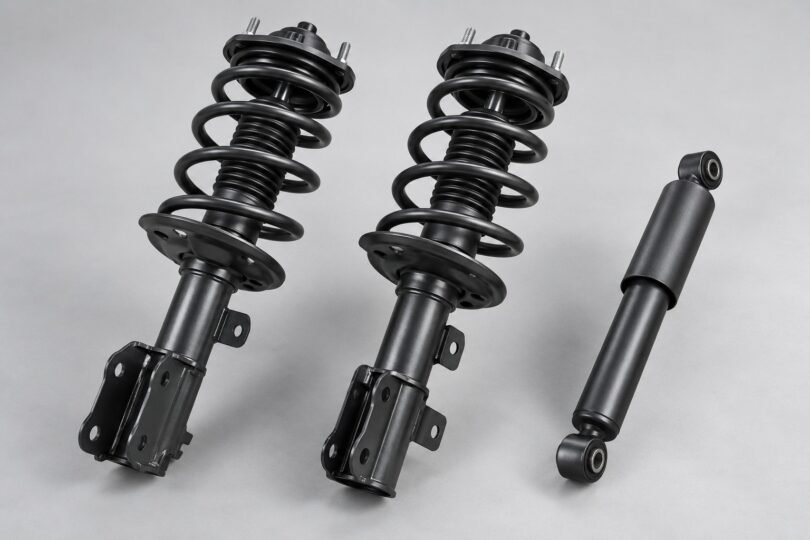
A photograph showing two assemblies does not prove that the sale includes a pair. Before payment, verify whether the listing supplies one corner, a front pair, a rear pair or a four-piece kit. For a bundle, obtain each included part number and check each application separately. Do not buy two identical front units merely because the site offers a quantity selector.
Budget for safe installation and alignment
Suspension springs store substantial energy. Have a qualified suspension technician handle the work, particularly any job requiring transfer or disassembly of a spring. This buying guide is not an installation procedure. Monroe’s assembly instructions warn against removing the rod nut because sudden spring release can cause serious injury.
KYB’s safety guidance calls for replacing shocks or struts in pairs and having the vehicle aligned after strut replacement. A complete assembly removes the need to transfer the spring during that replacement; it does not remove the need for correct procedures, vehicle-specific torque specifications and a post-installation check.
Ask for an installed quote that separates matched parts, required mounts or hardware, labor and alignment. Also clarify the seller’s return terms before a part is installed, and what happens if a catalog error is discovered. These details are more useful than an unsupported mileage promise or a generic “lifetime” claim.
The final buying decision
Choose the repair format after diagnosis, confirm every corner in the manufacturer’s catalog, and compare like-for-like installed quotes. KYB Excel-G, KYB Strut-Plus, Monroe Quick-Strut and Toyota service parts provide different routes to that decision. Exact fitment and competent installation should determine the shortlist before brand preference does.