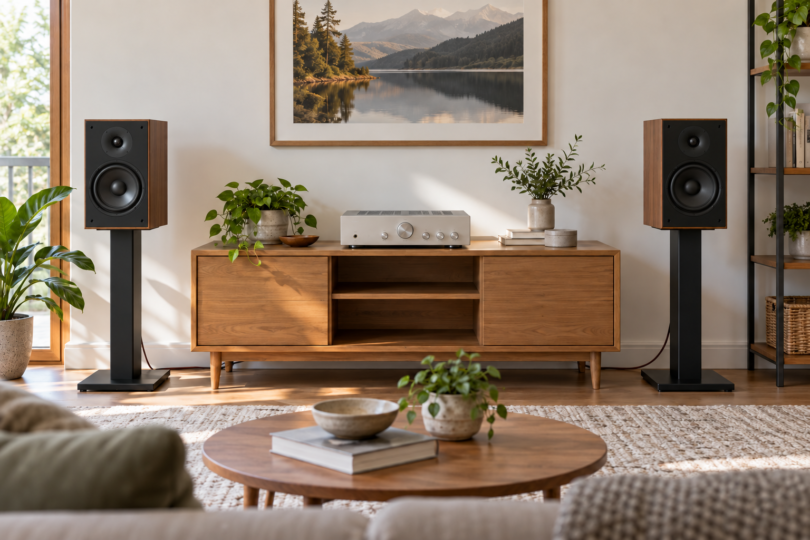

The best passive speaker for your setup is a pair that fits your room and the amplifier you plan to use. Start with the ELAC Debut 3.0 DB63 for a conventional 6.5-inch two-way system, the Q Acoustics 3020c for a shorter cabinet, the Sony SS-CS5M2 when cabinet depth matters, or the KEF Q Concerto Meta for a separate bass-and-midrange design.
These picks focus on home bookshelf and standmount speakers. Recommendations reflect documented design and system fit; there is no claimed listening-test winner. The selected offers are pairs, so compare the total for two speakers plus the equipment your setup still needs.
Every pair here needs an external amplifier or receiver. A passive speaker does not contain its own power amplifier. Check the amp’s speaker-load requirements before buying, and include speaker cable in your setup plan. KEF explains passive and active speaker systems in more detail.
The four passive speaker pairs at a glance
| Pair to compare | Best fit in this shortlist | Cabinet H × W × D, each | Amplifier check |
|---|---|---|---|
| ELAC Debut 3.0 DB63-BK, Black Ash, pair | 6.5-inch two-way system | 339 × 195 × 298 mm | 6Ω nominal; recommended amp 20–140W |
| Q Acoustics 3020c, Pin Oak, pair | Shortest cabinet here | 279 × 175 × 281 mm | 6Ω nominal, 3.7Ω minimum; 25–90W |
| Sony SS-CS5M2, black, pair | Shallowest cabinet here | 335 × 178 × 220 mm | 6Ω rated; 100W maximum input is not an amp-power range |
| KEF Q Concerto Meta, Black, pair | Dedicated midrange plus bass driver | 415 × 210 × 315 mm | 4Ω nominal, 3.2Ω minimum; 15–180W |
Dimensions describe each cabinet, not a shipping box or the width of a stereo pair. Allow extra space for connections, placement and any stands. Amplifier recommendations do not mean that the speaker generates that wattage, and the Sony maximum-input figure is a different type of specification.
1. ELAC Debut 3.0 DB63: a practical starting point for a two-way stereo system
The ELAC DB63 combines a 6.5-inch aramid-fiber woofer with a 1-inch aluminum tweeter. Choose the DB63-BK Black Ash pair if you want this larger two-way layout and have space for its 298mm-deep cabinet. Check the full model number: DB53 and earlier Debut models are different speakers.

ELAC Debut 3.0 DB63-BK, Black Ash, pair of 2 speakers
As an Amazon Associate we earn from qualifying purchases.
ELAC specifies 6Ω nominal impedance and a 20–140W recommended amplifier range. Use those as starting points when checking your amp’s documentation. A large woofer or a high wattage figure alone does not establish how a system will sound in your room.
The main tradeoff is placement. ELAC’s Debut 3.0 manual suggests starting about one to two feet from walls and corners, then adjusting. That makes it a better shortlist candidate for an open stand or console position than a tight enclosed cubby. Its listed cabinet depth is only the first measurement to check.
2. Q Acoustics 3020c: the compact-height choice
At 279mm tall, the Q Acoustics 3020c has the shortest cabinet in this four-model comparison. Its 120mm bass driver and 22mm tweeter suit a shopper prioritizing a smaller enclosure. The selected Amazon offer is a Pin Oak pair; other finishes are separate choices.

The 3020c is still 281mm deep, so a short cabinet does not automatically fit a shallow shelf. It is rated at 6Ω nominal but drops to a stated 3.7Ω minimum, with a 25–90W recommended amplifier range. Check that complete load information with your amplifier maker.
Q Acoustics lists two speakers, two grilles, two foam bungs and an owner’s manual in the box. The bungs are useful for experimenting with placement near a wall; they do not remove the need to leave room for the connections or support each cabinet securely. Budget separately for the amplifier and any stands.
3. Sony SS-CS5M2: compare when cabinet depth is limited
The Sony SS-CS5M2 pair is 220mm deep, the shallowest cabinet here. Each speaker is 335mm tall and 178mm wide. That gives you a useful alternative when a taller, shallower shape fits your furniture better than the Q Acoustics design. Leave clearance behind the terminals and follow the setup instructions.

Sony calls this a three-way, three-driver speaker: a 5.12-inch woofer, a 0.98-inch tweeter and a 0.75-inch super tweeter. Its driver arrangement differs from the KEF’s dedicated bass, midrange and tweeter arrangement, so the shared “three-way” label is not a sound-quality ranking.
Sony’s specifications give a 6Ω rated impedance and 100W maximum input power. The latter is a handling limit, not a built-in amplifier or a recommendation to buy a 100W amp. The product is sold as two speakers; the supplied-accessories field lists an instruction manual. Plan the receiver or amplifier and cabling separately.
4. KEF Q Concerto Meta: for a separate midrange-and-bass design
The KEF Q Concerto Meta separates bass duties into a 165mm driver, alongside a Uni-Q array combining a 100mm midrange unit and 19mm tweeter. Choose it for that three-way architecture when you can accommodate the largest cabinets in this shortlist. Each is 415mm tall and weighs 9.5kg, so check stand size and load capacity.
The key buying constraint is the amplifier: KEF specifies 4Ω nominal impedance, a 3.2Ω minimum and 15–180W recommended power. Confirm your amplifier is suitable for this load. Its 85dB sensitivity is a manufacturer specification, not a promise about loudness at your listening position.
The selected offer is the Black pair. KEF lists a pair of magnetic grilles, rubber feet, port bungs and documentation with the speakers. An amplifier and floor stands are separate purchases. Include them in the comparison if you do not already own suitable equipment.
How to choose the pair that fits your system
- Check impedance before watts. KEF’s impedance guide explains why the load changes with frequency. Read both nominal and minimum ratings where supplied, then check the amplifier’s permitted speaker load. Do not assume a 6Ω label tells the whole story.
- Measure usable space. Include cabinet depth, cable clearance and the distance you can leave to walls. Start with the manufacturer’s placement guidance, then adjust by listening. For ELAC, the manual’s one-to-two-foot starting distance needs more space than its cabinet dimensions alone.
- Choose for the room you have. If possible, audition with familiar music at your normal volume. Keep the tweeters near seated ear height and experiment with positioning. Reduce volume if you hear distortion; a speaker’s wattage figure does not make overdriving it harmless.
- Match the exact offer. Confirm model suffix, finish and whether the price covers one cabinet or a pair. All four offers above are pairs. A photographed amplifier, stand or subwoofer is not automatically part of the speaker purchase.
- Compare the complete cost. Include the amp, speaker cable, stands and any source component you need. Read the selected seller’s return terms before buying. A useful home audition matters more than an unsupported claim that one speaker is universally best.
Frequently asked questions
Can I connect these speakers straight to my phone or TV?
You need an amplifier or receiver between the source and these passive speakers. Choose amplification with the inputs your phone, television or other source needs. The speaker purchase itself does not provide Bluetooth, an HDMI input or a power amplifier.
Does a passive radiator make a Bluetooth speaker passive?
No. For this buying guide, passive means the loudspeaker relies on an external power amplifier. A component described as a passive radiator does not establish that the complete speaker system works that way. Check the system’s amplification requirements.
Are all four sold as pairs?
Yes, the exact configurations linked here are pairs of two speakers. Still check the selected seller and variant before paying. Speakers from a related range, especially center-channel models, can be sold individually.
Which pair should I compare first?
Start with the ELAC if you have space for a conventional 6.5-inch two-way setup. Compare the Q Acoustics when height is the constraint, and the Sony when cabinet depth is tighter. Consider the KEF when you want a separate midrange-and-bass design and have suitable amplification and stands.