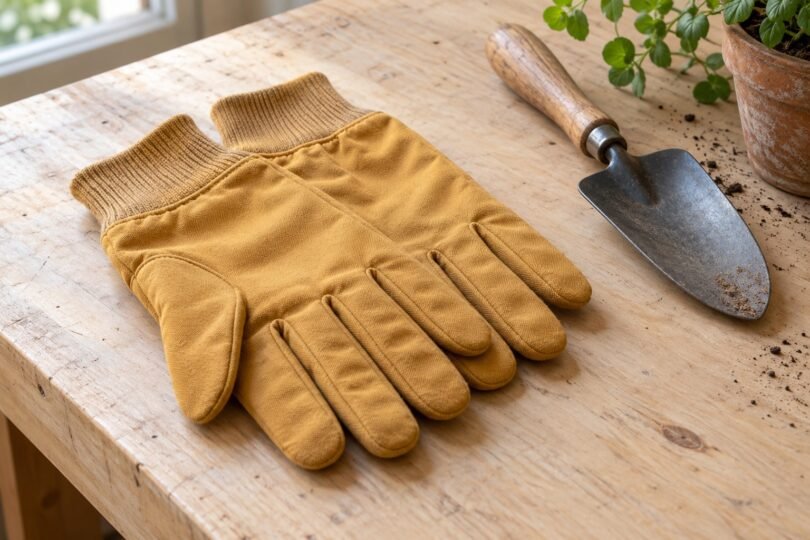

The best chore gloves are the ones that match the actual job and fit your hands. Traditional cotton or cotton-blend chore gloves are useful for dry, light-duty work where comfort and keeping everyday dirt off your hands matter. They are not automatically the right choice for wet cleanup, sharp scrap, chemicals, hot objects or machinery.
For ordinary dry chores, start with a well-fitting cotton-blend pair. Choose a coated palm when you need a different grip surface, and look for task-specific insulation, liquid protection or tested mechanical protection when the work requires it. Buying several appropriate pairs is usually more useful than expecting one bulk pack to cover every hazard.
Which glove type fits the job?
| Job or condition | Useful starting point | Important limitation |
|---|---|---|
| Dry sweeping, tidying and light handling | Cotton-blend chore glove with a comfortable cuff | Fabric alone is not a liquid barrier or proof of cut protection |
| Repeated handling where plain fabric slips | Appropriately textured coated-palm glove | A palm coating leaves other areas exposed and may not suit every wet or oily surface |
| Cold outdoor work | Purpose-designed insulated work glove | A thick chore glove has no automatic temperature rating |
| Cleaning agents or other chemicals | Glove selected for the exact chemical and exposure conditions | “Nitrile” or “rubber” alone does not establish suitability |
| Sharp edges, splinters or puncture hazards | Task-assessed protection with relevant model-specific performance data | Cut resistance and puncture resistance are different properties |
For workplace use, OSHA’s hand-protection requirements base selection on the glove’s performance, the task, conditions, duration and identified hazards. A general-purpose product description cannot replace that assessment. Equipment instructions also take priority: do not assume a glove is appropriate near moving machinery because a listing mentions workshop use.
Chore gloves worth comparing
Wells Lamont Handy Andy 412XL: a cotton-blend bulk option
The Wells Lamont Handy Andy 12-pack uses an inner polyester/cotton lining, an elastic knit wrist, a clute-cut seamless palm and a straight thumb. These features make it a sensible candidate for routine dry cleanup and general handling where a roomy fabric glove is comfortable.
Wells Lamont Handy Andy 412XL Chore Gloves, X-Large, Gold, 12 Pairs
As an Amazon Associate we earn from qualifying purchases.
This card is for 412XL, X-Large, Gold, 12 pairs. Check that exact selection at checkout; a family listing can include other sizes and pack quantities. The large pack makes most sense after you know the fit works. Its uncoated fabric is a reason to choose another glove for soaking-wet work or chemical handling, not evidence that the glove is defective.
Best fit: someone who already likes a cotton-blend chore glove and wants matching spare pairs. Skip it for: jobs that call for verified chemical, electrical, cut or heat protection. We do not assign those ratings to this model.
MCR Safety 8516S: a fabric chore glove with a longer cuff
MCR Safety’s 8516S combines a golden quilted fleece palm, thumb and index finger with a natural canvas back and a 2.5-inch safety cuff. The manufacturer describes cotton/polyester fabric, a clute pattern and a straight thumb. The documented size is Large, with an inner pack of 12 and sales unit of a dozen.
This construction is worth considering if you prefer a cuff extending beyond a knit wrist and a more substantial fabric palm for ordinary dry handling. Compare the cuff opening with your sleeves and make sure it does not interfere with movement. The term “safety cuff” describes this cuff style; it does not mean the glove is approved for every hazardous job. No chemical or mechanical rating is claimed here.
MCR Safety Red Hare 9670: an alternative when a coated palm helps
The Red Hare 9670 is a different construction: a 10-gauge, 100% cotton string-knit shell with a red nitrile-coated palm and a knit wrist. MCR lists Small, Medium and Large sizes. The palm dip is intended to add grip and durability, while the fabric portion remains breathable.
Consider it when an uncoated chore glove feels too slippery for your handling task. It is not an interchangeable replacement for a fully coated chemical glove, and the coating does not establish whole-glove waterproofing. Check the exact surface and conditions you will handle. This is a coated general-purpose option, rather than a traditional quilted cotton chore glove.
Fit matters more than buying the thickest glove
Use the manufacturer’s size guide instead of assuming Large means the same thing across brands. Wells Lamont provides separate sizing charts for different ranges, including winter gloves. Start with the chart appropriate to the model you are buying, then check the fit on your own hand.
- Fingers: close your hand fully and straighten it. The material should not pull hard between the fingers, while long empty fingertips should not get in the way.
- Palm: hold the sort of handle or harmless object you use during the job. Bunched fabric can make a grip awkward.
- Thumb: check reach and movement, especially with a straight-thumb pattern that feels different from your usual gloves.
- Wrist and cuff: check comfort and sleeve clearance. A tighter cuff is not automatically better if it restricts movement.
Try one pair or the smallest practical pack before committing to a dozen. If several people will use the gloves, do not assume a bulk pack contains mixed sizes. For the Handy Andy pack above, the listed pairs share the selected size.
Understand materials, grip and ratings
“Cotton glove” is a broad description. MCR’s cotton-glove guide distinguishes jersey, canvas, double-palm, terrycloth, hot-mill and coated styles, among others. A cotton/polyester chore glove is not the same construction as a thin inspection glove or a specialized layered hot-mill glove. Fabric weight also refers to the fabric specification, not the weight of an individual glove.
Likewise, dots and palm coatings change the contact surface, but grip still depends on what you are holding. Dry cardboard, a damp handle and oily metal are different use conditions. Look for manufacturer guidance for your task instead of treating “extra grip” as a universal performance guarantee.
Only compare ANSI/ISEA or EN ratings when they are documented for the exact model. Do not borrow a cut score from a similar-looking glove or convert an EN marking into an ANSI cut level yourself. A cut rating does not make a glove cut-proof, and a mechanical rating does not establish chemical compatibility. The recommendations above deliberately avoid assigning unsupported protection levels.
When a different glove is needed
For chemical cleaning, identify the substance, concentration, contact time and whether exposure involves splashes or immersion. OSHA’s PPE-selection guidance emphasizes matching chemical-resistant gloves to the chemicals and conditions involved. Check the chemical safety data sheet and glove maker’s compatibility information. A coating named nitrile, latex or polyurethane is not enough on its own.
For winter chores, decide whether the main problem is cold air, wet contact or both. Look for a purpose-built insulated model with relevant manufacturer guidance; do not turn an ordinary fabric-weight figure into a minimum working temperature. For handling sharp materials, choose protection through a hazard assessment rather than upgrading only to thicker cotton.
Cleaning, storage and replacement
Follow the care label for the exact glove. Cotton-blend fabric, a rubberized lining and a coated shell can need different treatment. MCR’s cotton and terrycloth care guide recommends avoiding chlorine-based cleaning products and favors air-drying; use it only where applicable to the MCR glove involved. Do not automatically apply those instructions to another brand or material.
Inspect fingertips, seams, palms and cuffs before reuse. Replace pairs with holes, failed seams, damaged coatings or contamination that cannot be safely removed. Do not wash hazardous chemical contamination into ordinary household laundry; follow the workplace procedure and manufacturer guidance. Let suitable cleaned gloves dry fully before storage, and keep a dry spare pair available for ordinary chores.
Bottom line: choose the Handy Andy 412XL for a known-fitting cotton-blend bulk supply, compare the 8516S when its fabric construction and longer cuff suit you, or consider the 9670 for a coated-palm alternative. Let the task, fit and documented limits decide which belongs on your hands.