MaxiFlex Ultimate 34-874 gloves are general-purpose mechanical work gloves, not electrically insulating gloves. Do not rely on their nitrile coating, an antistatic label or a cut-resistance rating to protect you from electric shock. If you searched for “MaxiFlex electrical gloves,” that distinction matters more than choosing a size or multipack.
ATG describes the 34-874 as a glove for precision handling in dry environments. It can be a useful choice for appropriate mechanical tasks after electrical hazards have been controlled, but it is not a substitute for the voltage-rated protective equipment and safe work procedures required for electrical exposure. Ask a qualified electrician or your employer’s safety professional to assess that work.
Match the glove to the hazard
| Category | What it addresses | What not to assume |
|---|---|---|
| General-purpose coated work glove | Mechanical handling, grip and specified abrasion performance | A rubber-like coating is not evidence of shock protection |
| Cut-resistant work glove | Specified resistance to cutting in a defined test | A cut rating is not a voltage or arc-flash rating |
| Electrostatic-dissipative glove | Controlled dissipation of static charge as part of a suitable system | Antistatic does not mean electrically insulating |
| Rubber insulating glove system | Electrical insulation for its marked class and intended conditions | Owning the gloves alone makes energized work safe |
ATG’s explanation of EN 16350 concerns electrostatic dissipation. Its test conditions do not establish a safe working voltage for touching an energized conductor. An ESD marking is therefore the wrong basis for selecting shock-protection gloves.
A verified MaxiFlex option for ordinary mechanical work
MaxiFlex Ultimate 34-874, large, three pairs
The 34-874 Ultimate uses a seamless nylon/Lycra liner and micro-foam nitrile coating on the palm and fingers. PIP’s model-specific specification sheet lists uses including general assembly and automotive-component handling. This is the kind of task to consider when the hazard assessment calls for a light mechanical glove.
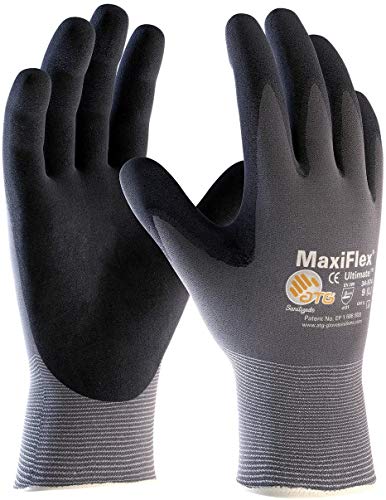
MaxiFlex Ultimate 34-874 Nitrile-Coated Work Gloves, Large, 3 Pairs
As an Amazon Associate we earn from qualifying purchases.
- Why consider it: a close-fitting knitted glove with coated gripping surfaces for suitable dry handling work.
- Trade-off: the construction prioritizes handling rather than providing a sealed, electrically insulating barrier.
- Exact linked choice: size Large, one pack containing three pairs. Other sizes and quantities are separate selections.
- Do not use it for: protection against exposed live electrical parts. It is not presented here as arc-rated PPE or as an approved protector over insulating gloves.
Check that the supplied gloves, packaging and instructions identify the same model and size. Similar-looking gloves within the MaxiFlex family have different model suffixes, coatings and mechanical ratings. A seller’s broad “electrical,” “cut resistant” or “safety” category does not replace the actual product marking.
What about MaxiFlex Cut and other versions?
A different MaxiFlex model may be appropriate when the task includes a different mechanical hazard. Make that decision from the exact product’s current technical sheet and your workplace assessment. Do not move from “Ultimate” to “Cut” and assume electrical protection has been added. Likewise, do not transfer a wash limit, touchscreen feature or mechanical rating from a newer model to an older listing with similar photographs.
For a household project, describe the task to the retailer or manufacturer in concrete terms: the material you will handle, whether it is sharp, whether it is wet, and whether moving machinery is involved. “Gloves for an electrician” is too broad because carrying supplies, handling sheet metal and working near energized equipment present different risks.
Electrical work needs more than a glove purchase
For US workplaces, OSHA’s electrical work-practice rule generally calls for exposed live parts to be de-energized before work, subject to specific exceptions. Equipment that has merely been switched off is not necessarily established as safe: isolation, lockout/tagout and verification are part of the applicable procedure. Have a qualified person handle that process.
When work must involve electrical exposure, the equipment selection depends on the actual hazard. OSHA 1910.137 specifies requirements for electrical protective equipment, including insulating-glove classes, inspection and electrical testing. The correct system may also require protectors and additional protection beyond the hands.
This article is a buying distinction, not instructions for live work. Do not choose a glove class from a single voltage number in an online listing, attempt a homemade electrical test, or proceed because the gloves look thick enough. For work at home, stop and use a qualified electrician when you cannot establish and control the hazards.
Fit and inspection for mechanical gloves
- Try the correct size. You should be able to close your hand without excessive tension, and loose fingertips should not interfere with handling. Confirm the maker’s size chart rather than relying on the size of another brand.
- Inspect before use. Check for worn coating, tears, embedded debris and contamination. Replace damaged gloves instead of assuming a spare outer layer fixes them.
- Keep the task limits in view. ATG’s 34-874 instructions warn against use where rotating machinery or entanglement is a risk and say the glove does not protect against chemicals or liquids.
- Follow the supplied care instructions. Use the instructions for the exact version you received. Cleaning may remove dirt; it does not add electrical insulation or restore every damaged protective property.
For actual rubber insulating gloves, inspection and testing follow a different regime. OSHA requires a visual inspection and air test before each day’s use, and electrical retesting at the specified intervals. Do not apply an ordinary work glove’s laundering routine to that equipment.
Frequently asked questions
Does nitrile block electricity?
The word nitrile on a work-glove label does not establish electrical insulation. The whole product must be designed, rated, tested and used for that purpose. A thin nitrile coating on a knitted liner is not a substitute for a rated insulating-glove system.
Are antistatic gloves safer around live wires?
An antistatic or electrostatic-dissipative specification addresses static-charge control. It does not authorize contact with live wiring. Choose protection for the actual electrical exposure through the appropriate qualified assessment.
Can MaxiFlex gloves go over rubber insulating gloves?
Do not assume so. Protector selection must follow the insulating-glove manufacturer’s instructions and the applicable work procedure. A convenient fit does not establish suitability as a protector.
Is the three-pair pack a better buy than a dozen?
Only if the size and model suit the job. Start by confirming fit and suitability, then compare the number of complete pairs and the cost per pair. Buying extra pairs of the wrong protection offers no useful saving.
Bottom line: the verified 34-874 pack is an option for appropriate mechanical handling. For electric-shock protection, use the task-specific rated equipment and qualified procedures; MaxiFlex branding alone does not establish that protection.
Image note: AI-generated editorial illustration; not a photograph of the named product.