
The right air compressor for auto body work is the one that can supply your actual tools throughout the job. Start with delivered airflow at the required pressure, then check duty cycle, air treatment and installation. A large tank or a high maximum-PSI number cannot compensate for inadequate sustained output.
For intermittent low-demand work, a portable compressor may be sufficient. For extended sanding or refinishing, a stationary machine is a more realistic starting point. A busy shop should have its simultaneous demand assessed before choosing a reciprocating or rotary-screw system.
This guide compares manufacturer specifications and published safety guidance. We have not tested these compressors, measured noise or compared paint finishes. Prices and availability are not verified.
Three conditional options
| Compressor | Published output | Potential fit | Main limitation |
|---|---|---|---|
| Makita MAC5200 | 6.5 CFM at 90 PSI | Intermittent tasks with a verified low air requirement | Not a default choice for sustained spray-gun or sander demand |
| Ingersoll Rand SS5L5 | 18.1 CFM at 90 PSI | A stationary single-user shop with a matched tool load | Requires 230-volt, single-phase power and a suitable installation |
| Quincy QGS-7.5 | 25.3 ACFM at 145 PSIG | Longer operating periods with professionally assessed demand | Different rating conditions; not automatically enough for multiple technicians |
These ratings are reproduced with their published units and pressures. They are not directly normalized test results. Do not silently treat CFM, SCFM and ACFM as identical specifications.
1. Makita MAC5200: investigate for intermittent work
The Makita MAC5200 is a wheeled portable model whose manufacturer specifies 6.5 CFM at 90 PSI. Consider it when mobility matters and the exact tool’s consumption, working pressure and operating pattern fit within its capabilities.
Useful distinction: short bursts from an appropriately matched tool are different from keeping a pneumatic sander running or completing a long spray pass. The portable format does not establish suitability for a whole-car paint job.
Before buying: check the tool manual, compressor duty restrictions, electrical requirements and pressure losses through the intended hose and fittings. If the tool needs more air than this machine can continuously deliver, choose a larger compressor or a different tool system.
Listing to compare: Makita MAC5200, 5.2-gallon wheeled compressor.

Makita MAC5200 3.0 HP* Big Bore™ Air Compressor
As an Amazon Associate we earn from qualifying purchases.
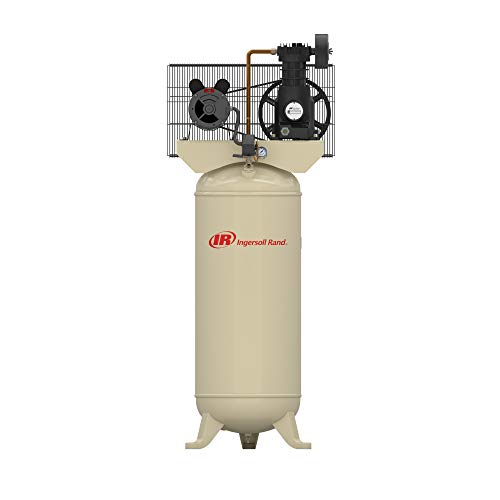
2. Ingersoll Rand SS5L5: a stationary-shop candidate
Ingersoll Rand’s single-stage specifications list the SS5L5 with a 60-gallon vertical receiver, 18.1 CFM at 90 PSI and 15.5 CFM at its maximum 135 PSIG. The listed supply is 230 volts, single phase, 60 Hz.
This is a stronger candidate than a small portable when a single user’s documented tool demand fits. The same page describes continuous-duty capability; confirm the operating manual’s lubricant, maintenance and environmental requirements rather than treating that claim as permission to exceed rated output.
Trade-off: it is a fixed installation with electrical, placement and servicing needs. Obtain an installed quote that includes the air treatment your finishing work requires. The receiver size alone does not establish how many tools it can run.
Listing to compare: Ingersoll Rand SS5L5, 60-gallon vertical compressor, 230 V single phase, compressor-only configuration.
3. Quincy QGS-7.5: evaluate for sustained shop demand
The Quincy QGS range is designed for a 100% duty cycle and offers tank-mounted and integrated-dryer configurations. Quincy’s table lists the QGS-7.5 at 25.3 ACFM and 145 PSIG with a 60-gallon receiver.
Consider this model when long operating periods justify investigating rotary-screw equipment. Ask the distributor to match the exact configuration to measured or calculated demand, electrical service and air-quality requirements.
Trade-off: a rotary-screw purchase should be based on the shop’s operating profile, not the assumption that it is always better. Check service access, maintenance support and the supplied dryer/filter specification. Compare the relevant performance data sheet rather than using horsepower as a proxy for output.
How to size the air supply
Make a list of each spray gun, sander, grinder and other air tool. Record the manufacturer’s consumption at its specified working pressure and clarify whether a quoted figure represents continuous or intermittent use. Identify which tools will operate together and how long the demanding portions of the job last.
Quincy’s painting selection guide emphasizes the gun’s airflow and pressure requirements, continuous operation, hose length and losses through dryers, filters and regulators. Ask the compressor supplier to allow appropriate capacity for those conditions and planned growth; there is no single tank size that suits every body shop.
The Compressed Air & Gas Institute glossary distinguishes actual from standard airflow. Compare SCFM with a compatible SCFM basis, or obtain a documented conversion from the supplier. A compressor’s maximum tank pressure is not the pressure to apply to a spray gun.
Air quality and safety belong in the budget
Finishing work needs air treatment matched to its contamination requirements. Include appropriate moisture management, filtration, regulators and distribution components in the selection. An oil-free pump is not, by itself, proof that the delivered air is dry or suitable for a particular coating process.
Buying a capable compressor does not make a garage suitable for spraying automotive coatings. OSHA identifies isocyanate exposure in painting as a serious respiratory hazard. Use the coating’s safety data sheet and a qualified assessment to establish ventilation, respiratory protection and other controls. Do not improvise a breathing-air supply from an ordinary shop compressor. If an appropriate spraying facility and protection are unavailable, use a professional refinisher.
Frequently asked questions
Is a 60-gallon compressor enough?
Possibly, but the pump’s delivered airflow, duty rating and your tools determine the answer. Two compressors with equal tanks can have very different outputs.
Can a larger tank fix low CFM?
Extra storage can buffer short demand peaks. It does not create additional sustained pump capacity, so it is not a cure for an undersized compressor.
Should I choose the quietest model?
Noise matters, but compare documented measurement conditions and actual installation needs. This guide has no independent noise measurements and does not rank these models for sound.
What should be on the final quote?
Exact model and electrical configuration, delivered airflow, duty conditions, receiver, dryer and filters, installation work, service support and warranty terms. Check all of those before ordering.
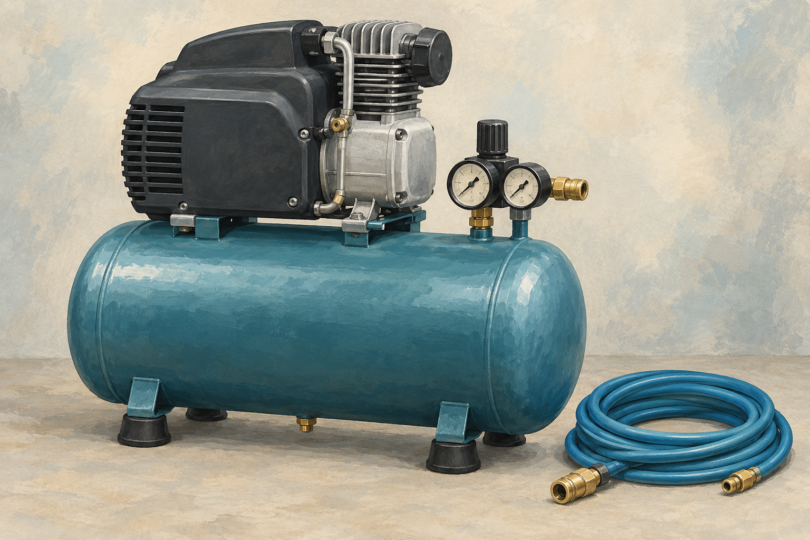
Image note: Generic editorial illustration of an unused air compressor; no model, capacity or spraying setup is specified.