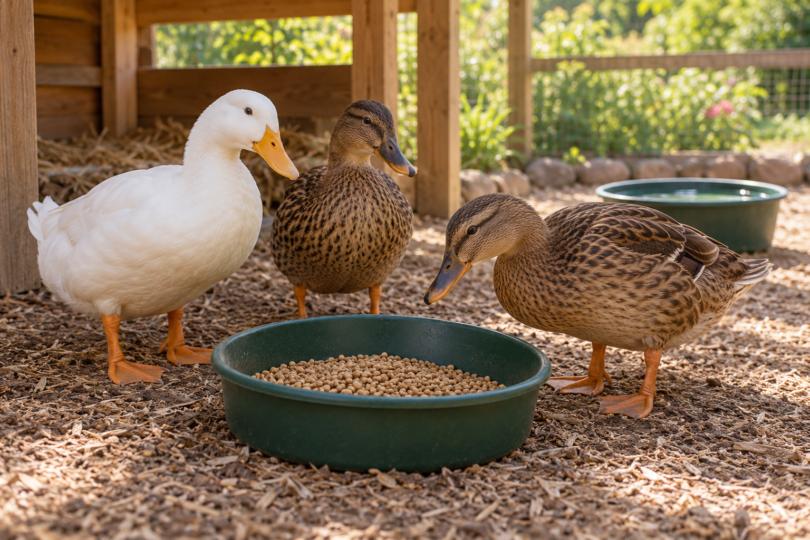

The best feeder for ducks depends on how you manage the flock. For adult ducks in a compact run, our pick is the RentACoop 10lb High Rise Single-Port Feeder. Choose the Fortiflex GP-12 pan for an open feeding surface you can inspect at a glance, or the Little Giant 50-pound Deluxe Dome Feeder when you need a larger hopper. These are equipment choices for domestic ducks.
We compared manufacturer specifications, feeder layouts and cleaning access, then checked the setup advice against animal-care guidance. The recommendations are based on documented features and practical trade-offs; we have not carried out hands-on flock trials.
Compare the three duck feeders
| Feeder | Best fit | Capacity and design | Main trade-off |
|---|---|---|---|
| RentACoop High Rise | Compact adult-duck feeding station | 10 lb; one covered feed port; mounting kit | Only one feeding opening |
| Fortiflex GP-12 | Simple open-pan setup under cover | 12 quarts; low plastic pan with volume markings | No hopper or feed cover |
| Little Giant DXDOMEFDR50 | Larger hopper for an adult flock | 50 lb; top-fill lid, three legs and removable feed-saver ring | More stored feed still needs daily attention |
RentACoop 10lb High Rise: best for a compact adult-duck setup
RentACoop explicitly lists adult ducks among the birds suited to this large-port model. It holds 10 pounds of feed and includes a rain hood, anti-roost lid and mounting kit. The manufacturer describes mounting to wood, wire or half-inch hardware cloth, with S-hooks also included. That makes it the strongest fit here when keeping a feeder against the run wall matters.
The single port is the compromise. Watch whether each duck can reach the feed comfortably, and add another feeding point if access becomes contested. Treat the hood as useful shelter, not a reason to skip checking for damp feed. This adult-bird recommendation does not establish suitability for ducklings.
The linked version is the white 10LB feeder, model FX-LCQ9-ESLN, sold as one feeder with its listed accessories. The matching waterer is a separate product.
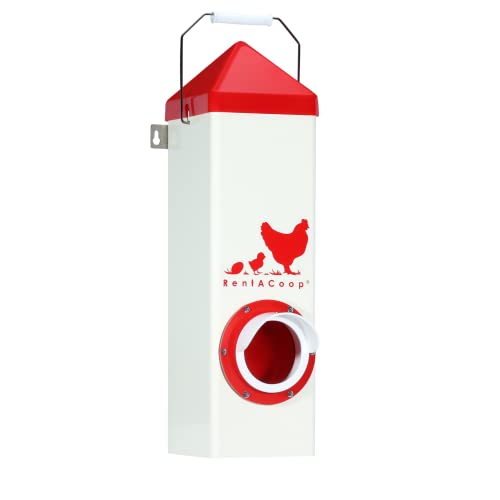
RentACoop High Rise 10lb Single-Port Feeder
As an Amazon Associate we earn from qualifying purchases.
Fortiflex GP-12: best simple open pan
The GP-12 is a general-purpose animal feeding pan with a 12-quart capacity, low plastic body and engraved volume markings. Its unobstructed top makes the contents easy to see and reach when you empty it. We would choose it for a sheltered feeding area where simple handling matters more than a large feed reservoir.
This is an editorial use-case recommendation for an open animal pan; Fortex does not identify the GP-12 as a duck-specific feeder. It has no covered hopper, so placement and frequent inspection matter. Check the rim height against your birds before relying on it, and avoid treating its volume as a ration size.
See the Fortiflex GP-12 specifications. Select GP-12 when buying: the same page also covers other pans. Its catalog bundle quantities describe trade packaging, not necessarily the quantity in a retailer’s offer.
Little Giant 50-pound Deluxe Dome: best larger hopper
Little Giant’s Deluxe Dome Feeder is documented for chickens, ducks and other poultry. The 50-pound version is model DXDOMEFDR50. It has a screw-on top lid, three supporting legs and a feed-saver ring that removes for cleaning. Choose it when a larger reservoir and access around a circular tray suit your setup.
Capacity is its advantage, but it is not a promise of a particular number of days between refills. Check the tray height and feed access for every bird. A hopper still needs inspection even when it contains plenty of feed, and the feed-saver ring is a design feature rather than a measured waste-reduction result in our comparison.
See the Little Giant Deluxe Dome Feeder and select 50 Pounds / DXDOMEFDR50. The page also offers 65- and 80-pound versions; their specifications should not be substituted for this pick.
Set up the feeding station before choosing capacity
Keep clean drinking water available. The RSPCA’s duck-care guidance calls for fresh water at all times and regular cleaning of feeders and drinkers. Choose a layout that lets you service both easily while keeping splashed water out of dry feed.
NC State Extension advises sheltering feeders from weather, checking equipment daily and matching feeder height to the birds. Watch the smallest duck eat before settling on a height. Reservoir capacity cannot tell you whether a flock has enough usable feeding space.
Buy feed appropriate to the ducks’ species, age and breed, as the RSPCA recommends. Choose the feed for the ducks first, then check whether the feeder can dispense it. Ask your veterinarian or poultry extension service about the diet and feeding plan for your flock.
Duck feeder questions
Can ducks use a feeder sold for chickens?
Some can: RentACoop explicitly includes adult ducks for the High Rise model, and Little Giant lists ducks for its Deluxe Dome. Check the exact model and your birds’ access; the word “poultry” alone does not establish a comfortable fit.
Are these feeders suitable for ducklings?
Do not assume so. NC State recommends small feeders for the first two weeks before moving to larger hoppers. Pick age-appropriate equipment and check that the smallest bird can reach it.
Does a covered feeder eliminate daily checks?
No. NC State recommends daily checks of feeders and waterers. Look for blocked feed, contamination, spills or damp contents even when the hopper remains full.
How much feed should I put in the hopper?
The 10-pound and 50-pound figures describe equipment capacity, not a daily feeding allowance. Follow a feeding plan suited to your birds and keep the feed in good condition rather than filling a large hopper automatically.
Which would we choose first?
For a compact adult flock, start by comparing the RentACoop’s one-port access with the open GP-12 pan. Move to the Little Giant if a larger hopper better suits your daily routine. Easy inspection and comfortable access matter more than buying the biggest container.