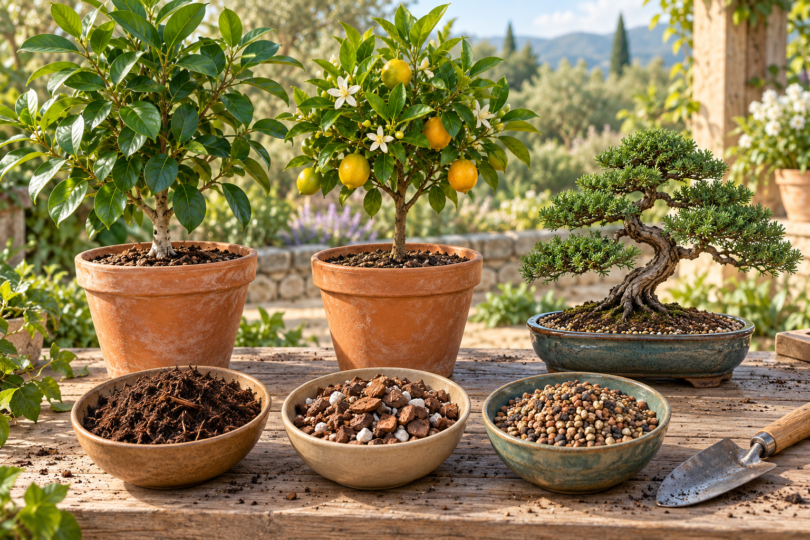

The best soil for trees depends first on where the roots will grow. A tree planted in the ground usually needs the existing site soil as backfill, with any wider soil improvement guided by site conditions. A tree that will stay in a pot needs a suitable container mix. A bonsai may need a much coarser substrate and a different watering routine.
For container shopping, start with FoxFarm Happy Frog for a general-purpose tree potting mix, Espoma Organic Cactus Mix for a small citrus or palm repotting job, or Bonsai Jack #221 when your ornamental bonsai needs a granular mix. These are three choices for different uses; none is a universal answer for every tree species.
Before buying soil for an in-ground tree
Do not fill a landscape tree’s planting hole with one of the potting mixes below. The University of Maryland’s tree-planting guidance says roots grow best in native soil and that amendments are unnecessary when soil and drainage tests show suitable conditions. Where improvement is needed, address as much of the future root area as practical, rather than enriching only the planting hole. Keep the root flare at soil level.
If the site stays wet, is heavily compacted, or has lost its topsoil, investigate that problem before choosing a bag. Species selection, drainage and planting depth matter more than buying a product labeled “tree soil.”
Best soil mixes for container trees: quick comparison
| Product | Best fit in this shortlist | Exact package linked | Main limitation |
|---|---|---|---|
| FoxFarm Happy Frog Potting Soil | General container trees such as a potted ficus | Two 12-dry-quart bags, model HF12QT-2 | A larger purchase than a small single-pot job may need |
| Espoma Organic Cactus Mix | Citrus and palm container plants | One 4-quart bag, model CA4 | Small bag; no numerical pH specification on the manufacturer page |
| Bonsai Jack Universal Organic Bonsai Soil Mix #221 | Ornamental bonsai requiring a granular substrate | One 2-dry-quart bag | Requires a watering and feeding plan suited to the tree and substrate |
The selections compare stated ingredients, intended uses and actual package identity. Choose by the tree’s requirements and the amount of mix you need, rather than treating the order as a performance ranking.
1. FoxFarm Happy Frog: best general container option
Choose it for: a container-grown tree when you want a ready-made potting soil. FoxFarm specifically gives potted ficus and lemon trees as examples and provides container instructions for trees and shrubs.
The manufacturer lists aged forest products, earthworm castings and bat guano among the ingredients, together with added soil microbes. That makes this a different starting point from the coarse bonsai substrate below. Its product page lists 12-quart and larger sizes, but does not give a numerical pH range. Check the bag and your species’ needs before adding any pH amendment.
What to check: the linked listing is model HF12QT-2, containing two 12-dry-quart bags, for 24 dry quarts total. It is not a single 12-quart bag or the 2-cubic-foot format. This quantity makes more sense when you have enough container space to use it. Do not confuse Happy Frog Potting Soil with the brand’s soil conditioner or separate fertilizers.
Trade-off: this is a general container choice, so a tree with particular acidity or substrate requirements still needs a more specific decision. Added ingredients also do not establish a universal fertilizer dose or a promise that no later feeding is needed.

FoxFarm Happy Frog Potting Soil HF12QT-2, Two 12-Dry-Quart Bags
As an Amazon Associate we earn from qualifying purchases.
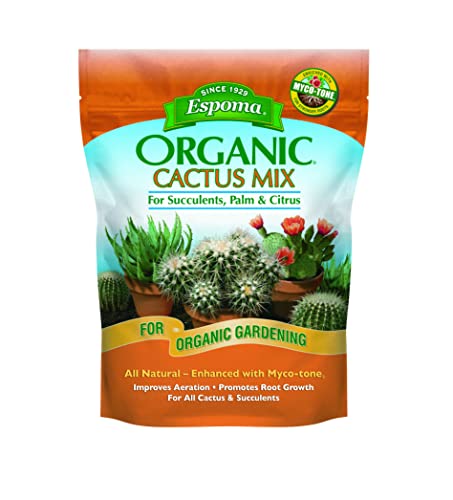
2. Espoma Organic Cactus Mix: best small-bag option for citrus and palms
Choose it for: a small container citrus or palm that needs fresh potting mix. Despite the cactus name, Espoma explicitly includes palm and citrus container plants in the intended uses.
The current manufacturer ingredient list specifies 60–70% processed forest products, plus sphagnum peat moss, perlite, humus, limestone and yucca extract. It also contains Myco-tone. Limestone is included to adjust pH, but neither the product page nor its linked safety data sheet supplies a numerical pH value. Do not assume that “cactus mix” guarantees a particular acidity.
What to check: this recommendation links to CA4, one 4-quart bag. Espoma also sells an 8-quart size, and multipack listings exist. Compare the full quantity before ordering; a small bag is convenient only if it supplies enough material around the existing root ball.
Trade-off: a citrus mix still needs a freely draining pot and appropriate watering. The University of Maryland’s citrus guidance allows a draining general-purpose, cactus/succulent or citrus potting mix. Let excess water escape and empty the saucer. Follow citrus-specific care rather than assuming a desert cactus watering schedule applies to a lemon tree.
3. Bonsai Jack #221: best granular option for ornamental bonsai
Choose it for: an ornamental bonsai whose care plan calls for a coarse, freely draining substrate. This is a specialist choice, not a substitute for ordinary landscape soil or an automatic upgrade for every potted tree.
Bonsai Jack’s current #221 specification lists 40% lava rock, 40% Bonsai Block calcined clay and 20% pine bark fines, with a nominal quarter-inch particle size and stated pH of 6.4. Those are manufacturer specifications, not a guarantee of the pH or drying rate in your own pot.
What to check: the linked retail item is Mix #221 in a 2-dry-quart bag; its bag also displays 2.2 liters. Keep it separate from Jack’s Gritty Mix #111 and the Universal Inorganic mix. Similar branding does not mean the same recipe.
Trade-off: do not carry over the watering interval from a dense nursery mix. Observe moisture in the actual pot and match fertilization to the species and fertilizer label. The word “Universal” in the product name does not settle whether the substrate suits an acid-loving or moisture-demanding tree. For an established bonsai, confirm the mix and repotting timing with its grower before changing the root environment.

How to choose the right soil for your tree
Start with the species and growing setting
Write down the tree’s identity, whether it will stay indoors or outdoors, and whether it is a landscape planting, an ordinary container tree or a bonsai. “Tree” is too broad a category to determine one recipe. A product’s suitable-use list is a starting point; it does not replace the requirements of your particular plant.
Plan drainage through the whole container
Use a container with working drainage holes and a mix suitable for that plant. Do not rely on gravel beneath the mix to repair poor drainage. Maryland Extension’s container guidance advises against a bottom layer of rocks, gravel or pot shards. Keep an ornamental outer pot or saucer from holding the inner pot in standing water.
Treat pH as a species requirement
A stated pH of 6.4 is useful product information, not proof that a mix suits every tree. Where the bag does not state a numerical pH, avoid inventing one from terms such as “organic,” “citrus” or “balanced.” For landscape soil, base lime or sulfur additions on a soil test and species requirements. Do not add them simply because an online recipe includes them.
Buy by volume, including the pack count
The space around the existing root ball determines how much new mix a repot needs. Check your container’s capacity, allow for the space already occupied by roots and their retained medium, and compare bags in the same volume units. A bag’s shipping weight is not a substitute for its stated volume. In this shortlist, Happy Frog’s two bags provide 24 dry quarts in total; the other linked products are single bags.
Keep soil choice and feeding separate
A new mix does not establish one fertilizer rate for all trees. Use the species’ guidance, the mix label and the fertilizer’s instructions together. For potted citrus, Maryland Extension recommends feeding during active growth, with the application frequency determined by the fertilizer label. Adding more fertilizer cannot fix an unsuitable planting site or a pot that will not drain.
Which mix should you buy?
Choose Happy Frog for a general container-tree project that can use the two-bag quantity. Choose Espoma CA4 for a smaller citrus or palm job. Choose Bonsai Jack #221 when a granular bonsai medium fits the tree’s care requirements. For a tree going into the ground, begin with the site soil, drainage and a soil test before buying amendments.
Frequently asked questions
What is the best soil for trees planted in the ground?
Usually the existing site soil is the appropriate backfill when its drainage and other conditions suit the species. If improvement is needed, address the wider future root area based on site assessment and soil testing, rather than filling only the planting hole with potting mix.
Can I use potting soil for a tree in a container?
Yes, if the mix suits the tree’s species and the pot drains freely. Happy Frog is a general container option in this shortlist; citrus, palms and bonsai may call for a more specific mix and care routine.
Is cactus potting mix suitable for citrus trees?
A well-draining cactus or citrus potting mix can suit container citrus. Espoma Cactus Mix explicitly lists citrus among its intended uses. Check moisture in the pot and empty collected drainage water; do not use a cactus watering schedule automatically.
Can every tree use the same bonsai soil?
No. Species, pot size, climate and watering habits affect the choice. Bonsai Jack #221 is a granular option with a manufacturer-stated pH of 6.4, but its Universal name does not guarantee suitability for every tree.
How much bagged soil should I buy when repotting a tree?
Estimate the container space that remains around the existing root ball, then compare the stated volume and bag count. The linked Happy Frog package has two 12-dry-quart bags; Espoma CA4 has one 4-quart bag; Bonsai Jack #221 has one 2-dry-quart bag.