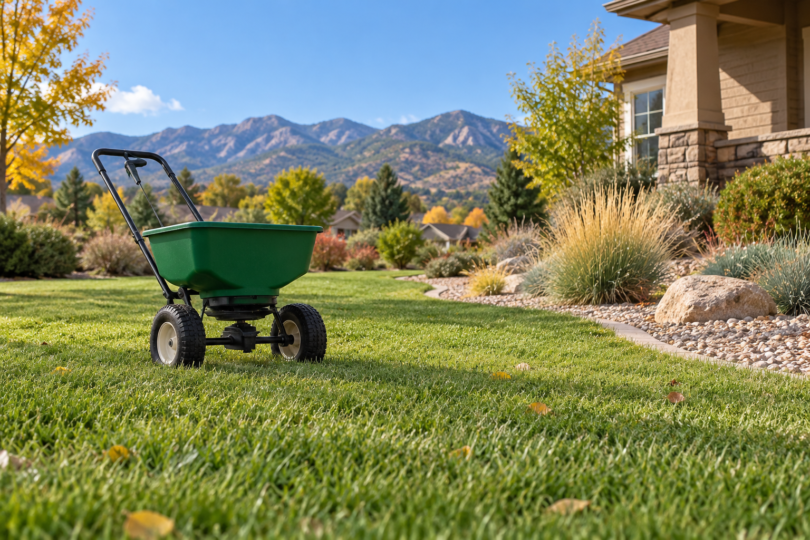

For an established Colorado lawn that needs nitrogen but does not need extra phosphorus, Scotts Turf Builder Lawn Food 32-0-4 is the first product we would compare. Pennington Full Season Lawn Fertilizer 32-0-5 is an alternative with polymer-coated urea and added iron. Milorganite 6-4-0 is a conditional choice for shoppers who want a biosolids-based, slow-release fertilizer and have a reason to add phosphorus.
The best fertilizer for Colorado lawns depends on the grass, soil and water available. Kentucky bluegrass, tall fescue and buffalograss should not receive an identical calendar of feedings. These picks compare current manufacturer information with Colorado State University Extension guidance; they are not results from a side-by-side lawn trial.
Compare the exact bags
| Product | N-P-K | Selected bag and stated coverage | Nitrogen at that coverage | Best fit |
|---|---|---|---|---|
| Scotts Turf Builder Lawn Food, North, SKU 22305 | 32-0-4 | 12.5 lb; 5,000 sq. ft. | 0.80 lb N per 1,000 sq. ft. | Routine feeding when extra phosphorus is unnecessary |
| Pennington Full Season Lawn Fertilizer | 32-0-5 | 11.2 lb; 4,000 sq. ft. | About 0.90 lb N per 1,000 sq. ft. | A phosphorus-free option with coated urea and 5% iron |
| Milorganite | 6-4-0 | 32 lb; 2,500 sq. ft. | About 0.77 lb N per 1,000 sq. ft. | Slow-release feeding where phosphorus is appropriate |
The nitrogen figures are calculated from bag weight, nitrogen percentage and stated coverage. They describe those products’ labeled application amounts, not a requirement for every lawn. These are alternatives to compare, not a three-product treatment to apply together.
1. Scotts Turf Builder Lawn Food 32-0-4: best starting point for established lawns
Scotts Turf Builder Lawn Food is a straightforward nutrient-only choice when the lawn needs nitrogen and the soil does not call for added phosphorus. The selected North product is SKU 22305: one 12.5-pound bag covers 5,000 square feet. Do not substitute a similarly named Weed & Feed or Triple Action bag.
The current product label specifies 2.5 pounds of product per 1,000 square feet. It permits application to wet or dry grass and says watering-in is not required, although light watering speeds results. Apply only to actively growing turf, keep granules away from waterways and drains, and do not apply ahead of heavy rain.
The trade-off: a zero middle number is useful when phosphorus is already adequate, but this formula will not correct a documented phosphorus shortage. The maker’s broad feeding calendar also needs to be matched to Colorado grass species and growing conditions.
2. Pennington Full Season Lawn Fertilizer 32-0-5: best alternative with coated urea
Pennington Full Season Lawn Fertilizer 32-0-5 contains polymer-coated urea and 5% iron. Pennington describes nitrogen release lasting up to four months. That is a manufacturer’s release-duration claim, not a guarantee of four months of identical color or a reason to add another fertilizer during the same feeding period.
The exact bag compared here is 11.2 pounds for 4,000 square feet. It is a different product from the older UltraGreen bag. Its label specifies one application per growing season; do not repeat it at every seasonal feeding opportunity discussed below. Follow this bag’s spreader settings and directions: mow and water one to two days beforehand, apply to actively growing grass, sweep stray granules off hard surfaces and water the product in. Skip application when heavy rain is expected.
The trade-off: iron content alone does not establish that a yellow lawn needs this fertilizer. It also supplies a substantial nitrogen feeding, so count that nitrogen in your seasonal plan. Choose the formula because its nutrient profile and release pattern fit the lawn, rather than treating “Full Season” as a universal Colorado schedule.
3. Milorganite 6-4-0: best conditional biosolids-based option
The 32-pound Milorganite 6-4-0 bag covers 2,500 square feet. Its guaranteed analysis includes 6% nitrogen, 4% available phosphate and 2.5% iron. Within that 6% total nitrogen, 4% of the product by weight is water-insoluble, slowly available nitrogen. The nutrients are derived from biosolids.
The trade-off: this is not a phosphorus-free alternative, and its analysis supplies no potash. If a soil test indicates adequate phosphorus or a potassium deficiency, a different fertilizer may fit better. It also takes a much heavier bag to cover the same area than either concentrated product above.
Milorganite’s application guidance says watering immediately after spreading is not required. Nutrient release depends on suitable moisture and temperature. Its national holiday-based schedule should be adapted to Colorado Extension’s species-specific guidance, particularly for buffalograss and blue grama; do not automatically add summer and late-fall feedings.
Choose nutrients before choosing a brand
In fertilizer analysis, the first number is nitrogen, the second is available phosphate and the third is soluble potash, expressed as percentages by weight. A bigger number does not make a product better; it changes how much nutrient a given quantity supplies.
A laboratory soil test can help identify phosphorus, potassium, pH and salt issues. Follow the laboratory’s sampling instructions and tell it which grass you grow. CSU Extension’s soil-testing guidance explains why a useful test needs both a representative sample and interpretation. Avoid buying a balanced 10-10-10 or phosphorus-rich starter fertilizer simply because the lawn is in Colorado.
For a new seeding or sod project, use the soil report and an establishment plan to select nutrients. Seed-and-fertilizer repair mixes are a separate purchase from routine fertilizer for an established lawn. Likewise, a spreader, soil conditioner, fungicide and herbicide each solve a different problem.
When to fertilize in Colorado
CSU Extension’s established-lawn schedule distinguishes grass types and maintenance levels. Use it alongside the product label, rather than following a generic four-application package calendar:
- Kentucky bluegrass, perennial ryegrass and turf-type tall fescue: late-summer and fall feeding are key opportunities. CSU lists a mid-August to mid-September application, with an October to early-November application depending on grass and maintenance needs. The final fall feeding should be while grass is still green and at least two to three weeks before the ground freezes.
- Fine fescue: it has a lower-input schedule; CSU does not call for the late-fall nitrogen application shown for some other cool-season lawns.
- Very sandy soil: CSU advises slow-release nitrogen and no turf fertilization after late September because of winter leaching risk.
Spring feeding is not automatically necessary. CSU’s spring and summer guidance cautions against pushing cool-season grass with heavy nitrogen during summer heat. A lawn fed the previous fall, especially one that receives returned clippings, may not need an early-spring application.
Buffalograss and blue grama need a different plan. CSU’s schedule places nitrogen during active warm-season growth, in late spring and summer. Its buffalograss guidance notes little improvement above two pounds of total nitrogen per 1,000 square feet per growing season. More fertilizer and water can encourage weeds. Do not borrow a bluegrass fall-feeding program for these native grasses.
Water availability can change the answer
A brown lawn is not automatically hungry. It may be drought-dormant, damaged or responding to another problem. CSU’s fall-fertilization guidance during drought says water restrictions and irrigation cutoffs can require changing or skipping the usual plan. Long-dormant brown turf gains little immediate fall benefit from fertilizer.
Check whether you can provide the watering required by the exact label. Do not use a national calendar date to override frozen ground, inactive turf or a site-specific irrigation limit. Elevation and weather make the lawn’s condition more useful than the month alone.
Frequently asked questions
Should I choose weed and feed for a Colorado lawn?
Only if you have an identified weed problem and the exact product is labeled for your grass and application timing. Fertilizer does not need to come with a pesticide. In particular, Scotts Bonus S Southern Weed & Feed2 excludes Kentucky bluegrass, ryegrass and fescue lawns. It is not a substitute for the nutrient-only Scotts product recommended above.
Does an organic-based fertilizer mean I can use more?
No. Measure the lawn and account for nitrogen from every application. Phosphorus and other nutrients still matter, and fertilizer spread onto pavement can wash into storm drains. Keep unused material in its labeled container and sweep stray granules back onto the lawn.
How many bags do I need?
Divide the measured lawn area by the coverage on the exact bag. At the stated rates, a 5,000-square-foot lawn uses one 12.5-pound Scotts bag, 14 pounds of Pennington Full Season, or 64 pounds of Milorganite. These examples compare quantity; choose one suitable feeding plan and follow its label rather than applying all three.
Which fertilizer should I buy first?
If testing and the grass’s growth stage point to nitrogen without added phosphorus, compare Scotts 32-0-4 and Pennington 32-0-5. Consider Milorganite only when its phosphorus content and slow-release behavior fit the soil and season. If the turf is dormant, water-limited or of unknown grass type, resolve that first.