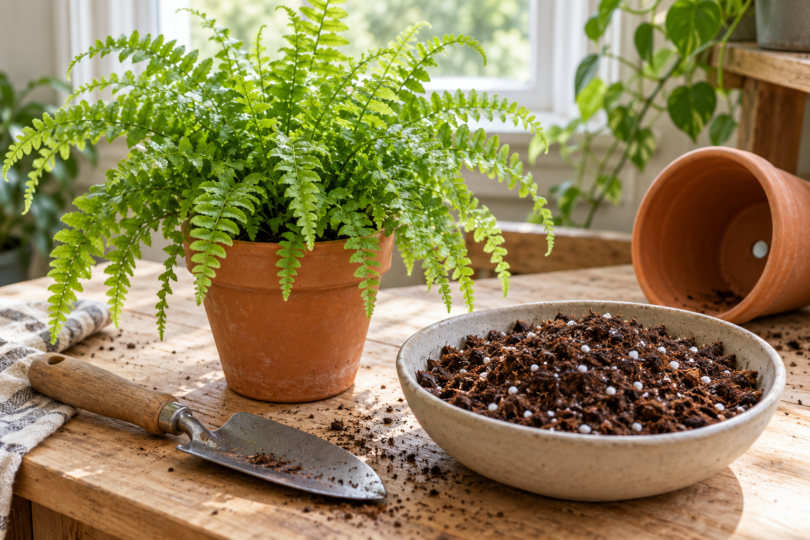

Espoma Organic Potting Mix is our first choice for a small indoor fern repotting project. Its maker specifically recommends it for ferns, and the 4-quart AP4 bag is a manageable starting size. Miracle-Gro Indoor Potting Mix is the alternative to consider if you want a mix without compost or bark. FoxFarm Ocean Forest suits buyers looking for a ready-to-use, nutrient-amended container soil in a larger 12-quart bag.
These are practical shopping recommendations based on published ingredients, product directions and fern-care guidance. They are not results from a side-by-side growing trial. Start with your fern’s identity: a pot-grown Boston fern and a mounted staghorn need different approaches.
Best potting mixes for ferns at a glance
| Pick | Selected package | Why consider it? | Main limitation |
|---|---|---|---|
| Espoma Organic Potting Mix | AP4, one 4-quart bag | Maker recommends it for ferns; peat, perlite and organic amendments | Contains processed forest products and animal-derived ingredients |
| Miracle-Gro Indoor Potting Mix | 72776430, one 6-quart bag | Coconut coir; no compost or bark | Includes fertilizer; reduced-gnat wording is not a pest guarantee |
| FoxFarm Ocean Forest | OF12QT, one 12-quart bag | Ready-to-use container soil with several nutrient sources | Not an unfertilized base; avoid automatically adding more feed |
Compare the delivered cost for the exact bag size and number of bags. A cheap-looking multipack or a larger bag can change the total substantially. Choose the amount you will use, rather than treating the heaviest package as the best value.
1. Espoma Organic Potting Mix: best starting point for a small repot
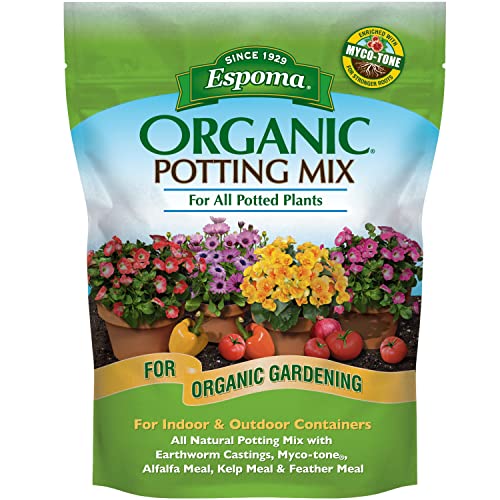
Espoma Organic Potting Mix AP4, 4 qt., 1 Bag
As an Amazon Associate we earn from qualifying purchases.
Espoma’s fern-care guide recommends this mix. Its current ingredient list includes processed forest products, sphagnum peat moss, perlite, humus, limestone, earthworm castings, alfalfa meal, kelp meal, feather meal and yucca extract. It also contains the company’s Myco-tone blend.
The useful distinction is that this is a complete container mix, with ingredients serving different roles, rather than a bag of decorative moss or plain coir. The AP4 code identifies the 4-quart size in Espoma’s product data. That smaller bag is convenient when you are filling around an existing root ball instead of starting a whole collection.
- Pros: a specific fern recommendation from the maker; a small package; approved for organic gardening.
- Cons: includes peat and animal-derived amendments; it does not offer the compost-and-bark exclusion of Miracle-Gro Indoor.
Choose it if: you want a straightforward bagged option for a common indoor fern. The recommendation does not establish that its microbial additions outperform the other mixes in your home.
2. Miracle-Gro Indoor Potting Mix: best option without compost or bark

Miracle-Gro’s Indoor mix contains coconut coir to help retain and release water and make the medium easier to re-wet. The manufacturer excludes compost and bark and describes the formula as less prone to fungus gnats. That is a formulation claim, not a promise that gnats cannot appear.
The selected 6-quart listing identifies model 72776430. The current maker page links a product label bearing that same code, although its current page also displays SKU 72776431. Check the bag’s full name: Indoor Potting Mix, Houseplant Potting Mix, Tropical Potting Mix and Moisture Control are distinct products.
- Pros: useful ingredient exclusions for indoor growers; coir aids re-wetting; an intermediate bag size.
- Cons: fertilizer is already included; the maker’s “up to six months” feeding statement does not define a universal fern feeding schedule.
Choose it if: avoiding compost and bark is your priority. Adjust watering to your fern instead of following a rigid calendar or letting a moisture-loving plant dry out completely.
3. FoxFarm Ocean Forest: best larger bag with nutrient amendments

Ocean Forest is a ready-to-use container soil. FoxFarm lists aged forest products, sphagnum peat moss, earthworm castings, bat guano, fish emulsion and crab meal; its description also identifies sandy loam as part of the mix’s texture. The selected package is one 12-quart bag, not the 1.5-cubic-foot size or a retailer’s old soil-and-stake bundle.
This is the option to compare when a small bag will not cover the job and you want an amended mix. FoxFarm says extra nitrogen fertilizer is unnecessary at first. That makes the existing nutrient content a reason to plan feeding carefully, not a reason to add several fertilizers immediately after repotting.
- Pros: ready for containers; a larger quantity; multiple nutrient-containing ingredients.
- Cons: contains animal-derived amendments; not the choice for someone seeking an unfertilized medium with complete control over nutrient additions.
Choose it if: its composition and bag size fit your project. Its suitability here is an editorial inference from its container formulation, not proof that every fern prefers Ocean Forest or that it grows ferns faster.
How to choose soil for your particular fern
A useful mix must hold moisture while leaving enough air around the roots. Ingredients such as peat or coir help with water retention, while perlite contributes pore space. Buying an indoor potting mix is generally more practical than digging garden soil into a houseplant pot; Clemson’s guide to container media explains the balance of drainage, air and moisture.
For Boston ferns, keep the medium lightly moist. Maidenhairs need consistently moist soil, while squirrel’s-foot ferns need their creeping rhizomes left above it. These distinctions come from Clemson’s indoor-fern guide. A mix that works well in one pot can require a different watering routine in another.
Staghorn ferns need separate consideration. UF/IFAS describes them as epiphytes and recommends mounting with sphagnum or another well-drained medium. Do not assume a large pot of general-purpose mix is the best next step for a mounted plant. Follow its staghorn guidance for that growing method.
Do not choose solely by an “acid-loving” claim. Identify the species and check its care instructions before adding lime, sulfur or an acidifying fertilizer. None of the three picks is presented as a guaranteed pH match for every fern.
Repotting and feeding without creating new problems
- Check whether repotting is needed. Inspect the root ball and the condition of the existing mix before buying a much larger container.
- Use a pot with a drainage hole. Leave room below the rim for watering, and keep the plant at its appropriate planting depth.
- Water the new mix thoroughly and let excess water escape. Empty collected drainage water rather than leaving the pot submerged.
- Watch how the new mix dries before setting a routine. A change of pot or medium can change how often you need to water.
- Read the bag’s fertilizer information before adding plant food. Heavy feeding can scorch fern foliage; a newly repotted fern does not automatically need an extra dose.
Espoma’s repotting advice is to move up just one container size when needed. Clemson cautions against overfertilizing ferns and feeding freshly repotted plants. Use species-specific care and the actual product label to decide what happens next; a general soil brand’s feeding program is not a substitute.
Which one should you buy?
Start with Espoma AP4 for a small, ordinary indoor-fern repot. Choose Miracle-Gro Indoor when its compost-and-bark-free formulation is the reason you are shopping. Consider Ocean Forest 12 quart when you want a larger, nutrient-amended container mix. If your fern is mounted, unidentified or already struggling in wet soil, resolve that growing-condition issue before treating a different brand as the cure.
Frequently asked questions
Can I use regular potting mix for a fern?
A quality indoor container mix can suit many pot-grown ferns if it retains moisture and drains well. Identify the fern first; mounted staghorns need a different approach.
Which potting mix is the easiest starting point?
Espoma Organic Potting Mix AP4 is our starting recommendation for a small indoor repot because the maker recommends it for ferns. It is not a proven winner for every species.
Is decorative reindeer moss a substitute for potting soil?
No. Decorative reindeer moss is not a complete rooting medium. Buy an appropriate container mix or the specific mounting medium your fern requires.
Should I add fertilizer as soon as I repot?
Do not automatically add fertilizer. Check the nutrients already in the mix and your fern’s care instructions; excess feeding can scorch foliage, especially after repotting.
Do all ferns need acidic soil?
Do not assume one acidity target suits every fern. Identify the species and check its requirements before changing pH or choosing an acidifying plant food.