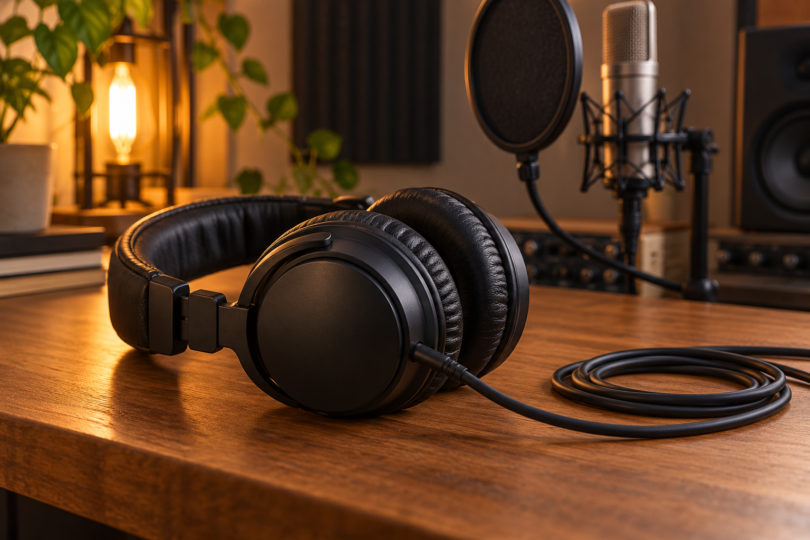

The best headphones for vocal recording should make it easy to hear the backing track while keeping the microphone’s pickup of that track under control. For a practical starting point, choose the Audio-Technica ATH-M40x if detachable cables matter most, the Sony MDR-7506 if you prefer a folding design with a coiled lead, or the beyerdynamic DT 770 PRO 80 Ohm if you want replaceable velour pads and a straight cable.
These are three wired, closed-back monitoring options compared from manufacturer specifications and instructions. The recommendations below are buying judgments, not results from a listening session or a measured leakage test.
Best headphones for recording vocals at a glance
| Headphones | Best fit | Connection and impedance | Main tradeoff |
|---|---|---|---|
| Audio-Technica ATH-M40x | Swapping between straight and coiled cables | 3.5 mm stereo plug; included 6.3 mm adapter; 35 ohms | Both supplied cables extend to 3 m, so plan where the spare length will go |
| Sony MDR-7506 | A folding monitor with a coiled lead | 3.5 mm plug with 6.3 mm Unimatch adapter; 63 ohms | The cable is fixed rather than a quick plug-in replacement |
| beyerdynamic DT 770 PRO, 80 Ohm | Velour pads and a straight studio lead | 3.5 mm stereo plug; 6.35 mm adapter; 80 ohms | Fixed 3 m cable; confirm your headphone output can drive this exact impedance version |
1. Audio-Technica ATH-M40x: best for cable flexibility
The ATH-M40x combines a closed-back design with 35-ohm impedance, folding construction and two detachable cables: a 1.2–3 m coiled lead and a 3 m straight lead. Its earcups rotate through 90 degrees, although keeping both cups on is the more sensible starting point when an open microphone is nearby.
Choose it if you regularly move between a desk and a standing vocal position and want to change the cable without changing headphones. The 3.5 mm stereo connector and included 6.3 mm adapter cover those two analog socket sizes; a computer or phone with only USB still needs a suitable audio output. Audio-Technica’s specification table calls the adapter screw-on, while its overview calls it snap-on, so this comparison makes no promise about the fastening mechanism.
The padded headband and ear cushions are useful features to try on, not a guarantee of comfort. Audio-Technica’s manual acknowledges that sound can escape, so do not interpret the maker’s isolation language as a promise that your microphone will hear no click track.

Audio-Technica ATH-M40x Studio Monitor Headphones
As an Amazon Associate we earn from qualifying purchases.
2. Sony MDR-7506: best for a folding monitor with a coiled lead
Sony specifies a closed dynamic design, 63-ohm impedance and a 9.8-foot cord for the MDR-7506. Its Unimatch connector works with 3.5 mm and 6.3 mm sockets, and Sony includes a carrying pouch. The manufacturer’s product photograph shows the coiled cable and folding earcup assembly.
This is the straightforward choice if you like a coiled lead and want headphones that fold for storage. The fixed cable is the main compromise: buyers who want a lead they can unplug at the earcup should favor the ATH-M40x instead. Keep enough slack between the headphones and interface so the cable does not tug when you move.
Try the pad shape and headband fit before committing to long takes. The published impedance and connector size do not establish how loud the headphones will play from every interface, and this comparison does not rank the Sony’s comfort, tonal accuracy or leakage against the other two.

3. beyerdynamic DT 770 PRO 80 Ohm: best for velour pads
The DT 770 PRO in the 80-ohm version is a wired, closed over-ear model with replaceable velour earpads, an adjustable padded headband and a fixed straight cable. The maker lists article number 474746 for this version, a 3.5 mm plug and a 6.35 mm adapter; its specification sheet gives the cable length as 3 m.
Choose it if you prefer velour against your ears and a straight lead at a regular recording station. Check the 80-ohm version specifically: DT 770 PRO models also come in other impedances, and the separate PRO X range is not the same product. The firm studio fit may suit someone who moves while singing, but headband pressure and warmth are personal try-on decisions.
The fixed cable is less convenient to exchange than the ATH-M40x’s detachable leads. Confirm the output specification of your interface or headphone amplifier before ordering; the 80-ohm label alone is not a guarantee of sufficient level. Closed cups reduce leakage, but they do not establish silence at the microphone.
How to choose for your recording setup
Start with closed-back headphones for tracking. Beyerdynamic specifically recommends them around microphones because they reduce sound leakage. As a practical check, record a short silent passage with the backing track and click playing at your normal monitoring level, then listen for spill before the take. Lower the cue level or adjust the fit if the microphone picks it up.
Match the socket first, then check the output’s supported headphone load and level. A 6.3/6.35 mm adapter changes the plug size; it does not add amplification or turn an analog pair into USB headphones. If your voice arrives late in the headphones, inspect the interface’s direct-monitoring and software settings rather than assuming a different pair will fix the recording path.
For comfort, check the seal while wearing your usual glasses, move your jaw as you would while singing, and take a short break before deciding. Keep the volume moderate and reduce it before connecting; Audio-Technica warns that extended loud listening can damage hearing. None of these recommendations is hearing protection.
Frequently asked questions
Are closed-back headphones completely silent outside the earcups?
No. They help reduce leakage, but the seal, listening level and microphone position still deserve a check. Use a short test recording to judge your actual setup; no zero-bleed claim is made for these models.
Do I need a separate headphone amplifier?
Not necessarily. Check your interface’s headphone-output guidance for the exact model and impedance you select. This shortlist does not establish that every laptop, phone or interface can supply a comfortable monitoring level.
Which choice has detachable cables?
The ATH-M40x includes detachable straight and coiled cables. The Sony MDR-7506 and classic DT 770 PRO 80 Ohm use fixed cables. Choose the Audio-Technica if quick cable changes are the deciding feature.
Can these headphones record my voice?
These selections are monitoring headphones. Your recording setup still needs a separate microphone and a way to capture its signal; the headphone purchase is for hearing the cue mix.