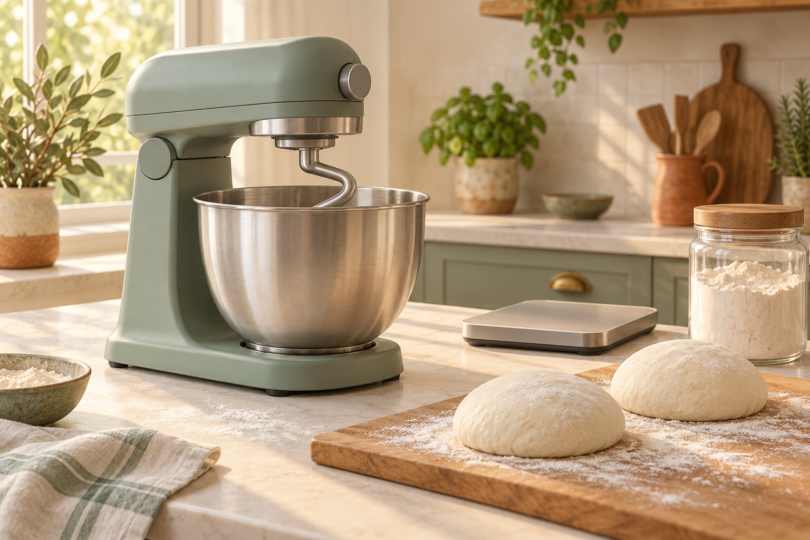

The best mixer for pizza dough is one that fits the batch you actually make. A generous bowl is useful, but the manufacturer’s dough limit, kneading speed and operating instructions matter more than bowl volume alone. These three household mixers suit different routines: a two-pizza recipe, mixed home baking, or larger weighed batches.
Which pizza-dough mixer should you choose?
| Exact US model | Best fit | Dough guidance to check |
|---|---|---|
| Cuisinart Precision Master SM-50NAS, White Linen | A conventional tilt-head mixer for smaller pizza sessions and other baking | Manual’s pizza recipe makes 1½ lb; maximum yeast-dough capacity is 6 cups of white flour |
| KitchenAid 5.5-Quart Bowl-Lift KSM55SXXXPL, Porcelain White | A bowl-lift mixer for a household that makes more than pizza | Use the spiral hook at Speed 2; the reviewed manual does not specify a pizza-dough weight maximum |
| Ooni Halo Pro UU-P31300, Charcoal Grey | Pizza-focused batches of at least 1 kg | 1–5 kg total dough, maximum 3.2 kg flour; hook operating time up to 20 minutes |
1. Cuisinart Precision Master SM-50NAS: for a familiar two-pizza recipe
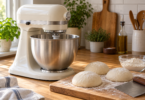
The White Linen SM-50NAS is a practical starting point if you want one mixer for pizza dough, cakes and whipped cream. Its current manufacturer listing specifies a 5.5-quart stainless-steel bowl, 12 speeds and a tilt-back head. A dough hook, flat paddle, chef’s whisk and splash guard with a pouring spout are included; optional power-hub attachments cost extra.
The SM-50 series manual linked from that product page gives an unusually useful starting recipe: 3 cups of bread flour makes about 1½ pounds of dough for two 12-inch crusts. It calls for Speed 3 until a ball forms, followed by about four minutes of kneading at that speed. That timing belongs to the recipe, rather than every possible dough.
The manual’s maximum for most breads and pizza is 6 cups of white flour. This is a flour limit, not six cups of finished dough, and it should not be transferred unchanged to every whole-grain formula. If overload protection stops the mixer, the instructions say to switch off, unplug, reduce the load and let it stand for a few minutes; allow more time if it will not restart.
Buying caveat: Cuisinart marks this model as unavailable for sale in Colorado, Maine and Minnesota. Check that restriction before choosing it. Also allow room above the mixer for its head to tilt back.
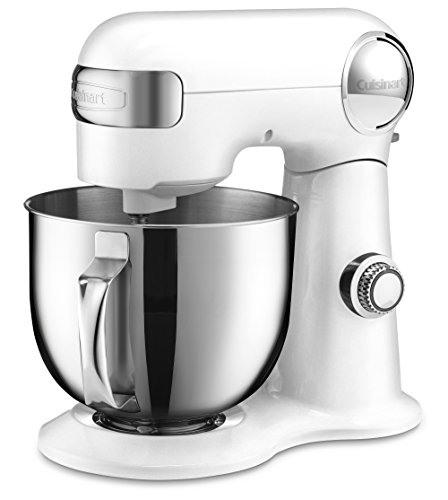
Cuisinart Stand Mixer, 12 Speed, 5.5 Quart Stainless Steel Bowl, Chef’s Whisk, Mixing Paddle, Dough Hook, Splash Guard w/ Pour Spout, White Linen, SM-50NAS, Manual
As an Amazon Associate we earn from qualifying purchases.
2. KitchenAid KSM55SXXXPL: for pizza plus everyday baking
The Porcelain White 5.5-Quart Bowl-Lift KitchenAid is the shortlist’s choice for someone who prefers a bowl that raises into position. It includes a stainless-steel bowl, coated flat beater, coated spiral dough hook and six-wire whip. Its 11 speeds include a half-speed setting for gentle work, while separately purchased hub attachments broaden its uses.
For pizza, follow the narrower instruction in the KSM55-family owner’s manual: mix and knead yeast dough at Speed 2. The manual warns that a higher speed can cause mixer failure. Its statement that the hook kneads most yeast dough within four minutes is general guidance, not a guaranteed finish time or a continuous-duty rating.
Capacity caveat: the reviewed manual does not give a numerical pizza-dough weight limit. Do not treat the 5.5-quart bowl volume as that limit, or assume a bread-capacity headline applies to every pizza formula. Start with a suitable KitchenAid recipe and check its flour quantity before scaling. If the mixer shuts down after extensive use, the manual calls for switching it off and resting it for 30 minutes before restarting.
Choose this model for its bowl-lift arrangement and broader baking role. If a clearly stated minimum and maximum pizza-dough mass is your priority, the Halo Pro below is easier to size from its manual.
3. Ooni Halo Pro UU-P31300: for larger weighed dough batches
The Charcoal Grey Halo Pro combines a rotating bowl, spiral hook and breaker bar. Its 7.3-quart bowl and 58 speed settings make it the most dough-focused option here. Ooni describes it as optimized for 55–80% hydration, so a very dry or unusually wet recipe deserves a separate suitability check.
The Halo Pro manual lists a 1 kg minimum total yeast-dough batch, with no more than 640 g flour at that minimum, and a 5 kg maximum with no more than 3.2 kg flour. At 250 g per dough ball, 1–5 kg is four to twenty balls by arithmetic. Two 250 g balls would fall below the stated minimum, making this a poor match for that routine.
The hook-and-bar table allows 5–100% speed and operating times up to 20 minutes; use a recipe-appropriate setting within those limits. The 60-minute timer also covers rest periods and does not authorize an hour of continuous kneading.
A geared whisk, flexible beater and splash guard expand its uses. Use the breaker bar with the spiral hook, and remove it for the beater. The exact US Charcoal Grey unit is UU-P31300, rated 120 V/60 Hz; check that model rather than ordering an overseas version.
Important limit: despite the “Pro” name, the manual specifies domestic use and excludes industrial or commercial use. It is a larger home-batch option, not a recommendation for a continuously running pizza business.

How to match a mixer to your pizza routine
Write down your normal batch first. Multiply the number of pizzas by the dough-ball weight, then check both total dough and flour against the model’s instructions. Four 250 g balls need 1 kg of finished dough. Flour, water, salt and any other ingredients all contribute to that total.
Keep hydration separate from batch size. A 65% hydration formula uses 650 g water per 1 kg flour; that percentage alone does not establish a mixer’s capacity. Flour type and other ingredients also affect how a dough behaves. KitchenAid’s bread-making guidance specifically notes that kneading time varies with flour, hydration and ingredients.
Compare the smallest batch you make as well as the largest. The Halo Pro’s explicit minimum matters if most pizza nights are for one or two people. A mixer that suits a party batch may leave you making unwanted extra dough during the week.
Check working space and washing. Leave clearance for a tilting head or raised bowl, and check where the mixer will live between uses. Follow the attachment-specific cleaning instructions: a dishwasher-safe bowl does not mean every whisk, gearbox or accessory can go in with it.
Buy the model, then follow its instructions. Speed numbers are not interchangeable across brands. The Cuisinart pizza recipe uses Speed 3, while the KitchenAid spiral hook requires Speed 2. A motor’s wattage and the number of dial settings do not establish a better pizza result.
Our shortlist verdict
Choose the Cuisinart SM-50NAS for a straightforward two-pizza starting recipe and general mixing, subject to its sales restriction. Choose the KitchenAid KSM55SXXXPL if you prefer bowl-lift operation and want a mixer for varied home baking. Choose the Ooni Halo Pro UU-P31300 when your normal dough batch is at least 1 kg and its explicit load and operating limits suit your recipe.
Frequently asked questions
Is bowl capacity the same as dough capacity?
No. Quarts describe bowl volume. Follow the model’s separate flour and dough limits; a full bowl is not a safe capacity test.
What speed should I use for pizza dough?
Use the exact model’s instructions. KitchenAid specifies Speed 2 for yeast dough; Cuisinart’s supplied pizza recipe uses Speed 3. Ooni lists a hook operating range, so choose the setting called for by a suitable recipe.
Can the Halo Pro make just two dough balls?
Two 250 g balls total 500 g, below the manual’s 1 kg minimum. Size the batch by weight; the number of balls alone does not establish suitability.
Can these mixers handle continuous commercial batches?
This shortlist is for household use. Ooni explicitly excludes commercial use, and none of the documented limits here establishes a continuous commercial duty cycle.
Which parts can go in the dishwasher?
Follow the exact manual. Cuisinart’s chef’s whisk and KitchenAid’s standard wire whip need hand washing. Ooni allows its removable attachments in the dishwasher except the whisk gearbox, which must not be submerged. Keep every mixer body out of water.